Raj Nagar Extension Aerocity: Is This Ghaziabad’s Next Big Urban Growth Story?
Imagine standing on a massive stretch of open land just on the outskirts of Delhi NCR, watching the blueprint of a hyper-modern metropolis take shape. For years, Raj Nagar Extension in Ghaziabad was primarily known as an affordable residential hub—a place where middle-class families could buy a decent apartment without drowning in debt. It was practical, functional, but perhaps lacked that high-octane commercial spark found in parts of Noida or Gurugram.
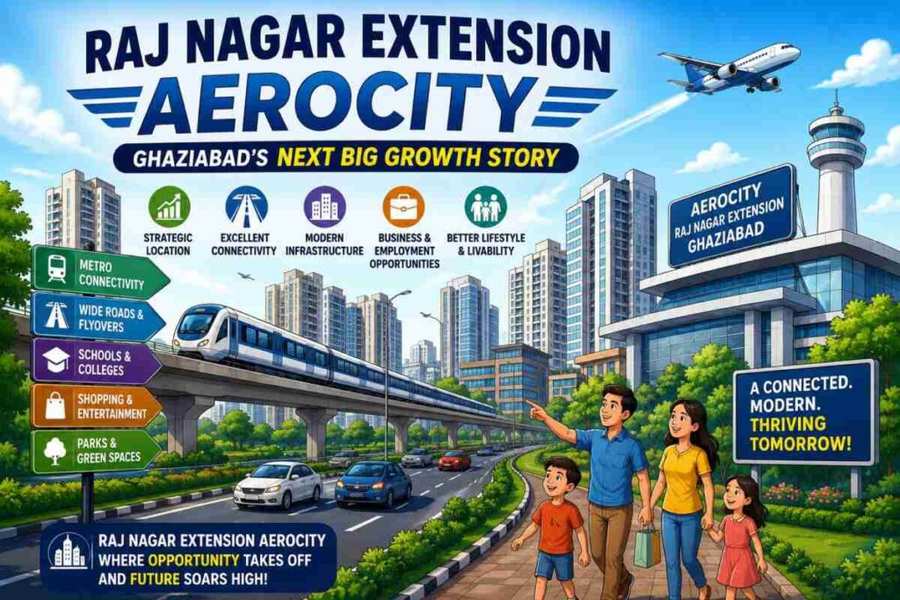
That narrative is changing rapidly. The Ghaziabad Development Authority (GDA) is laying the groundwork for a massive, 230-hectare Aerocity-style commercial township right next to the proposed international cricket stadium. Spanning across three local villages, this mega-project intends to pivot the entire region from a quiet residential sprawl into a bustling, high-value commercial landmark.
If you are an investor, a business owner, or a local resident, this isn’t just another routine infrastructure announcement. It represents a fundamental shift in how real estate, commerce, and economic opportunities will move in Western Uttar Pradesh. However, with massive projects come massive questions about execution, timelines, and ground realities. Let’s pull back the layers on this massive development to see what it means for your portfolio.
What is the Raj Nagar Extension Aerocity Project?
Simple Explanation
At its core, the proposed Raj Nagar Extension Aerocity is a massive, planned commercial district designed to mimic the high-end, self-sustaining ecosystem of Delhi’s Aero City. Spread across roughly 230 hectares of land in three key villages near Raj Nagar Extension, the project aims to integrate commercial high-rises, luxury hospitality, retail complexes, corporate offices, and entertainment zones into a singular, highly connected urban pocket.
The defining feature of this project is its proximity to the upcoming international cricket stadium, creating a dual-engine growth zone where sports tourism and high-end corporate commerce feed into one another.
Why It Matters in 2026+
The year 2026 marks a turning point for regional connectivity in Delhi NCR. With the Regional Rapid Transit System (RRTS) fully operational and the expansion of peripheral expressways, the physical distance between cities has mutated into a question of travel time.
Ghaziabad cannot afford to remain just a “bedroom community” where people sleep before commuting to Delhi or Noida for work. The Raj Nagar Extension Aerocity matters because it gives Ghaziabad its own economic anchor. It provides modern corporate spaces, creates thousands of white-collar jobs locally, and prevents the town’s talent pool from migrating out daily. For the real estate market, it acts as a premium counterweight to the affordable housing tag, driving up land values and rental yields across the board.
Key Features and Highlights of the Township
The blueprint for this Aerocity-style hub is ambitious, leaning heavily on modern urban planning principles that contrast sharply with the organic, chaotic growth seen in older parts of Ghaziabad.
Feature 1: The Land Pooling Model
Unlike traditional projects where the government forcibly acquires land—often leading to decades of litigation, disgruntled farmers, and stalled projects—the GDA is prioritizing a land pooling mechanism. In this framework, farmers and landowners voluntarily hand over their raw agricultural plots to the development authority. The GDA pools the land, lays down world-class infrastructure (roads, grids, water lines, green spaces), and returns a specific percentage of the newly developed, high-value commercial or residential land back to the original owners. This creates an immediate partnership model, significantly reducing local friction and accelerating development timelines.
Feature 2: High-Density Mixed-Use Zoning
The layout is designed to maximize vertical space and foot traffic. Expect to see highly flexible mixed-use zoning where corporate office towers sit directly above premium retail arcades, interspersed with upscale hotel blocks and walkable dining avenues. By clustering these spaces close to the proposed international cricket stadium, the zone ensures a steady influx of high-spending visitors during sporting events, concerts, and conventions.
Feature 3: Integrated Smart Infrastructure
Moving away from overloaded municipal lines, the proposed 230-hectare township is slated to feature dedicated utility corridors, underground wiring, advanced waste management facilities, and automated traffic management layouts. The goal is to build an environment polished enough to attract multinational corporations, luxury hotel chains, and premium retail brands that traditionally choose Noida or Gurugram.
Benefits of the Raj Nagar Extension Aerocity
An infrastructure project of this scale sends economic ripples across multiple sectors. Here is how the benefits break down across different lenses.
Financial Benefits
For early investors and existing property owners in Raj Nagar Extension, the financial implications are profound.
- Capital Appreciation: The transition of a region from purely residential to a commercial-residential hybrid historically triggers sharp capital appreciation. Raw land and existing commercial units nearby stand to gain the highest percentage yield increases.
- Rental Income Trajectory: As corporate offices set up shop, the demand for premium executive rentals, co-living spaces, and service apartments in the immediate vicinity will outpace current supply, allowing landlords to command higher rents.
Lifestyle and Business Benefits
For businesses, the township offers premium commercial real estate at a lower entry cost than mature markets like Noida Sector 62 or Gurugram’s Golf Course Road Extension. Companies get access to brand-new infrastructure, large floor plates, and seamless transit links.
For residents, it means a complete lifestyle upgrade. The addition of high-end shopping malls, fine dining options, multiplexes, and manicured public plazas means locals no longer have to drive down to East Delhi or Central Noida for a premium leisure experience.
Long-Term Value
The long-term value lies in structural economic stability. By anchoring the region with an international cricket stadium and a commercial Aerocity, the local economy becomes resilient. The continuous cycle of sporting events, business conferences, and commercial retail ensures that cash flow within the Raj Nagar Extension micro-market remains vibrant, even during broader macroeconomic slowdowns.
Location and Market Analysis
The success of any mega-scale real estate asset relies entirely on geography. Let’s analyze the structural landscape holding this project together.
+-------------------------------------------------------------+
|                      REGIONAL CONNECTIVITY                  |
+-------------------------------------------------------------+
|                                                             |
|   [ Delhi-Meerut Expressway ] <---> [ RAJ NAGAR EXTENSION ] |
|                                             |               |
|                                             v               |
|                                    [ PROPOSED AEROCITY ]    |
|                                             ^               |
|                                             |               |
|         [ Ghaziabad RRTS Station ] <--------+               |
|                                                             |
+-------------------------------------------------------------+
Connectivity
The proposed site across the three identified villages sits in a sweet spot of regional transit. It enjoys direct access to the Delhi-Meerut Expressway (DME), making travel to the heart of New Delhi or deep into Western UP remarkably straightforward. Furthermore, the Northern Peripheral Road links it directly to Loni and northwestern Delhi access points. The proximity to the Rapid Rail (RRTS) network completely transforms its positioning, allowing commuters from Meerut, Modinagar, or central Delhi to reach the zone in minutes.
Infrastructure Growth
Over the last few years, the infrastructure around Raj Nagar Extension has quietly matured. The elevated road connecting it directly to UP Gate at the Delhi border has already slashed commute times down to a fraction of what they used to be. Water supply networks, internal 45-meter and 60-meter wide sector roads, and electrical sub-stations have stabilized, creating a robust foundation capable of taking on the massive load a commercial Aerocity will eventually demand.
Future Potential
As land availability shrinks along the Noida Expressway and central Gurugram reaches a point of hyper-dense saturation, institutional capital naturally searches for the next logical expansion vector. Ghaziabad’s northern fringe, centered around Raj Nagar Extension, offers the last major open land parcels in close proximity to Delhi that feature established transit connectivity. By 2030, this pocket is highly likely to serve as the primary commercial gateway for the entire Western UP consumer base.
Investment Potential and Practical Use Cases
Investing in an unbuilt or early-stage development project requires a balanced look at both the numbers and the human variables involved.
ROI Opportunities
The most lucrative returns are positioned within the commercial retail and hospitality segments. Given the massive crowds that an international cricket stadium draws, there will be an immediate, sharp deficit in hotel rooms, banquet halls, and food and beverage hubs during event windows. Investors purchasing commercial pre-leased spaces, fractional retail shares, or land plots adjacent to the defined 230 hectares stand to witness strong rental yields and multi-fold capital growth as ground construction hits visible milestones.
Risk Factors (Be Honest)
No major real estate project is without its fair share of hurdles. If you are looking at this market, you must keep three major risks in mind:
- The “Consent” Bottleneck: The land pooling model is brilliant on paper, but it hinges entirely on getting mutual consent from hundreds of individual farmers across three villages. If a significant faction refuses the pooling terms or demands higher allocations, the project boundary walls could face delays.
- Execution Timelines: Bureaucratic approvals, structural planning shifts, and municipal coordination within development authorities can take years to move from blueprint to actual asphalt and concrete.
- Capital Delays: Infrastructure of this scale requires sustained, massive financial injections. Any delay in GDA budgetary allocations or private developer partnerships can slow down the momentum.
Who Should Invest?
This zone is ideal for long-term patient capital. If you are looking for a quick flip to double your money in 12 months, this is not the asset class for you. However, if you are an investor with a 5-to-10-year horizon, a business owner looking to secure future office space, or a generational investor looking to build a high-yielding commercial portfolio, the entry prices in this region present an incredibly rare ground-floor window.
Comparison Section: Raj Nagar Extension vs. Alternatives
To truly understand value, we must compare this emerging hub against established alternatives within the Delhi NCR ecosystem.
| Metric | Raj Nagar Extension Aerocity (Proposed) | Noida Expressway (Established) | Delhi Aerocity (Mature) |
| Entry Cost / Price Point | Low to Moderate | High | Extremely High |
| Primary Growth Driver | Cricket Stadium & Land Pooling Hub | IT Parks & Institutional Corporate | IGI Airport Proximity |
| Current Infrastructure | Developing / Transit-Ready | Fully Developed | World-Class / Saturated |
| Long-Term Growth Room | Massive (Early Lifecycle) | Moderate (Maturing Market) | Low (Yield Stabilization) |
| Risk Profile | Medium to High (Execution Dependent) | Low | Minimal |
Why It Stands Out
While Delhi’s Aerocity is world-class, its astronomical real estate prices completely price out small to mid-sized businesses and independent investors. Noida Expressway offers scale but lacks the unique, immediate foot-traffic pull generated by an international sporting arena. The Raj Nagar Extension Aerocity balances an accessible entry price point with a unique entertainment-and-commerce blueprint, making it a highly distinct investment play within NCR.
Step-by-Step Guide for Strategic Market Entry
If you want to capitalize on this upcoming urban shift, you need a methodical approach to ensure you don’t get stuck in speculative traps.
1.Map the Proposed 230-Hectare Boundary:Research Phase.
Analyze the official master plans and village survey records released by the GDA. Identify the exact boundaries of the three selected villages to understand where the core commercial zones will sit versus where the buffer residential lines run.
2.Verify Land Titles and RERA Compliance:Legal Due Diligence.
If buying private land or developer plots adjacent to the project, stringently check the land titles back 30 years. If looking at builder projects riding the “Aerocity wave,” verify their active registration status with UP RERA to ensure zero legal encumbrances.
3.Assess Proximity to Major Transit Knots:Location Filtering.
Filter your property choices based on immediate connectivity. Prioritize parcels or commercial units that sit within a 5-to-10-minute driving radius of the elevated road access points or the nearest RRTS station hubs.
4.Commit Long-Term Capital:Financial Execution.
Deploy your funds using flexible payment plans or structured milestones linked directly to construction progress. Ensure your financial liquidity allows you to hold the asset comfortably for at least 5 years without relying on immediate rental income.
Expert Tips for Navigating the Market
Navigating an unexecuted master plan requires an insider’s mindset. Here are a few practical rules of thumb shared by veteran regional analysts:
- Watch the Farmers’ Meetings: Don’t just track GDA notices; look at what’s happening on the ground in those three identified villages. The speed at which local land pooling consent forms are signed will tell you the exact timeline of the project long before official press releases do.
- Ignore the Hype, Follow the Anchor: Do not buy property based purely on the word “Aerocity.” Wait for the core anchor project—the international cricket stadium—to hit clear, undeniable physical construction milestones. When the stadium walls go up, the surrounding land value becomes real.
- Look for Commercial/Retail Hybrids: If buying retail space, ensure the property has a high frontage and open access layout. Standard locked-in office spaces are good, but street-facing retail units thrive exponentially better near sports venues.
- Evaluate Peripheral Micro-Markets: Sometimes the best value isn’t inside the mega-project itself, but in the immediate residential sectors surrounding it. Look for well-constructed, ready-to-move-in apartments nearby that will house the future workforce of this commercial hub.
Common Mistakes to Avoid
- Buying “Pre-Launch” Farmland Without Legal Approvals: Many unverified brokers will try to sell raw agricultural patches within the villages under the promise that “it will be pooled soon.” Avoid buying raw agricultural land independently inside the planned zone unless you are a native local familiar with land conversion laws.
- Over-Leveraging with High-Interest Loans: Because execution timelines can stretch out, taking on high-interest commercial loans based on speculative short-term rental returns can break your personal cash flow. Use surplus capital or low-leverage financing.
- Believing Unrealistic Timelines: If a brochure tells you the entire Aerocity will be up and running with five-star hotels by next year, run away. Mega-townships take time. Plan your financial lifecycle around realistic 5-to-8-year windows.
Future Trends (2026–2030)
As we look toward the end of the decade, the evolution of the Raj Nagar Extension Aerocity will likely follow a clear structural pattern. First, expect to see corporate hospitality groups acquiring large land footprints within the pooled areas to set up mid-scale and luxury hotels, anticipating stadium event revenues.
Second, the area will likely become a major testing ground for green building initiatives in Uttar Pradesh. Due to the strict eco-compliance and modern building bylaws required for grand-scale townships, new constructions here will likely feature solar integrations, widespread EV charging networks, and recycled water systems as a standard baseline, shifting the region’s aesthetic completely toward a premium corporate park landscape.
Conclusion
The proposed Aerocity-style commercial township near Raj Nagar Extension is an undeniable game-changer for Ghaziabad’s urban and economic trajectory. By combining a 230-hectare structured layout with a land pooling framework and a major international sports anchor, the project presents a compelling alternative to the oversaturated markets of Delhi NCR.
However, the defining word remains planned. The true realization of this urban transformation depends completely on ground-level land consents, transparent execution, and steady capital inflows. For the discerning investor, this represents a prime opportunity to track, analyze, and strategically enter an early-stage growth market before it transitions into a fully realized, premium commercial destination.
For residents and businesses across Gurugram, Noida, and Delhi, the message is clear: the days of being hopelessly stuck in traffic are winding down. for Cutting out traffic Govt has launched Delhi katra Expressway It is time to look forward, adapt to these emerging corridors, and position your investments to ride the wave of this historic infrastructure transformation. You will see a city built for the next generation. Knowledge Park 5 is not just about real estate. It is about the quality of life you deserve. It represents a smart choice for your family and your finances. Take a drive through the sector and see the progress yourself.
You will see a city built for the next generation. Sector 4 Greater Noida, is more than just a destination on a map; it represents the modern Indian dream of affordable luxury and planned growth. Knowing the Sector 4 Greater Noida pin code is just the beginning of your journey. Whether you are moving here for work, family, or investment, the area offers a robust foundation for a high-quality life. With its strategic location, improving infrastructure, and vibrant community, Sector 4 is undoubtedly one of the best places to plant your roots in the NCR. for more doubts get a On call free session by Real Estate Advisory or Visit byviveksingh.in to book a direct strategy consultation. Are you a Business Owner ? than For business owners, the primary benefit is the guaranteed footfall. Book your Commercial Shop in Mahagun Metro Mall Today as Being located right near the Vaishali Metro Station means a constant stream of commuters is funnelled toward the mall. High visibility leads to lower customer acquisition costs for retail tenants.
Frequently Asked Questions
What exactly is the land pooling model being used for the Raj Nagar Extension Aerocity?
The land pooling model is a collaborative system where landowners voluntarily hand over their plots to the GDA. The authority develops large-scale modern infrastructure across the unified area and returns a clear, legally approved percentage of developed commercial or residential land back to the farmers, bypassing traditional acquisition disputes.
How will the proposed international cricket stadium affect property prices in Raj Nagar Extension?
The international cricket stadium acts as a high-density foot-traffic driver. It creates immediate seasonal demand for hospitality, food and beverage outlets, and short-term rentals, structurally elevating the commercial profile of Raj Nagar Extension and accelerating local capital appreciation.
Is it safe to invest in commercial properties around Raj Nagar Extension right now?
Yes, provided you verify that the developments are fully approved by UP RERA and feature clear land titles. Investing right now offers lower entry prices, but your capital must be patient enough to withstand a multi-year development cycle as the infrastructure matures.
Which villages are currently identified for the 230-hectare Aerocity-style township?
The GDA has identified roughly 230 hectares of land distributed across three specific villages located adjacent to Raj Nagar Extension and the proposed cricket stadium site. Precise sector maps and individual land parcel breakdowns are managed via ongoing GDA land pooling notifications.
How does Raj Nagar Extension’s connectivity compare to Noida or Gurugram?
With the operational Delhi-Meerut Expressway, the elevated link road to the Delhi border, and close access to the Rapid Rail (RRTS) network, Raj Nagar Extension offers exceptional transit times to Delhi and Western UP, standing out as a highly accessible hub at a fraction of Noida or Gurugram prices.