
Imagine waking up to discover that your hard-earned savings, tucked safely into local bank accounts, have silently lost a fraction of their global purchasing power while you slept. Over the last several months, this exact scenario has played out for over a billion people. The headlines are flashing with urgent alerts: the Indian currency has plunged to an unprecedented, historic low, breaching the critical 96 mark against the greenback.
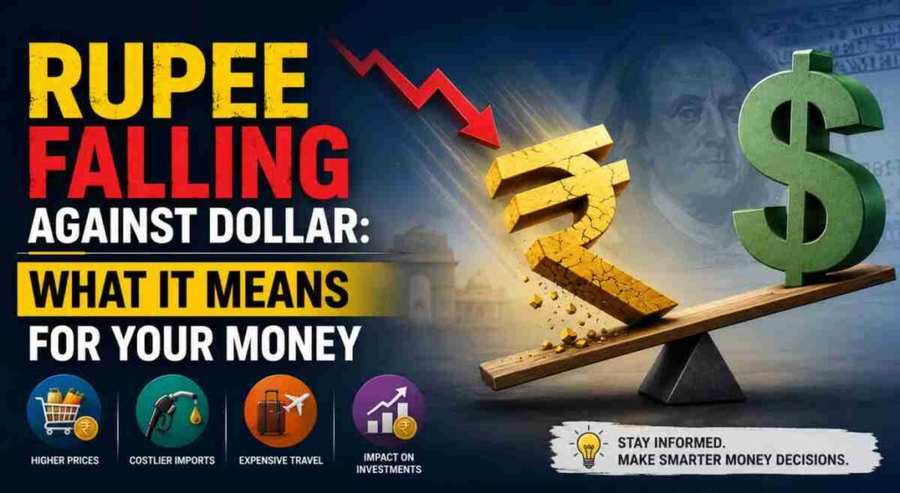
For the average household, a shifting currency ticker feels like a distant, abstract math problem confined to corporate boardrooms and institutional trading desks. But currency valuation is not just an arbitrary score on a financial news board. It is the invisible force that dictates the price of the fuel pumped into your car, the landing cost of the smartphone in your hand, and the tuition bill for studying abroad. When the local currency slips, its ripples are eventually felt at every dinner table. Understanding the macroeconomic currents driving this shift is the first step toward safeguarding your financial future.
Introduction
The relentless headline of the rupee falling against dollar has shifted from a routine market update to a primary point of discussion for families, corporate boards, and macroeconomic planners. In mid-2026, the local currency plunged to a historic low of over ₹96.20 against the greenback, making it one of the most pressured currencies in the Asian corridor. For an economy that prides itself on robust internal growth and resilient domestic consumption, this sudden, steep depreciation has left many people asking a fundamental question: Why is our currency sliding when our factories are humming?
This comprehensive guide pulls back the curtain on the complex machinery of international foreign exchange. We will look past the dense financial jargon to analyze the specific global and domestic forces pulling the currency down—ranging from surging energy bills to shifting foreign investments. More importantly, we will map out the direct consequences of this shift. Whether you are an equity investor watching market volatility, a business owner managing an overseas supply chain, or a consumer tracking household inflation, this breakdown offers the practical insights needed to successfully navigate a shifting economic landscape.
What is the Rupee Falling Against the Dollar?
Global Risk Evaporation ──> Capital Flees to US Dollar ──> Higher Demand for USD ──> Rupee Depreciates
Simple Explanation
At its most basic level, the currency exchange rate is determined by supply and demand. Think of the global market as a massive marketplace where currencies are traded like commodities. When the phrase rupee falling against dollar hits the news, it means the demand for US dollars has outpaced the demand for local currency.
If it previously took ₹83 to purchase a single US dollar, and it now requires more than ₹96, the local currency has depreciated. You now need more units of home currency to buy the exact same unit of global reserve currency. This dynamic makes foreign purchases more expensive while making local goods cheaper for foreign buyers.
Why It Matters in 2026 and Beyond
In 2026, the global financial system is operating under unique pressures. The world economy is experiencing deep structural realignments, shifting trade partnerships, and stubborn inflationary cycles. A currency’s valuation acts as a real-time confidence tracker for an economy’s immediate operating environment.
A weakening currency complicates long-term corporate planning, directly drives up the cost of critical imports, and forces central banks to make difficult policy trade-offs between supporting domestic growth and stabilizing the exchange rate. Ignoring these shifts means missing the broader trends reordering global wealth.
Key Features and Triggers Behind the Drop
The ongoing decline of the local currency isn’t a random market fluke; it is the direct outcome of specific macroeconomic forces converging simultaneously.
1. Surging Global Crude Oil Prices
The nation’s foundational vulnerability remains its structural dependence on imported energy, relying on foreign sources for more than 80% of its crude oil requirements. When global crude oil prices surge past $110 per barrel due to persistent geopolitical tensions, the country’s economic baseline changes quickly. Because international energy trades are settled exclusively in greenbacks, a higher oil price forces domestic oil marketing companies to purchase massive amounts of foreign currency. This surge in commercial demand drives up the value of the greenback while putting steady downward pressure on the domestic currency.
2. Aggressive FII Outflows
The global investment landscape has shifted toward a “risk-off” environment. Confronted by rising international bond yields and heightened geopolitical instability, foreign institutional investors (FII) outflows have accelerated sharply. Institutional funds have withdrawn tens of thousands of crores from domestic equity markets, converting their local holdings back into greenbacks to seek safety in Western capital markets. This large-scale exit creates an inventory imbalance, leaving an oversupply of local currency and a shortage of foreign exchange.
3. Broad-Based US Dollar Strength
The greenback is experiencing a strong global bull run. Supported by sticky inflation in Western economies, elevated benchmark interest rates, and its traditional role as a safe-haven asset during geopolitical crises, the US Dollar Index (DXY) has climbed toward multi-year highs. When the global reserve currency strengthens across the board, emerging market currencies worldwide face downward pressure, pulling the local currency along with them.
Benefits and Drawbacks of a Weakening Currency
While a falling exchange rate is often viewed negatively, a closer look reveals that currency depreciation produces distinct winners and losers across different sectors of the economy.
| Economic Stakeholder | Direct Impact | Strategic Position |
| IT Services & Software Exporters | Net Positive | Receives higher local revenue for dollar-denominated contracts, expanding profit margins. |
| Manufacturing & Heavy Imports | Net Negative | Faces significantly higher input costs for foreign components and machinery. |
| Domestic Consumers | Net Negative | Absorbs higher costs passed down through costlier fuel, electronics, and imported goods. |
| Foreign Tourism & Hospitality | Net Positive | Becomes a more cost-effective destination for foreign travelers holding stronger currencies. |
Financial Benefits for Exporters
The primary beneficiaries of a weaker exchange rate are export-oriented sectors, particularly information technology services, pharmaceuticals, and specialty textiles. These companies bill their international clients in greenbacks but incur their core operating expenses—like salaries and administrative costs—locally. When they convert their foreign earnings back into home currency, their top-line revenue and operating margins expand without requiring price hikes.
Structural Pressures on Business Owners
Conversely, companies reliant on foreign supply chains face immediate financial pressure. From electronics manufacturers importing advanced semiconductors to infrastructure firms buying foreign steel, input costs rise immediately. If these businesses absorb the higher costs, their profit margins shrink. If they pass the expenses along, they risk reducing demand in a price-sensitive consumer market.
Long-Term Macroeconomic Value
Over an extended period, a weaker currency can trigger a helpful structural adjustment: import substitution. As foreign goods become consistently more expensive, domestic conglomerates face a strong financial incentive to build local alternatives. This shift can accelerate domestic manufacturing capabilities, deepen internal supply chains, and eventually help lower the structural trade deficit.
Market and Impact Analysis
To understand why the rupee falling against dollar creates such persistent waves across local asset classes, we must look at how currency fluctuations pass through to the broader domestic economy.
The Inflation Transmission Channel
The most immediate domestic risk of a sliding currency is imported inflation. When importing essential commodities like crude oil, industrial chemicals, and edible oils becomes more expensive, those higher costs quickly spread through the economy. Higher fuel costs drive up transport expenses for agricultural products and manufactured goods alike, leading to a general rise in wholesale and consumer price indexes.
Weaker Exchange Rate ──> Costlier Crude Imports ──> Higher Transport Costs ──> Rising Food & Goods Inflation
Central Bank Policy Traps
This imported inflation complicates monetary policy for the central bank. The Reserve Bank of India (RBI) forex intervention strategy must balance two conflicting goals. The central bank uses its foreign exchange reserves to sell greenbacks and buy local currency, aiming to smooth out excessive volatility and prevent a speculative downward spiral.
However, aggressively burning through foreign reserves to defend an arbitrary currency level is unsustainable if global macroeconomic trends remain unfavorable. If inflation stays elevated due to currency weakness, the central bank may be forced to keep domestic interest rates high, which can slow down domestic corporate borrowing and real estate growth.
Investment Potential and Tactical Allocations
A shifting currency dynamic alters the risk-reward equation across various asset classes, requiring a proactive rebalancing of investment portfolios.
ROI Opportunities in Currency-Hedged Assets
In an environment shaped by a rupee falling against dollar, traditional fixed-income assets often yield negative inflation-adjusted returns. To counter this, savvy wealth managers look toward sectors with natural hedges. Equities of top-tier IT services and pharmaceutical firms provide an effective defensive shield, as their earnings tend to grow alongside a rising greenback.
Additionally, international mutual funds and exchange-traded funds (ETFs) that hold foreign-denominated assets allow domestic investors to benefit directly from a strengthening foreign currency.
Real-World Risk Factors
Investors must remain clear-eyed about the systemic risks in play. High volatility in the currency pairs often triggers sharp corrections in mid-cap and small-cap stocks, particularly those carrying unhedged foreign currency convertible bonds (FCCBs) or relying heavily on foreign raw materials. Furthermore, if foreign institutional investors (FII) outflows persist due to currency depreciation, large-cap benchmark indices can face sustained downward pressure regardless of strong underlying corporate earnings.
Who Should Shift Their Capital Allocation Strategy?
Strategic Note: Active portfolio rebalancing during currency adjustments isn’t just for institutional funds. High-net-worth individuals, corporate treasuries, and retail investors with upcoming foreign liabilities—such as funding an offshore education or expanding a business overseas—need to actively manage their currency exposure to prevent capital erosion.
Comparative Analysis: Local Currency vs. Emerging Market Peers
When assessing currency depreciation, it’s essential to determine whether the weakness is driven by unique domestic challenges or a broader retreat from emerging markets.
Cross-Currency Performance
A review of the 2026 financial landscape shows that the trend extends beyond a single currency. Nearly all major emerging market currencies—including the Brazilian Real, the South African Rand, and the Indonesian Rupiah—have depreciated against a strong greenback.
However, the local currency has broken through historic support levels faster than some of its regional peers. This accelerated decline is primarily due to the country’s high structural dependence on energy imports, which amplifies the economic impact of global oil shocks compared to net energy-exporting nations.
The Resilience Factor
Despite this vulnerability, the domestic financial system possesses a key backstop that many emerging market peers lack: a massive foreign exchange reserve cushion. Hovering near historical highs of around $696 billion, these reserves give the central bank the firepower needed to prevent sharp, panicked sell-offs.
While the currency may continue to depreciate gradually in line with global trends, a sudden, disruptive collapse remains highly unlikely due to this institutional defense.
Step-by-Step Guide for Businesses to Hedge Currency Risks
If you run an enterprise with exposure to international trade, waiting out a volatile currency market can be a costly mistake. Here is a practical framework to insulate your business operations from unpredictable swings in foreign exchange.
Step 1: Conduct a Comprehensive Currency Exposure Audit
Begin by reviewing your entire financial pipeline to identify every point of exposure to foreign exchange risk. Calculate your total expected foreign currency inflows (from export invoices) against your mandatory outflows (for import settlements, foreign software subscriptions, or overseas logistical fees) over the next rolling 12 months. This exercise determines your net open exposure—the specific amount of capital vulnerable to market swings.
Step 2: Utilize Forward Contracts and Options
Work with your treasury partner or corporate banking representative to set up formal hedging mechanisms.
- Forward Contracts: Allow you to lock in a specific exchange rate for a future transaction, ensuring predictable costs regardless of market shifts.
- Currency Options: Provide the right, but not the obligation, to execute a trade at a set rate, giving you a safety net while allowing you to benefit if the spot market moves in your favor.
Step 3: Shift Invoice Settlements to Alternative Currencies
Where feasible, renegotiate your international trade agreements to reduce reliance on the greenback. Explore settling invoices using alternative currencies or bilateral local-currency trade mechanisms, particularly when dealing with regional trading partners. Diversifying your settlement currencies minimizes your exposure to a single, dominant foreign currency.
Expert Tips for Navigating a Weakening Currency Market
Navigating a period of currency depreciation requires a shift in how you manage both personal and business capital. Consider these practical strategies from seasoned market professionals:
- Accelerate Foreign Debt Paydowns: If your business carries unhedged, variable-rate loans denominated in foreign currency, prioritize paying down that debt to avoid rising service costs as the local currency softens.
- Diversify Portfolios Internationally: Allocate a portion of your investable capital into international equity funds or global feeder funds to build an organic hedge against local currency depreciation.
- Build a Sovereign Gold Buffer: Maintain a position in physical gold or sovereign gold bonds; precious metals typically retain their global purchasing power and serve as a reliable currency hedge during periods of domestic depreciation.
- Lock in Fixed Costs Early: For essential business imports or major personal foreign expenses, consider prepaying vendors or locking in fixed rates early to protect your budget from further currency declines.
- Prioritize Domestic Supply Options: Review your corporate procurement strategy and substitute foreign components with domestic alternatives wherever possible to insulate your margins from exchange-rate volatility.
Common Mistakes to Avoid During Currency Volatility
When headlines focus on a falling exchange rate, emotional reactions can lead to costly financial missteps. Avoid these common traps:
Catching a Falling Knife in Equity Markets
A frequent error among retail investors is rushing to buy shares of import-heavy companies simply because their stock prices have dropped sharply. If a company’s business model relies on cheap foreign inputs, a prolonged period of currency weakness can fundamentally impair its earnings power for several quarters. Always check a company’s balance sheet for unhedged foreign debt before investing during a currency downturn.
Delaying Essential Hedging Decisions
Many mid-sized business owners hold off on locking in forward contracts, hoping the currency will quickly rally back to previous levels. Betting on short-term currency movements is incredibly risky. It is far safer to accept a predictable, locked-in exchange rate that preserves your business margins than to leave your operational cash flow exposed to highly volatile currency markets.
Future Trends (2026–2030)
Looking ahead toward the end of the decade, the relationship between major global currencies is expected to undergo a structural shift.
Structural Depreciation vs. Absolute Weakness
Economists anticipate that the local currency will follow a path of gradual, managed depreciation against the greenback, likely moving at an average pace of 2–3% annually over the next few years. This long-term trend is normal for an emerging economy that maintains a higher structural inflation rate than a developed nation.
This gradual adjustment helps keep local exports price-competitive in global markets and prevents the economy from becoming misaligned with its international peers.
Higher Relative Inflation ──> Gradual Structural Depreciation ──> Preserved Export Competitiveness
The Shift Toward Multipolar Trade Settlement
Over the next few years, the absolute dominance of the greenback in regional commerce is expected to face gradual pressure. As bilateral trade agreements settled in local currencies mature and cross-border digital payment networks expand, a growing share of trade will bypass traditional clearing systems entirely.
While the US dollar will retain its status as the primary global reserve currency, these alternative channels will give emerging market central banks greater flexibility in managing their exchange rates.
Conclusion
The ongoing story of the rupee falling against dollar highlights a fundamental reality of the modern financial world: domestic economic success cannot be completely separated from global market volatility. While the local currency’s slide to historic lows creates clear challenges for inflation management and import-reliant industries, it also opens up valuable opportunities for agile exporters and forward-looking investors who adjust their strategies early.
Rather than viewing currency depreciation as an economic setback, smart market participants treat it as a clear signal to adapt. By diversifying your investment portfolios internationally, actively hedging corporate foreign exchange exposures, and focusing on domestic supply chains, you can effectively insulate your financial interest from currency swings. The global economic landscape is shifting—position your capital to ride the wave rather than swim against it.
You will see a city built for the next generation. Knowledge Park 5 is not just about real estate. It is about the quality of life you deserve. It represents a smart choice for your family and your finances. Take a drive through the sector and see the progress yourself. You will see a city built for the next generation. Sector 4 Greater Noida, is more than just a destination on a map; it represents the modern Indian dream of affordable luxury and planned growth. Knowing the Sector 4 Greater Noida pin code is just the beginning of your journey. Whether you are moving here for work, family, or investment, the area offers a robust foundation for a high-quality life. With its strategic location, improving infrastructure, and vibrant community, Sector 4 is undoubtedly one of the best places to plant your roots in the NCR.
Frequently Asked Questions
Why is the rupee falling against dollar so sharply right now?
The current decline is primarily driven by a sharp rise in global crude oil prices, accelerating foreign institutional investors (FII) outflows from domestic equities, and a broad strengthening of the US dollar backed by high international bond yields and safe-haven demand amid geopolitical tensions.
How does a weakening currency directly affect everyday consumers?
A falling currency drives up the cost of essential imported goods, particularly crude oil. This increase raises transport costs across the economy, leading to higher retail inflation for daily goods, fuel, electronics, and overseas travel or education.
Which specific sectors benefit when the currency depreciates?
Export-oriented industries benefit significantly from a weaker local currency. Key sectors include information technology services, pharmaceuticals, textiles, and agricultural exporters, as their dollar-denominated revenues yield more local currency upon conversion.
What role does the central bank play during a currency slide?
The Reserve Bank of India (RBI) forex intervention strategy involves strategically selling US dollars from its foreign exchange reserves and buying local currency. This action increases the dollar supply in the market, helping to smooth out excessive volatility and prevent panic-driven sell-offs.
Should I move my personal investments into gold or foreign assets now?
Allocating a portion of your portfolio to gold or international mutual funds can serve as an effective defensive hedge against currency depreciation, as these assets tend to retain their global purchasing power when the domestic currency softens.