
The Waymo Highway Era: How Autonomous Freeways Are Changing Commuting in 2026
Imagine slipping into the backseat of a sleek SUV on a rainy Tuesday morning. There is no driver at the steering wheel. You tap a screen, adjust the climate control, and lean back with a cup of coffee. Minutes later, the vehicle glides down an on-ramp and smoothly merges into four lanes of 65 mph highway traffic. It changes lanes to avoid a slow-moving semi-truck, handles a sudden construction bottleneck with poise, and deposits you at your destination in half the time a surface-street route would take.
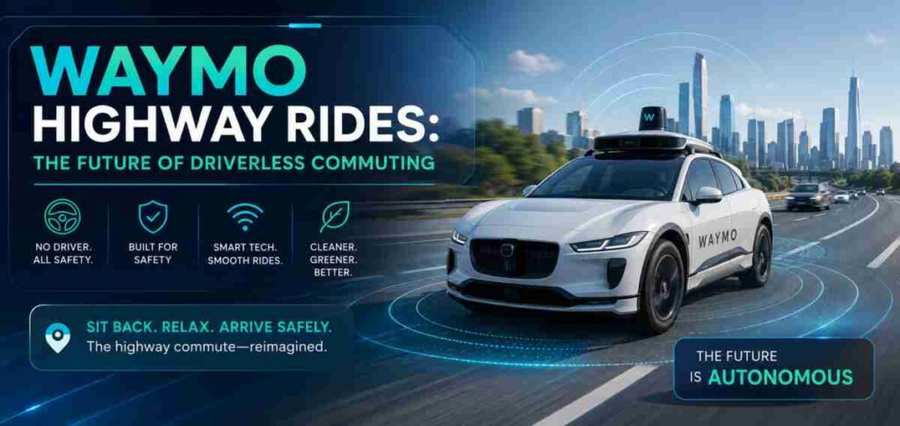
This isn’t a sci-fi pitch. It is the reality of the Waymo highway rollout—a milestone that represents the holy grail of autonomous ride-hailing.
For years, driverless cars were restricted to dense, predictable surface streets at lower speeds. Bringing driverless vehicles onto high-speed freeways is a massive technical leap forward, bringing both incredible benefits and unexpected challenges for modern transportation.
What is the Waymo Highway Initiative?
Simple Explanation
The Waymo highway program refers to the commercial deployment of Alphabet’s fully autonomous vehicles (AVs) on major freeways and expressways without a human safety driver. While Waymo One has operated in urban areas for years, highway driving requires the vehicle’s onboard computer to make split-second decisions at speeds up to 65–70 mph, managing high-stakes merges, long-range object detection, and rapid lane changes.
Why It Matters in 2026+
As urban areas face unprecedented gridlock, surface-street ride-hailing is no longer enough. Unlocking the highway is a critical step for autonomous vehicles to become a true alternative to personal car ownership.
By utilizing freeways, autonomous vehicles can cut travel times by up to 50% for long-distance commuters, unlock seamless airport transfers, and connect sprawling suburban zones to major metro centers. It marks the transition of AV technology from a novelty neighborhood shuttle to a viable mass-transit alternative.
Key Technical Features of Waymo Highway Navigation
Operating an autonomous vehicle at high speeds requires an entirely different hardware and software stack than navigating a 25 mph residential zone. Waymo utilizes an advanced sensor suites to maintain a 360-degree view of its surroundings:
                  [Custom Long-Range Lidar]
                             │
                             ▼
  [29 High-Res Cameras] ──► (ONBOARD COMPUTER) ◄── [Millimeter Radar]
                             ▲
                             │
                [Redundant Mechanical Backups]
- Long-Range Custom Lidar: Sends out millions of laser pulses per second to build a highly accurate 3D map of the environment. The specialized highway array can detect objects, debris, and lane shifts hundreds of meters ahead, giving the vehicle ample stopping distance at 65 mph.
- 360-Degree Vision Network: Using 29 high-resolution cameras with high dynamic range and thermal stability, the system instantly identifies brake lights, emergency vehicles, and subtle construction zone signs even in blinding sunlight or heavy downpours.
- Weather-Resistant Millimeter Radar: Radar tracks the exact speed and distance of surrounding vehicles. Because it uses radio waves rather than light, it remains effective through heavy fog, dust storms, and heavy rain where visibility drops to near zero.
- Onboard Processing Power: Equipped with server-grade CPUs and GPUs, the vehicle’s computer processes gigabytes of data per second in real time. It predicts the behavior of surrounding human drivers and plans a safe path forward without relying on a continuous internet connection.
Real-World Benefits of Highway Autonomous Rides
The shift from surface streets to expressways offers significant advantages for daily commuters, businesses, and city infrastructure alike.
Commuting Efficiency and Time Savings
The most immediate benefit for riders is a drastic reduction in travel time. A cross-city trip that used to take 50 minutes via local roads with frequent stoplights can now be completed in 20 minutes via the freeway.
Accessibility and Lifestyle Value
For individuals with visual impairments, disabilities, or those without a driver’s license, highway access provides true regional mobility. It allows passengers to travel spontaneously between cities and access distant job markets or medical facilities independently.
Long-Term Environmental and Traffic Impact
Autonomous highway driving is highly optimized. By avoiding aggressive acceleration and braking, these vehicles improve fuel economy and lower emissions. Furthermore, as fleet coordination improves, AVs can harmonize with traffic flow, helping to reduce the rubbernecking and sudden braking that trigger multi-mile traffic jams.
Market Geography: Where Are Waymo Highway Trips Available?
The rollout of highway operations follows a targeted geographic strategy, prioritizing regions with high commuter density, progressive regulatory frameworks, and diverse climate profiles.
| Metro Region | Primary Highway Corridors | Key Transit Links Unlocked |
| Phoenix Metro | I-10, Loop 101, Loop 202 | Direct, high-speed routes to Sky Harbor International Airport (PHX) and East Valley suburbs. |
| San Francisco Bay Area | US-101, I-280, I-880 | Full Peninsula connectivity from San Francisco down to San Jose Mineta Airport (SJC). |
| Los Angeles | I-10, I-405, US-101 | High-density corridor travel connecting Downtown LA, Santa Monica, and Culver City. |
| Miami | I-95, SR 836 | Rapid coastal and downtown express routes for tourists and business commuters. |
The Reality of Autonomous High-Speed Travel: Risks & Real-Time Adaptations
While the technology is highly advanced, operating a driverless fleet at highway speeds presents real-world complexities. Waymo maintains an explicit safety framework to manage unexpected disruptions on the road.
High-Speed Edge Cases
Freeways present chaotic, variable environments. Sudden lane closures, fading paint lines, unexpected road debris, and erratic human behavior require perfect execution. For example, a vehicle must differentiate between a harmless cardboard box blowing across lanes and a solid piece of truck tire debris that requires an immediate, safe lane change.
The “Technical Learnings” Pause
The road to full autonomy is iterative. Recently, a widely covered incident in the San Francisco Bay Area highlighted these complexities when a vehicle encountered a complex, shifting construction zone on a highway merge point. Spurred by unexpected lane configurations and changing signs, the vehicle accelerated through a closed lane before safely exiting into a local residential neighborhood.
In response, Waymo demonstrated its commitment to safety by temporarily pausing active freeway trips to analyze the data, integrate the technical lessons, and patch the software stack before resuming rides.
Safety Protocol: If a vehicle encounters an environment it cannot confidently navigate, it is programmed to execute a conservative “minimal risk maneuver.” This involves activating hazard lights, safely migrating to the shoulder or the nearest exit, and coming to a controlled stop while alerting remote assistance teams.
How Waymo Highway Compares to Alternatives
To understand where this technology fits into the transportation landscape, it helps to compare it to existing premium transit options.
[Traditional Rideshare] ──► Unpredictable driver quality, high peak-pricing surge
[Personal Vehicles]     ──► High cost of ownership, driving fatigue in traffic
[Waymo Highway]         ──► Fixed pricing, predictable driving, 100% private cabin
Waymo Highway vs. Traditional Rideshare
While traditional app-based rideshare relies on human drivers, it introduces variables like distracted driving, inconsistent vehicle cleanliness, and unpredictable behavior. Waymo provides a standardized, reliable ride experience. The driving style is defensive, predictable, and free from the social pressures of a shared vehicle cabin, making it an ideal rolling workspace or relaxation pod.
Waymo Highway vs. Consumer Level 2 Autopilot Systems
Many modern consumer vehicles offer highway lane-keeping and adaptive cruise control. However, these are Level 2 driver-assist systems that require constant human supervision and a hand on the wheel. Waymo operates at Level 4 autonomy, meaning the vehicle handles all driving tasks under specific conditions. You can sleep, read, or work without ever looking at the road.
How to Take Your First Freeway Ride
If you reside in a supported service area, booking a highway trip is a straightforward process managed entirely through your smartphone.
1.Download and Access the App:Requires active account setup.
Download the Waymo One app on iOS or Android. Complete your profile registration and link a valid payment method.
2.Check Service Area Boundaries:Verify highway availability.
Ensure your pickup point and destination fall within the regional service boundaries. If your route is eligible for a freeway route, the app will display it during selection.
3.Join the Interest List:Gradual rider rollout.
Because highway access is rolled out in structured phases to manage fleet demand, you may see an option to join a freeway interest list. Opt in to receive a notification as soon as your account is cleared for high-speed routes.
4.Preview and Confirm Your Route:Review before hailing.
Enter your destination. Before hitting “Request,” preview the map route overlay. The app will explicitly indicate whether your vehicle will utilize local streets or opt for an express highway path based on real-time traffic conditions.
Insider Tips for an Optimal Autonomous Ride
To get the most out of an autonomous highway commute, keep these practical tips in mind:
- Utilize the In-Car Displays: The screens mounted on the back of the front seats show exactly what the vehicle’s sensor suite sees. Watching how the car tracks distant vehicles can provide peace of mind during your first high-speed merge.
- Customize Your Cabin Atmosphere: Use the app before boarding to set your preferred radio station or climate control temperature, ensuring a comfortable environment before hitting the fast lane.
- Plan Around Peak Construction: If you know a regional highway is undergoing massive, chaotic overnight lane reconfigurations, consider booking during daylight hours when the visual path is highly predictable.
- Use the Privacy Advantage: Take advantage of the quiet, driverless cabin to conduct sensitive business calls or enjoy an uninterrupted moment of rest during high-speed travel.
Common Misconceptions to Avoid
- “The cars are controlled by remote drivers via video game controllers.”The Reality: The vehicles are completely self-driving. Onboard computers handle all steering, braking, and routing decisions locally. Remote fleet support teams can offer high-level guidance (e.g., “permitting” the car to bypass a roadblock), but they do not steer or operate the vehicle directly.
- “Autonomous vehicles can’t handle bad weather on the highway.”The Reality: While severe, historic storms can prompt temporary safety pauses for entire regions, the hybrid sensor array—specifically millimeter radar—is explicitly designed to track objects through rain and fog better than the human eye.
- “If the internet drops, the car will stop on the highway.”The Reality: The vehicle does not rely on cloud computing to drive. All safety-critical processing, object detection, and path mapping happen on the local computer hardware inside the car’s trunk.
The Road Ahead: Future Trends (2026–2030)
Over the next few years, the autonomous highway landscape will shift from a premium novelty to a core pillar of regional infrastructure.
We expect to see multi-state lane networks, where dedicated highway lanes are optimized for autonomous commuter cars and freight shipping trucks moving in aerodynamic platoons. As vehicle-to-everything (V2X) communication rolls out, cars will talk directly to smart highway signs, construction barriers, and other vehicles, making sudden stops and merge friction a thing of the past.
For residents and businesses across Gurugram, Noida, and Delhi, the message is clear: the days of being hopelessly stuck in traffic are winding down. for Cutting out traffic Govt has launched Delhi katra Expressway It is time to look forward, adapt to these emerging corridors, and position your investments to ride the wave of this historic infrastructure transformation. You will see a city built for the next generation. Knowledge Park 5 is not just about real estate. It is about the quality of life you deserve. It represents a smart choice for your family and your finances. Take a drive through the sector and see the progress yourself.
You will see a city built for the next generation. Sector 4 Greater Noida, is more than just a destination on a map; it represents the modern Indian dream of affordable luxury and planned growth. Knowing the Sector 4 Greater Noida pin code is just the beginning of your journey. Whether you are moving here for work, family, or investment, the area offers a robust foundation for a high-quality life. With its strategic location, improving infrastructure, and vibrant community, Sector 4 is undoubtedly one of the best places to plant your roots in the NCR. for more doubts get a On call free session by Real Estate Advisory or Visit byviveksingh.in to book a direct strategy consultation. Are you a Business Owner ? than For business owners, the primary benefit is the guaranteed footfall. Book your Commercial Shop in Mahagun Metro Mall Today as Being located right near the Vaishali Metro Station means a constant stream of commuters is funnelled toward the mall. High visibility leads to lower customer acquisition costs for retail tenants.
Frequently Asked Questions
Do Waymo vehicles drive on the highway in all cities?
No. Highway operations are systematically deployed and validated city by city. Currently, public highway routes are available to select riders in major metros like Phoenix, San Francisco, Los Angeles, and Miami, with testing expanding to new markets incrementally.
What happens if a Waymo encounters an emergency vehicle on the freeway?
The vehicle’s sensor network detects emergency strobe lights and sirens from hundreds of meters away. It is programmed to yield the right-of-way safely, slow down, or migrate to an outer lane to allow police cars, ambulances, or fire trucks to pass.
Can I force my ride to take or avoid the highway?
The app automatically calculates the optimal path based on safety metrics, trip distance, and live traffic data. You can preview your exact route before confirming your ride request to see if the highway will be used.
Are autonomous highway rides safer than human-driven ones?
Data shows that the autonomous system significantly reduces serious injury and airbag-deployment crashes compared to human drivers over the same distance. This is primarily because the system does not experience distraction, fatigue, or road rage.
How does the car handle highway construction zones?
The vehicle combines pre-mapped road data with real-time camera and lidar feeds to identify orange cones, flashing arrow signs, and concrete barriers. It adjusts its speed down to match construction limits and safely initiates merges well ahead of lane closures.