
Few things trigger collective anxiety quite like the numbers flashing at a fuel pump. For drivers, business owners, and everyday consumers, watching the cost per litre creep upward feels like a direct hit to the wallet. Whether you are commuting to work, running a delivery fleet, or managing a household budget, the price of petrol and diesel acts as the underlying heartbeat of your daily expenses. When fuel costs soar, the shockwaves are felt across the entire economy, driving up the price of everything from groceries to ride-sharing fares.
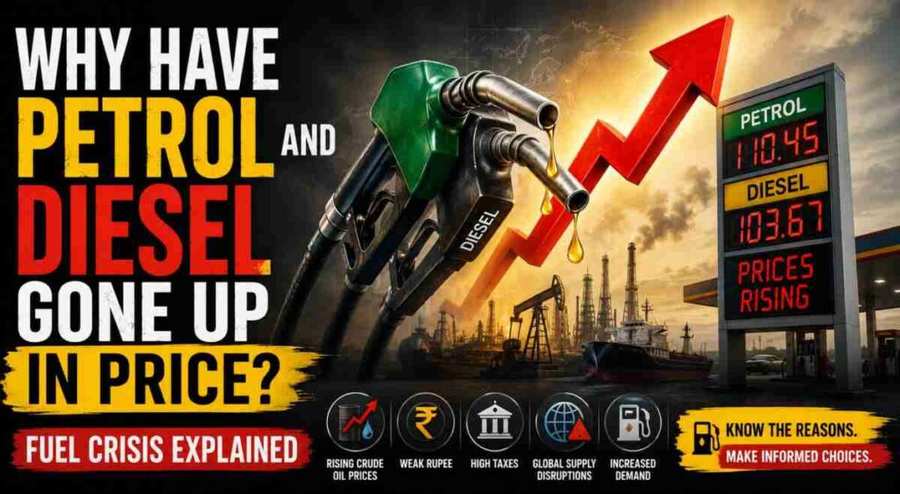
But why exactly does this happen? The mechanics behind fuel pricing are rarely as straightforward as local filling stations simply wanting to charge more. Instead, a complex mix of international geopolitics, corporate safety nets, currency dynamics, and domestic tax structures dictates what you pay at the pump. This comprehensive guide breaks down the hidden forces driving up the cost of petrol and diesel, pulling back the curtain on global oil markets and local economic policies to give you a clear, unvarnished look at why filling your tank has become so expensive.
What is the Underlying Mechanism of Fuel Pricing?
Simple Explanation
To understand why petrol and diesel prices rise, it helps to view fuel as a highly processed commodity with a global supply chain. At its core, the fuel running your car starts as crude oil—unrefined petroleum buried deep beneath the earth’s surface. Oil marketing companies (OMCs) or refiners buy this crude oil in massive quantities on the international market, transport it via tankers, and process it in domestic refineries to produce petrol, diesel, aviation turbine fuel, and other petroleum products.
The final price you see at the pump is determined by adding the cost of this raw crude oil, the expenses incurred during refining and distribution, the profit margins of oil marketing companies, the commissions paid to gas station pump operators, and a substantial layer of domestic taxes imposed by both federal and state governments. Because crude oil represents the single largest variable cost in this equation, any shift in global oil dynamics instantly impacts local pump prices.
Why It Matters Now
The global energy architecture is experiencing a profound period of volatility. While previous decades saw predictable cycles of supply and demand, the modern energy landscape is deeply vulnerable to rapid-fire disruptions. Economies are expanding, vehicle ownership is hitting record numbers, and the industrial demand for diesel—the literal fuel of global commerce—remains incredibly high.
When a commodity as vital as oil faces structural supply shocks, the financial consequences are immediate. Understanding these pricing mechanisms is no longer just for economists; it is essential financial literacy for anyone trying to navigate an increasingly inflationary world.
Key Features / Highlights of the Current Surge
Geopolitical Instability and Core Chokepoints
The single largest catalyst behind recent spikes in petrol and diesel costs is geopolitical conflict in key oil-producing regions, specifically West Asia. Armed conflicts, military interventions, and retaliatory strikes involving major regional powers instantly inject fear into global commodity markets.
The primary pain point is the vulnerability of critical maritime trade routes, most notably the Strait of Hormuz. This narrow waterway handles nearly one-fifth of the world’s total oil and gas supplies. When tensions rise and the strait faces threats of closure or severe shipping blockages, the global supply of oil shrinks overnight, driving up international crude benchmarks like Brent crude beyond the $100-to-$120 per barrel mark.
[Global Geopolitical Tensions]
       │
       ▼
[Disruption at Strait of Hormuz] ──► [Over 14M Barrels/Day Removed]
       │
       ▼
[Brent Crude Surges past $100+] ──► [Refiners Pay Higher Spot Prices]
       │
       ▼
[Domestic Retail Price Hikes]
Supply Deficits and OPEC+ Production Caps
The basic laws of economics state that when demand remains steady or grows while supply shrinks, prices go up. Global oil output from key regions has faced sudden drops, sometimes falling by over 14 million barrels per day below baseline expectations due to active conflicts and infrastructure damage.
Compounding this raw physical deficit is the strategic behavior of OPEC+ (the Organization of the Petroleum Exporting Countries and its allies). Rather than flooding the market with excess oil to cool down prices, producing nations often enforce strict production limits to maintain their own fiscal revenues, leaving importing nations in a tight financial spot.
The Exhaustion of Corporate Buffers
For months at a time, everyday consumers are often insulated from the harsh realities of the international oil market. State-run oil marketing companies frequently freeze retail prices at the pump, absorbing the losses internally to shield citizens from severe inflationary shocks—often coinciding with sensitive political timelines or state elections.
However, this corporate safety net is finite. As global crude oil benchmarks stay elevated for long stretches, refiners completely exhaust their inventories of cheaper oil. When daily operational losses for these firms begin reaching unsustainable heights—sometimes mounting to billions of currency units per day—they have no choice but to break the price freeze and pass the costs along to consumers via calibrated, staggered retail hikes.
Benefits and Realities of Fuel Cost Dynamics
Financial Impact on Corporate and Retail Consumers
While rising prices offer no immediate financial “benefit” to the consumer’s wallet, understanding fuel cost dynamics reveals how money flows through the energy sector. High prices directly improve the top-line revenues and downstream margins of domestic energy exploration and extraction companies. When retail prices are adjusted upward, it stops the financial bleeding of state-backed oil marketing companies, protecting their corporate balance sheets and preserving their ability to invest in future infrastructure.
For the average consumer, however, the financial reality is entirely restrictive: higher costs at the pump leave less disposable income for discretionary spending, acting as a functional tax on basic mobility.
Lifestyle and Business Behavioral Shifts
Persistent increases in petrol and diesel costs serve as a powerful behavioral disruptor. For business owners running logistics, supply chains, or delivery fleets, high fuel prices force a radical push toward operational efficiency. Companies are forced to optimize delivery routes, utilize advanced tracking software to cut idle times, and accelerate the transition toward alternative energy options.
For individual commuters, expensive fuel acts as a lifestyle wake-up call, driving a structural pivot toward public transit, carpooling arrangements, and remote work or hybrid office models to actively avoid the financial sting of daily driving.
Long-Term Value and the Clean Energy Pivot
From a macro perspective, sustained high prices for fossil fuels provide the ultimate economic incentive for the clean energy transition. When petrol and diesel are cheap, there is very little financial urgency for individuals or corporations to invest in alternative technologies.
However, when filling a standard fuel tank becomes a major monthly line-item expense, the return on investment (ROI) for electric vehicles (EVs), hybrid powertrains, and localized solar arrays becomes incredibly attractive. The long-term value of high fuel prices lies in their ability to fast-track the commercial adoption of sustainable transport technologies, ultimately reducing structural reliance on imported oil.
Market Analysis and Import Vulnerabilities
Global Supply Lines and Currency Headwinds
The financial vulnerability of any domestic market to fuel price hikes is directly tied to its level of import dependence. Many major developing economies import more than 80% of their total crude oil requirements. This means domestic pumps are directly plugged into global market volatility.
┌─────────────────────────────────────────────────────────┐
│              THE FUEL IMPORT WALLET HIT                 │
├────────────────────────────┬────────────────────────────┤
│ Crude Price in USD         │ Rises due to supply shock  │
├────────────────────────────┼────────────────────────────┤
│ Local Currency vs USD      │ Depreciating / Weakening   │
├────────────────────────────┼────────────────────────────┤
│ Double-Whammy Effect       │ More weak currency needed  │
│                            │ to buy expensive US dollars│
└────────────────────────────┴────────────────────────────┘
Compounding this physical vulnerability is the critical factor of currency exchange rates. Crude oil is globally traded and priced in United States Dollars (USD). If a domestic currency weakens or depreciates against the greenback at the same time international oil prices are climbing, refiners face a brutal economic double-whammy: they must spend significantly more of their weakened local currency to purchase the strong US dollars required to clear their international oil import bills.
Refining Capacities and Infrastructure Stress
Even if raw crude oil is successfully secured from alternative, non-Gulf suppliers, turning that crude into usable petrol and diesel requires an immense, highly specialized refining infrastructure. Refiners must handle elevated spot-market procurement fees, spiking marine insurance premiums for tankers traveling through high-risk zones, and increased freight charges due to extended maritime routing around global conflict points. These invisible logistical costs add up quickly at every stage of the midstream supply chain, adding massive overhead to the final product before it ever reaches a local delivery truck.
Macroeconomic Strain and Fiscal Deficits
When the international cost of crude oil outpaces domestic economic growth, national budgets face severe strain. Massive capital outflows to pay for energy imports drain valuable foreign exchange reserves and threaten to widen national current account deficits.
To keep the broader economy from stalling under the weight of an energy crisis, governments are forced to make hard choices: either slash domestic fuel taxes and sacrifice critical public revenue used for roads and schools, or allow retail pump prices to climb, running the risk of driving up wider retail inflation across the country.
Economic Implications and Use Cases
Inflationary Pressures and the Supply Chain Multiplier
Diesel is the primary fuel powering the global shipping industry, agricultural tractors, long-haul freight trucks, and commercial cargo trains. Because of this structural reality, an increase in diesel prices behaves like an economic multiplier.
When transport operators face higher operating costs to move goods across the country, those expenses are immediately passed down the commercial ladder. The direct result is a visible rise in wholesale and retail inflation, causing the everyday shelf price of essential fruits, vegetables, construction materials, and consumer goods to head upward.
Corporate Margin Compression and Risk Factors
For businesses that rely heavily on transport networks—such as e-commerce platforms, traditional manufacturing companies, and third-party logistics providers—volatile fuel costs represent a major risk factor. If these companies choose to absorb the higher transport costs to remain competitive, their corporate profit margins are instantly compressed, leading to hiring freezes or reduced capital expenditure.
Conversely, if they pass the entirety of the fuel price hike onto their customer base, they run the risk of depressing overall consumer demand, which can slow down broader economic growth.
Who Bears the Greatest Financial Burden?
The socioeconomic distribution of a fuel price hike is highly uneven. While affluent individuals can absorb higher gas prices without altering their standard of living, the financial burden falls squarely on middle-class commuters, fixed-income families, and daily wage earners like auto-rickshaw drivers and delivery couriers.
For these individuals, a 5% to 10% increase in the price of fuel represents a real, regressive financial strain that directly takes resources away from household health, education, and savings budgets.
Price Structure Comparison: Why Prices Vary
Domestic Breakdown vs. Global Benchmarks
A common source of consumer confusion is why petrol and diesel prices vary so wildly from one region or country to another, even when everyone is buying from the same global pool of crude oil. The answer lies in the domestic tax architecture. In many nations, the actual cost of the refined fuel product accounts for only about half of the total retail price at the pump. The remaining balance is made up of fixed and ad-valorem taxes levied by federal and local authorities.
| Component of Fuel Pricing | Financial Behavior & Characteristics |
| International Crude Base Cost | Volatile; tracks global benchmarks like Brent crude and currency exchange rates. |
| Refining & Logistics Margin | Relates to processing costs, freight rates, and marine insurance premiums. |
| Federal Excise Duty | Typically a fixed tax rate per litre; provides predictable revenue for central government budgets. |
| State Value-Added Tax (VAT) | Variable percentage-based tax; differs significantly by region, state, or municipality. |
| Dealer Commission | Relatively stable, flat fee paid to the local service station owner for operational upkeep. |
Why Local Taxation Drives the Final Pump Price
Because petrol and diesel are often kept outside of uniform national sales tax frameworks, state and local governments retain individual authority to set their own Value-Added Tax (VAT) or sales tax rates on fuel. This explains why driving across a state or provincial border can instantly result in fuel being noticeably cheaper or more expensive.
States with high infrastructure spending or lower alternative revenue streams often levy heavy taxes on fuel, turning the local gas pump into a primary source of public funding, which keeps retail prices stubbornly high even if global markets briefly cool down.
Step-by-Step Guide: How Global Crises Reach Your Local Pump
Step 1: The Upstream Geopolitical Trigger
The journey toward a higher fuel bill always begins far away from your local gas station. A geopolitical event—such as a breakout of military conflict in the Middle East, maritime sabotage along vital shipping lanes, or an unexpected production cut by a major oil cartel—instantly panics global commodity traders.
Fearing future physical shortages, Wall Street and international energy desks begin aggressively bidding up the price of oil futures contracts, causing global benchmark prices like Brent crude to spike in a matter of hours.
Step 2: Midstream Procurement and Refining Reality
As the newly inflated international price becomes the baseline, domestic oil marketing companies must step out into the spot market to purchase their next allocations of crude oil. They pay these higher market rates in US dollars, dealing with elevated freight costs and increased maritime insurance premiums along the way.
The expensive crude oil arrives at domestic ports, is pumped into local refineries, and is processed into petrol and diesel. At this stage, the refiner’s internal cost of production has officially risen, creating a massive financial imbalance if retail prices remain unchanged.
Step 3: Downstream Retail Realization
Once regional elections conclude or corporate financial losses become completely unsustainable, the artificial price controls are removed. The oil marketing companies begin rolling out calibrated, incremental price adjustments to clear their backlogs of daily losses.
The revised pricing structure moves down the distribution line, local state taxes and dealer commissions are calculated on top of the new higher base, and the updated price is digitally pushed out to the display boards at your neighborhood filling station.
[Geopolitical Crisis / Supply Shock]
                 │
                 ▼
[Traders Bid Up Global Brent Crude Futures]
                 │
                 ▼
[Refiners Buy Expensive Oil via Strong USD]
                 │
                 ▼
[Corporate Under-Recoveries Peak (Billions Lost)]
                 │
                 ▼
[Retail Price Freezes Terminated / Lifted]
                 │
                 ▼
[Staggered Hikes Implemented at Local Pumps]
Expert Tips for Navigating High Fuel Costs
- Audit Your Driving Habits with Intentionality: Sudden, aggressive acceleration and heavy braking waste an immense amount of fuel. Maintaining steady speeds and utilizing your vehicle’s cruise control on open highways can instantly boost your overall fuel economy by up to 15%.
- Keep a Strict Eye on Tire Pressures: Driving on under-inflated tires increases rolling resistance, forcing your engine to work harder and burn significantly more fuel just to maintain forward momentum. Check your tire pressure weekly against the manufacturer’s recommendations.
- Streamline and Consolidate Domestic Errands: Avoid taking multiple spontaneous trips throughout the week. Instead, combine your grocery runs, school drop-offs, and administrative errands into a single, well-planned driving loop to minimize cold engine starts and unnecessary mileage.
- Lighten Your Vehicle’s Onboard Load: Take a few minutes to clean out your trunk and backseat. Carrying around unnecessary heavy cargo, old sports gear, or unused roof racks adds aerodynamic drag and dead weight, both of which degrade fuel efficiency over time.
- Leverage Digital Fuel Rewards and Fleet Cards: Take full advantage of loyalty programs, specialized fuel credit cards, and corporate fleet accounts that offer direct cash-back points or co-branded discounts per litre at specified gas station chains.
- Embrace Modern Fuel-Saving Vehicle Settings: If your car is equipped with an “Eco-Mode” or an automatic engine “Start-Stop” feature that shuts down the motor while idling at long traffic lights, keep these settings permanently turned on to maximize your efficiency in urban traffic.
Common Mistakes Consumers Make During Fuel Crises
Topping Up Fuel with Premium Options Unnecessarily
When fuel prices rise, many drivers mistakenly assume that switching to high-priced “premium” or high-octane petrol will somehow magically protect their engine or provide vastly superior fuel mileage to offset the cost. Unless your vehicle’s owner’s manual explicitly states that a high-octane premium fuel is mechanically required for your specific high-performance engine, running standard regular fuel is perfectly safe and will perform exactly the same, saving you immediate money at the pump.
Neglecting Basic Under-the-Hood Vehicle Maintenance
Hoping to save money during an inflationary stretch, some vehicle owners make the counterproductive mistake of delaying routine service appointments. Running a car with clogged engine air filters, worn-out spark plugs, or old, degraded motor oil forces the engine to operate with reduced thermal efficiency, resulting in a noticeable drop in fuel economy that easily wipes out any short-term savings from skipped maintenance.
Idling the Engine for Extended Periods
Leaving your car’s engine running while waiting outside a shop, sitting in heavy stationary gridlock, or picking up family members is an incredibly wasteful habit. Modern fuel-injected engines burn fuel continuously while idling. If you are going to be stationary for more than thirty seconds, it is far more cost-effective to turn the engine completely off.
Future Trends: What Lies Ahead for Energy Markets?
The Normalization of Gradual, Staggered Revisions
Long gone are the days of massive, single-day price adjustments that surprise consumers overnight. Moving deeper into the decade, energy markets and state-backed refiners are permanently adopting a strategy of small, frequent, and calibrated daily or weekly price adjustments. By spreading the financial recovery out over several weeks in increments of 80 to 90 paise per litre, oil marketing companies can slowly repair their balance sheets while actively minimizing widespread public backlash and sudden inflationary shocks to the wider economy.
┌─────────────────────────────────────────────────────────┐
│               FUTURE FUEL PRICING TRENDS                │
├────────────────────────────┬────────────────────────────┤
│ Old Pricing Model          │ Sharp, single-day jumps    │
│                            │ (High public backlash)     │
├────────────────────────────┼────────────────────────────┤
│ Modern Staggered Model     │ Tiny, daily micro-hikes    │
│                            │ (Spreads financial shock)  │
└────────────────────────────┴────────────────────────────┘
Strategic Diversification of National Crude Sourcing
To protect domestic pumps from localized geopolitical blockades like those in the Middle East, importing nations are aggressively re-engineering their trade routes. Governments are moving away from heavy reliance on singular geographic zones, instead building out long-term supply deals with non-Gulf producers, tapping into alternative spot markets, and increasing domestic strategic petroleum reserves to act as a physical buffer during international supply shocks.
Accelerated Fleet Electrification Across Public and Commercial Sectors
As structural volatility keeps fossil fuel prices elevated, the macroeconomic shift toward alternative energy sources will move from a voluntary environmental choice to an absolute economic necessity. Expect to see massive institutional investments in corporate delivery van electrification, a rapid scaling of public electric bus networks, and a steady expansion of highway fast-charging infrastructure as nations look to structurally insulate their transport networks from the whims of international oil markets.
Conclusion
The steady rise of petrol and diesel prices is rarely the fault of a single local entity. Instead, it is the direct financial consequence of a hyper-connected global energy supply chain facing real-world geopolitical pressures. When conflict flares up in critical transit corridors like the Strait of Hormuz, international crude prices respond instantly, leaving import-dependent nations to deal with the economic fallout of expensive oil, weakened currencies, and massive corporate losses.
While you cannot control the price of Brent crude futures or stop regional geopolitical shifts, you are far from powerless. By understanding the structural forces at play, optimizing your personal driving habits, keeping your vehicle running efficiently, and considering alternative transit options, you can actively protect your household budget from the worst effects of global energy shocks. The era of cheap fossil fuels is facing its share of challenges; staying informed and adaptable is your best defense at the pump.
You will see a city built for the next generation. Knowledge Park 5 is not just about real estate. It is about the quality of life you deserve. It represents a smart choice for your family and your finances. Take a drive through the sector and see the progress yourself. You will see a city built for the next generation. Sector 4 Greater Noida, is more than just a destination on a map; it represents the modern Indian dream of affordable luxury and planned growth. Knowing the Sector 4 Greater Noida pin code is just the beginning of your journey. Whether you are moving here for work, family, or investment, the area offers a robust foundation for a high-quality life. With its strategic location, improving infrastructure, and vibrant community, Sector 4 is undoubtedly one of the best places to plant your roots in the NCR.
Frequently Asked Questions
Why do petrol and diesel prices keep changing even when global crude oil briefly stabilizes?
Domestic fuel pricing does not track daily international market shifts in a vacuum. If state-run oil marketing companies spent weeks or months absorbing multi-billion dollar losses during a severe market spike to shield consumers, they will continue to raise retail prices in small, calibrated increments even after global crude oil starts to stabilize. This lag allows refiners to slowly recover their massive financial losses and protect their balance sheets from operational collapse.
Why does the price of petrol and diesel vary so much between different states and cities?
While the base cost of importing and refining crude oil remains uniform across a country, the final retail pump price is highly dependent on local geography. Petrol and diesel are subject to individual state-level Value-Added Taxes (VAT) or local sales levies, which differ significantly by region. Additionally, remote inland cities face higher transport and freight costs to move the refined fuel from coastal ports to local stations, which drives up the local price.
Does Currency exchange play a massive role in Final Oil Prices?
Yes, currency exchange rates play a massive role in final pump prices. Because international crude oil is priced and settled globally in US dollars, any depreciation of your local currency means your domestic refiners must spend significantly more money to buy the same amount of oil. This currency weakness acts as an added import cost, which is eventually passed down directly to everyday consumers through higher retail fuel prices.
Why don’t governments just remove all taxes on petrol and diesel to help the common man?
While slashing fuel taxes provides immediate financial relief to consumers, it creates a massive hole in public finances. Taxes on petrol and diesel represent a primary, highly reliable source of revenue for both central and state governments. This funding is critical for building public infrastructure, running healthcare systems, maintaining national security, and servicing public debt. Removing these taxes entirely would force drastic cuts to vital public services or require significant tax hikes on other essential goods.
Is the current rise in fuel prices going to make regular consumer goods more expensive?
Yes, there is a direct link between fuel costs and everyday retail inflation. Diesel is the primary fuel that powers commercial freight trucks, cargo trains, and agricultural machinery. When the cost of diesel goes up, transportation and logistics companies face immediate increases in their operating overhead. To protect their businesses, they pass these added transport costs down the supply chain, causing the shelf price of groceries, clothes, and consumer goods to rise across the board.