
The Lucknow-Kanpur Expressway is nearing its launch. Check the latest timeline, detailed route map, toll charges, and real estate impact
If you have ever attempted to drive between Lucknow and Kanpur during peak hours, you already know the story. It is a grueling, unpredictable exercise in patience. You start with high hopes on National Highway 27 (NH-27), only to find yourself trapped in an endless sea of brake lights near Unnao or navigating heavy freight trucks crawling through city bottlenecks. A journey of less than 100 kilometers routinely steals two to three hours of your day, leaving you exhausted before your business meeting or family gathering even begins.
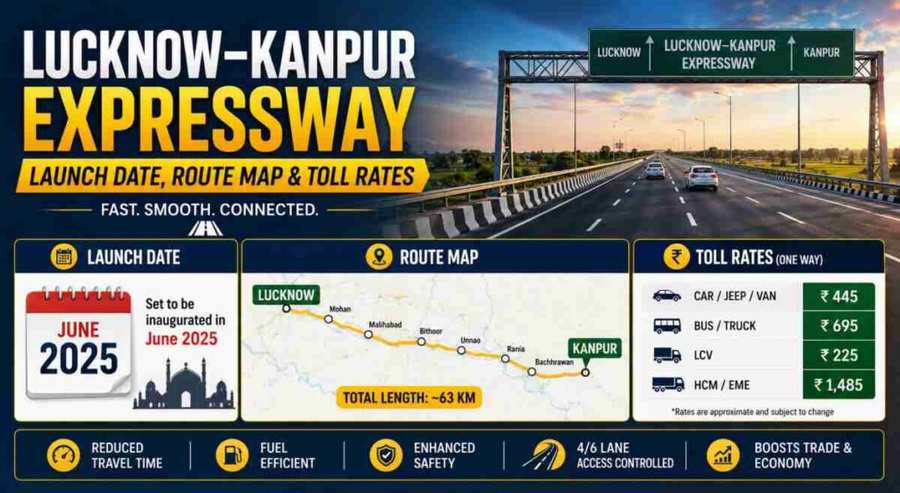
But that exhausting routine is on the absolute verge of history. Following the milestone rollout of the Delhi-Dehradun Expressway, the National Highways Authority of India (NHAI) is putting the final touches on its next crown jewel: the Lucknow-Kanpur Expressway, officially designated as National Expressway 6 (NE-6).
This 63-kilometer, six-lane engineering marvel is not just a strip of blacktop; it is a high-speed economic corridor that will slash commuting times down to an unbelievable 35 to 45 minutes. Whether you are an investor looking for the next big real estate boom, a business owner moving freight, or a daily commuter tired of the highway grind, this infrastructure update changes everything. Here is an insider look at the timeline, route maps, costs, and the transformative impact of the soon-to-be-launched expressway.
What is the Lucknow-Kanpur Expressway?
Simple Explanation
The Lucknow-Kanpur Expressway is a 63-kilometer-long, six-lane wide (easily expandable to eight lanes) access-controlled highway. Unlike traditional highways that merge seamlessly with local city traffic and feature frequent intersections, an access-controlled expressway is completely fenced off. Entry and exit points are strictly regulated via engineered interchanges.
This layout ensures that long-distance travelers and commercial freight can maintain high speeds without worrying about local traffic cross-overs, tractors, or unexpected pedestrian crossings. Developed by the NHAI under an Engineering, Procurement, and Construction (EPC) model, the project represents an investment of approximately ₹4,700 crore.
Why It Matters in 2026+
As we move through 2026, Uttar Pradesh is undergoing a massive infrastructural shift. The state is no longer relying on slow, legacy arterial roads to power its economy. The Lucknow-Kanpur Expressway creates a hyper-efficient connection between the political capital (Lucknow) and the industrial hub (Kanpur).
By shrinking the physical and psychological distance between these twin cities, NE-6 effectively merges them into a singular, powerhouse economic zone. It serves as a blueprint for how modern Indian transit infrastructure can stimulate regional gross domestic product (GDP) by unlocking frozen land values and optimizing logistics.
Key Features & Technical Highlights
+------------------------------------+-------------------------------------------+
| Feature                            | Technical Specification                   |
+------------------------------------+-------------------------------------------+
| Official Designation               | National Expressway 6 (NE-6) / Awadh Exp  |
| Total Length                       | 62.764 Kilometers                         |
| Number of Lanes                    | 6 Lanes (Expandable up to 8 lanes)        |
| Design Speed Limit                 | 120 km/hr                                 |
| Total Project Cost                 | Approx. ₹4,700 Crore                      |
| Key Structural Components          | 18 km Elevated Route | 45 km Greenfield   |
+------------------------------------+-------------------------------------------+
The Twin-Package Design
The project was split into two distinct engineering packages to accelerate development and ensure specialized focus on urban versus rural terrain:
- Package 1 (Urban Elevated Stretch): Spanning roughly 18 kilometers from Amausi Airport in Lucknow to Bani. This segment is highly sophisticated, featuring significant elevated sections designed to bypass the densely populated, traffic-heavy suburban zones of southern Lucknow.
- Package 2 (Greenfield Stretch): Covering approximately 45 kilometers from Bani to Azad Chauraha near the Ganga Bridge in Kanpur. This section slices through previously undeveloped agricultural land, providing a clean, unencumbered path built entirely from scratch.
Advanced Construction Methodology
A standout feature of this project is the deployment of Automated Intelligence Machine Guided Construction (AIMGC) systems. By using 3D modeling, GPS tracking, and automated grading sensors on construction equipment, the contractors (PNC Infratech) achieved unparalleled precision in pavement smoothness and structural alignment. This technology translates directly into safer driving dynamics, better fuel efficiency for vehicles, and a much longer lifespan for the top wear-course of the road.
Smart Traffic Management and Tolling
Say goodbye to long, idling queues at traditional toll booths. The Lucknow-Kanpur Expressway introduces a fully automated, barrier-free digital tolling ecosystem. High-speed cameras and overhead sensors instantly read your vehicle’s FASTag without requiring a complete stop. Additionally, automated incident detection systems (AIDS) along the route monitor traffic flow in real-time, instantly flagging breakdowns or accidents to the central command center to deploy immediate assistance.
Benefits of the Lucknow-Kanpur Expressway
Financial Benefits & Logistics Savings
For businesses moving raw materials or finished goods between Kanpur’s manufacturing units and Lucknow’s distribution networks, time is money. Dropping the transit window by nearly two hours translates to dramatic reductions in fuel consumption and vehicle wear-and-tear. Trucking fleets can now complete multiple round-trips in a single day instead of just one, effectively doubling logistics productivity and slashing supply chain operational costs.
Lifestyle & Daily Commuting Upgrades
For the thousands of professionals, professors, medical experts, and tech workers who live in one city but work in the other, daily travel via the old NH-27 was an absolute dealbreaker. The sheer physical exhaustion of a 3-hour commute made it unsustainable. With the new expressway offering a predictable, smooth 35-to-45-minute sprint, long-distance daily commuting becomes an entirely realistic lifestyle choice. It opens up a massive talent pool for employers in both cities.
Long-Term Socio-Economic Value
By drawing heavy commercial trucks and long-distance travelers off the older city routes, the inner-city roads of Lucknow, Unnao, and Kanpur will experience a dramatic drop in traffic congestion. This results in reduced localized air pollution, quieter urban neighborhoods, and far fewer minor accidents on local streets. It improves the holistic quality of life for millions of residents who live along the old highway corridor.
Location & Market Analysis
       [ LUCKNOW (Shaheed Path) ]
                   |
           (Amausi Airport)  <-- Package 1 (18 km Elevated)
                   |
                [ BANI ]
                   |
               (Nawabganj)   <-- Package 2 (45 km Greenfield)
                   |
                [ UNNAO ]
                   |
        [ KANPUR (Azad Chauraha) ]
Strategic Multi-Expressway Interconnectivity
The true genius of the Lucknow-Kanpur Expressway lies in how it links with the rest of India’s rapidly growing highway grid. It is designed to act as a crucial tri-junction corridor connecting:
- The Ganga Expressway: The massive 594-km corridor linking Meerut to Prayagraj.
- The Lucknow Outer Ring Road: Allowing seamless bypass options to eastern and northern UP without entering Lucknow city.
- The Ghaziabad-Kanpur Expressway: Providing a direct, high-speed freight pipeline back to the National Capital Region (NCR).
Regional Infrastructure Growth
Areas flanking the expressway—especially around Nawabganj, Banthara, and the outskirts of Unnao—are transforming from sleepy rural tracts into prime institutional and logistics pockets. The Uttar Pradesh government is actively planning industrial manufacturing clusters, warehousing parks, and mega-townships along these exit ramps, maximizing the utility of the newly accessible land.
Future Real Estate Potential
The real estate market along the corridor is already reacting sharply. Historically, land values outside Lucknow’s Amausi zone or Kanpur’s Trans Ganga City grew at a modest, linear pace. However, with the physical completion of the expressway, developers are snapping up land parcels for integrated residential townships, commercial complexes, and private educational institutions. Industry experts project a steady 15% to 20% year-on-year appreciation in land values around major expressway interchanges over the next three to five years.
Investment Potential & Practical Use Cases
High-Yield ROI Opportunities
If you are an investor looking for tangible asset growth, the sweet spot lies in commercial warehousing and suburban residential plots near the Unnao-Lalganj intersection and Banthara. As Kanpur’s traditional industrial sectors expand and modernize, demand for smart, accessible logistics hubs with immediate expressway access will skyrocket. Early investors who purchase land parcels or commercial plots along the designated service roads stand to make substantial gains as tenant demand peaks.
Risk Factors to Honestly Consider
While the upside is undeniable, any seasoned investor must look at the risks realistically:
- Localized Speculative Bubbles: Some micro-markets have seen a sudden surge in asking prices driven purely by speculative hype. Always ensure you are not buying at an artificially inflated peak.
- Zoning and Master Plan Compliance: Before investing in land along the corridor, verify that the plot falls under the correct development zone (commercial, industrial, or residential) as per the regional development authority’s master plan.
- Toll Costs for Daily Users: As highlighted below, the toll structure on NE-6 is premium. If your business model relies on low-cost, high-frequency short trips, calculate your toll overhead beforehand.
Who Should Buy and Invest?
- Logistics & E-commerce Operators: Companies looking to set up regional distribution hubs to service both central and eastern Uttar Pradesh simultaneously.
- Long-Term Residential Land Buyers: Families looking for affordable housing plots within integrated townships that sit 30 minutes away from major employment hubs.
- Commercial Developers: Builders specializing in highway retail plazas, fuel stations, restaurants, and transit amenities.
Head-to-Head Comparison: Choosing Your Route
When traveling between these two cities, you have three primary choices. Here is a definitive breakdown of how they stack up against each other:
+--------------------------+---------------------+-------------------+---------------------+
| Metric                   | New NE-6 Expressway | Old NH-27 Route   | Inter-city Rail     |
+--------------------------+---------------------+-------------------+---------------------+
| Total Distance           | 63 km               | 94 km             | Approx. 72 km       |
| Average Travel Time      | 35–45 minutes       | 2.5–3 hours       | 1–1.5 hours         |
| Permitted Speed Limit    | 120 km/hr           | 60–80 km/hr       | N/A                 |
| Congestion Level         | Zero (Access Ctrl)  | Extremely High    | Fixed Schedule      |
| Base Car Toll (One Way)  | ₹275                | ₹95               | N/A                 |
+--------------------------+---------------------+-------------------+---------------------+
H3: Why the New Expressway Stands Out
While the old NH-27 remains a viable option for local drivers who want to avoid paying a premium toll, it simply cannot compete on efficiency. The new expressway trims nearly 31 kilometers off the driving distance by abandoning legacy, winding historical alignments in favor of a crisp, straight greenfield path. More importantly, the complete isolation from local village traffic means your travel times remain highly predictable, regardless of the time of day or night.
Step-by-Step Guide for First-Time Commuters
Navigating the new access-controlled system requires a minor shift in driving habits. Follow this step-by-step checklist for a flawless, stress-free trip:
Step 1: Pre-Trip Vehicle and FASTag Audit
Before you rev up your engine, ensure your vehicle is mechanically sound for high-speed cruising. Check your tire pressure carefully; running under-inflated tires at sustained speeds of 120 km/hr is a major safety hazard. Crucially, log into your banking app and check your FASTag account balance. Because the toll rates on this premium corridor are higher than normal highways, an insufficient balance will result in delays at the automated entry ramp.
Step 2: Entering via Designated Interchanges
You cannot simply pull onto the expressway from any local side street.
- From Lucknow: Head toward southern Lucknow and access the entry ramp located at Shaheed Path near Amausi Airport.
- From Kanpur: Make your way toward Azad Chauraha near the Ganga Bridge to enter the main expressway alignment. Keep your vehicle positioned in the dedicated smart lanes to allow the overhead sensors to log your entry tag seamlessly.
Step 3: Cruising Safely and Selecting Exits
Once you are on the smooth concrete lanes, maintain a steady pace within the 120 km/hr speed ceiling. Stick to lane driving principles—use the extreme right lane strictly for overtaking slower vehicles, and cruise comfortably in the middle or left lanes. Keep an eye on the digital signage overhead. If your destination is an intermediate hub like Unnao or Nawabganj, position yourself into the left lane well in advance to exit via the engineered loop ramps safely.
Expert Tips for Driving on High-Speed Corridors
To make the most of your journey and ensure total safety, keep these seasoned insider tips in mind:
- Avoid Highway Hypnosis: The straight, uninterrupted nature of greenfield expressways can cause a state of mental trance known as highway hypnosis. Keep your mind engaged by adjusting the climate control or listening to engaging audiobooks.
- Maintain Safe Following Distances: At 120 km/hr, your stopping distance increases exponentially. Use the “3-second rule” to keep a safe buffer zone between you and the vehicle directly ahead.
- Respect the Speed Ceiling: The expressway is equipped with automated speed-traps and radar guns. Exceeding the 120 km/hr limit will trigger an immediate digital challan sent straight to your phone.
- Keep Left Except to Overtake: Heavy commercial trucks are legally restricted to the slower left lanes. Never hog the extreme right lane; use it exclusively for quick overtaking maneuvers, then safely merge back left.
- Utilize the Official Wayside Amenities: If you feel fatigued, do not park on the expressway shoulder, which is extremely dangerous. Pull into the officially designated wayside amenity zones to stretch your legs, use clean restrooms, and grab a coffee.
Common Pitfalls & Mistakes to Avoid
- Driving with Under-Inflated or Old Tires: Sustained high-speed driving generates extreme heat within a tire’s sidewall. Driving on worn-out structural threads or improper pressures drastically elevates the risk of a high-speed tire blowout.
- Missing Your Intended Exit Ramp: Because entry and exit points are spaced far apart, missing your designated interchange loop means you will have to drive several kilometers down to the next turning point before you can double back, costing you extra time and toll fees.
- Stopping on the Main Carriageway: Stopping your car on the active driving lanes or shoulder for casual photography or to check a map is strictly prohibited and carries severe safety risks. Always pull out completely into designated rest zones.
- Tailgating Large Commercial Fleet Vehicles: Freight trucks have massive blind spots along their rear corners. If you follow them too closely, the truck driver cannot see you in their side mirrors, creating an incredibly hazardous situation if they brake suddenly.
Future Horizons: Expected Trends (2026–2030)
Looking ahead toward the end of the decade, the Lucknow-Kanpur economic axis will experience profound structural changes:
- The Rise of Electric Vehicle (EV) Transit: The expressway is being designed with the future in mind. Official rest stops are slated to feature high-output DC fast-charging stations, making inter-city EV commuting completely seamless and free of range anxiety.
- The Emergence of a Unified Mega-City Economy: As commuting times remain consistently under 45 minutes, the boundary separating the twin cities will blur. We will see people living in the green, open residential spaces of Unnao while maintaining corporate offices in Lucknow and owning factories in Kanpur.
- Advanced Drone Logistics corridors: Government agencies are studying the feasibility of creating designated drone flying paths along the expressway’s green buffers, allowing automated medical and high-value e-commerce deliveries to zip between the twin cities in minutes.
Conclusion
The imminent launch of the Lucknow-Kanpur Expressway marks a watershed moment for Uttar Pradesh’s infrastructure journey. By taking an erratic, stress-inducing 3-hour journey and compressing it into a reliable, smooth 35-to-45-minute drive, this corridor does more than just move cars faster—it connects lives, opens up lucrative real estate markets, and provides a massive shot of adrenaline to regional commerce.
While the premium toll structure might require a bit of budgeting for frequent travelers, the sheer quantum of time saved, safety gained, and peace of mind achieved makes it a phenomenal bargain. As the final regulatory clearances wrap up and the grand opening nears, it is time to plan your route, secure your investments, and get ready to experience a whole new era of high-speed travel.
You will see a city built for the next generation. Knowledge Park 5 is not just about real estate. It is about the quality of life you deserve. It represents a smart choice for your family and your finances. Take a drive through the sector and see the progress yourself. You will see a city built for the next generation. Sector 4 Greater Noida, is more than just a destination on a map; it represents the modern Indian dream of affordable luxury and planned growth. Knowing the Sector 4 Greater Noida pin code is just the beginning of your journey. Whether you are moving here for work, family, or investment, the area offers a robust foundation for a high-quality life. With its strategic location, improving infrastructure, and vibrant community, Sector 4 is undoubtedly one of the best places to plant your roots in the NCR.
Ready to build your legacy? Don’t just look at the price tag today; look at the potential of the neighborhood tomorrow. The best time to buy was twenty years ago; the second best time is today—but only if you know the numbers.
Frequently Asked Questions
When is the official launch date for the Lucknow-Kanpur Expressway?
The Lucknow-Kanpur Expressway is currently in its final operational wrap-up and cosmetic stages. Prime Minister Narendra Modi is highly anticipated to officially inaugurate this landmark infrastructure project later this month, with the current target set for May 24, 2026. The expressway will open up for public commuters immediately following the formal inauguration ceremony.
What is the exact route map and total length of the expressway?
Officially named National Expressway 6 (NE-6), the corridor spans exactly 62.764 kilometers. The route originates at Shaheed Path near the Amausi Airport in southern Lucknow. It then runs completely parallel to the older NH-27 highway stretch, cutting clean through the Unnao region before concluding near Azad Chauraha at the Ganga Bridge in Kanpur.
What are the approved toll rates for the new Lucknow-Kanpur Expressway?
The National Highways Authority of India (NHAI) has finalized the official toll rates. For standard private cars, a one-way trip is pegged at ₹275, while a return pass valid for 24 hours costs ₹415. For commercial operators, Light Commercial Vehicles will be charged ₹445 one-way, while heavy buses and multi-axle freight trucks face a one-way toll of ₹935.
How much time will travelers save by using the new expressway?
Currently, navigating the 94-kilometer distance across the congested, older NH-27 highway takes anywhere between 2 to 3 hours due to heavy urban bottlenecks. Because the new access-controlled expressway boasts a designated design speed limit of 120 km/hr, commuters can complete the entire trip between Lucknow and Kanpur in just 35 to 45 minutes, saving nearly two hours.
How does the project impact local real estate and property values?
The physical completion of NE-6 is a massive catalyst for local property markets. Suburban areas situated along the expressway interchanges—especially throughout Banthara, Nawabganj, and the peripheral boundaries of Unnao—are seeing a sharp real estate surge. Industry experts project a highly stable 15% to 20% annual capital appreciation for commercial warehousing and township plots over the coming years.