
In an era dominated by hyper-accelerated feeds and fifteen-second digital assets, a single clip can rewrite reality before the truth even has a chance to log in. This phenomenon played out vividly on social media during Indian Prime Minister Narendra Modi’s official diplomatic tour through Northern Europe.
A video captured a brief, friction-filled moment inside a stately briefing room in Oslo. In it, a local commentator shouted an adversarial question at the Indian leader as he transitioned away from the podium. Within minutes, the snippet exploded across global networks. It was instantly cataloged by algorithms as a definitive, high-stakes showdown.
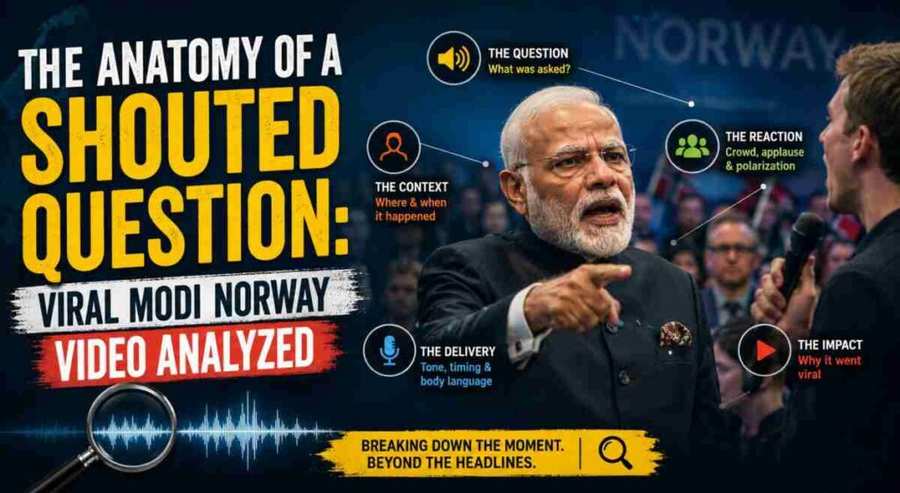
However, as the digital dust settles, a growing wave of independent creators and structural analysts are stepping forward to expose a completely different layer to the story. This deep-dive exploration goes past the immediate political theater to dissect the mechanics of modern information ecosystems. By examining the stark boundaries between structured diplomatic protocol and performative digital journalism, we can uncover how context is routinely sacrificed for engagement, and learn how everyday media consumers can develop the critical shields required to navigate an increasingly deceptive landscape.
What is Media Literacy in Journalism?
Simple Explanation
At its absolute core, media literacy in journalism is the practical ability to analyze, evaluate, and unpack media messages rather than absorbing them passively. It is the mental discipline to look at a compelling video clip and ask: What happened five minutes before the camera started rolling? What happened ten minutes after it cut to black? Who benefits from this specific frame? It requires moving past raw emotional reactions to examine the underlying mechanics of how a story is assembled and distributed.
Why It Matters in 2026+
As we advance through 2026, the global media landscape has decentralized to a staggering degree. The traditional gatekeepers of information have been largely replaced by distributed algorithms that aggressively prioritize emotional friction over objective nuance.
In this environment, a lack of deep structural understanding makes audiences highly vulnerable to sophisticated confirmation bias campaigns. When complex geopolitical encounters are compressed into short vertical video assets, understanding the raw context is no longer just an academic exercise—it is an essential line of defense for digital citizenship.
Key Features of the Viral Norway Narrative
The Fragmented Clip
The primary catalyst for the controversy was a tightly cropped video featuring Prime Minister Narendra Modi alongside Norwegian Prime Minister Jonas Gahr Støre. As the formal session concluded and both leaders moved away from their respective podiums, a voice broke through the ambient room noise, demanding to know why the leader would not take questions from “the freest press in the world.” The video cuts away almost immediately after, creating an intentional narrative vacuum that frames the departure as a sudden, panicked evasion.
The Omission of Diplomatic Protocol
The core vulnerability of the viral narrative lies in what the lens deliberately left out. The event was not arranged as an open, Q&A-style press conference. Instead, it was organized under a strict, universally recognized diplomatic format: a joint press statement. Under this long-standing global protocol, heads of state stand side-by-side to deliver pre-coordinated, formal declarations for the record. They do not field unscripted, spontaneous queries from the floor while exiting the stage.
The Equal Stance of Both Leaders
An essential piece of context highlighted by subsequent analytical videos is that Norwegian Prime Minister Jonas Gahr Støre adhered to the exact same behavioral protocol. He did not engage with the unscripted interjections or field impromptu questions from the floor during that joint session. By evaluating the scene through an even lens, it becomes clear that both leaders were executing standard state decorum rather than staging an individualized, defensive retreat.
Benefits of Deconstructing the Viral Narrative
Financial Benefits
For media institutions, content creators, and corporate communications teams, mastering this level of structural analysis yields direct financial dividends. Outlets that invest heavily in publishing unverified, hyper-reactive content face severe reputational damage, subscriber churn, and costly legal liabilities when narratives collapse under scrutiny. Conversely, platforms that establish a reputation for bulletproof, context-driven verification build long-term subscriber loyalty and command premium, brand-safe advertising revenue.
Lifestyle and Business Benefits
On an individual and operational level, developing a robust framework for verification eliminates the exhausting mental fatigue associated with the daily outrage cycle. Businesses can avoid making critical operational errors or public relations missteps driven by volatile, half-true social trends. For everyday professionals, it translates into a cleaner, highly optimized information diet that preserves cognitive energy for productive, real-world tasks.
Long-Term Value
The permanent benefit of breaking down these high-profile media flashpoints is the gradual cultivation of a resilient public discourse. When an audience collectively refuses to reward performative, context-stripped snippets with viral engagement, the economic incentive for producing deceptive media drops precipitously. This shift fundamentally elevates the baseline quality of global journalism over time.
Market and Ecosystem Analysis
Digital Infrastructure Traffic Flows
The velocity at which the Oslo clip migrated across global networks highlights the hyper-efficient architecture of modern content delivery systems. When an asset contains high-contrast political imagery combined with emotional audio, platforms rapidly elevate its distribution metrics. This automatic prioritization occurs entirely independent of factual accuracy or contextual integrity, turning structural nuances into invisible casualties of optimization.
[Local Event in Oslo]
       │
       ▼
[Context-Stripped Video Clip]
       │
       ▼
[Algorithmic Optimization Engine] ───► High Visibility / Rapid Spread
       │
       ▼
[Polarized Audience Reaction]
The Rise of the Creator Economists
A powerful counter-weight within this ecosystem is the emergence of analytical creators who specialize in forensic media deconstruction. Equipped with screen-recording tools, official state archives, and multi-angle broadcast feeds, these digital-native investigators are progressively filling the verification vacuum left behind by fast-paced legacy newsrooms. They provide the vital historical and institutional context needed to stabilize volatile online narratives.
Future Audience Dynamics
As digital consumers grow increasingly fatigued by relentless, performative confrontation masquerading as accountability, a significant market shift is underway. Audiences are actively migrating toward long-form, slower, and radically transparent content formats. The growing demand for raw, unedited press feeds and meticulous, step-by-step fact-checking signals a profound systemic pushback against the era of the isolated snippet.
Use Cases and Structural Mechanics
The Secondary Briefing Reality
The most compelling evidence of narrative manipulation in this case is found in the events that transpired later that same evening. The Indian Ministry of External Affairs explicitly invited the very commentator who shouted the question to an official, structured press briefing at a local hotel.
During this separate event, she was handed an active microphone and granted the floor to deliver a multi-part series of highly critical questions regarding human rights and democratic institutions. This subsequent interaction completely dismantles the viral claim that critical voices were universally silenced or denied access during the state visit.
The Risk of Performative Confrontation
When the act of asking a question transforms into a performative spectacle designed primarily to generate personal visibility or social media engagement, the fundamental mission of journalism is compromised. The core objective shifts entirely from extracting clear, meaningful policy answers to producing a dramatic, high-contrast visual asset. This practice actively damages public trust and reduces complex institutional scrutiny to basic online entertainment.
Who Needs Accurate Framing
This structural distinction matters immensely to policy analysts, international relations professionals, and engaged citizens alike. Relying on distorted, context-stripped depictions of international state visits can lead to fundamentally flawed assessments of bilateral ties, trade negotiations, and global diplomatic health.
Comparison Section
Joint Press Statements vs. Formal Press Conferences
Understanding the operational differences between distinct media environments is the foundational cornerstone of professional media literacy.
| Attribute | Joint Press Statement | Formal Press Conference |
| Primary Objective | Delivering coordinated, historic state positions for the official record. | Open, interactive cross-examination of a public figure. |
| Operational Format | Rigid, timed, sequential readings from a prepared podium. | Dynamic, unscripted Q&A session driven by the floor. |
| Question Protocol | Expressly prohibited unless mutually agreed upon in advance by both state delegations. | Active, open, and expected throughout the scheduled window. |
| Exit Etiquette | Immediate departure of both heads of state upon reading final statements. | Structured wrap-up by a moderator or press secretary. |
Why the Distinction Stands Out
Conflating these two entirely different formats creates an unfair and highly distorted baseline for evaluation. Labeling a leader’s adherence to standard, mutually agreed-upon diplomatic decorum during a joint statement as a calculated “escape” is an explicit distortion of international statecraft. It applies an inappropriate operational standard to a highly specialized environment.
Step-by-Step Guide to Verifying a Viral Video
Step 1: Establish the Raw Structural Format
Before absorbing the emotional content of a viral video, identify the precise setting and official nature of the event. Determine if you are looking at a structured state declaration, a corporate media junket, or an open town hall, as each venue operates under completely different communication rules.
Step 2: Audit the Full, Unedited Timeline
Locate the comprehensive broadcast feed of the gathering through official government archives or neutral international distribution agencies. Examine the minutes leading up to and immediately following the viral clip to see if the behavior of everyone in the room aligns with standard event protocols.
Step 3: Check for Secondary Access Windows
Investigate whether structured channels for media interaction, such as subsequent departmental briefings or scheduled follow-up press conferences, were provided to journalists later in the day to handle deeper, unscripted questioning.
Expert Tips for Developing Media Literacy
- Look for the Uncut Feed: Whenever a brief, highly dramatic video clip dominates your feed, make a conscious effort to seek out the unedited, long-form video of the entire event to verify the exact context.
- Evaluate All Active Parties: Observe if other individuals in the frame—such as host-nation leaders, moderators, or security personnel—are exhibiting the exact same behavioral patterns, indicating an adherence to general protocol.
- Identify the Original Source: Trace the digital asset back to its earliest upload to determine if the poster is an objective news gathering agency, a political action group, or an independent creator seeking visibility.
- Separate the Style From the Substance: Dissect whether a reporter’s actions are designed to extract clear, actionable information or to produce a high-impact, performative asset for personal social channels.
- Monitor Post-Event Adjustments: Follow up on the story 24 to 48 hours later to examine official clarifications, subsequent briefings, and statements from all involved parties once the initial emotional wave has passed.
Common Mistakes to Avoid
The Single-Source Trap: Relying entirely on a single, isolated social media post or an algorithmically served video snippet to form a definitive conclusion about complex international diplomacy.
- Confusing Protocol with Panicking: Automatically interpreting a public figure’s adherence to a rigid, pre-arranged exit schedule as a defensive attempt to dodge accountability.
- Ignoring Follow-Up Sessions: Failing to account for subsequent, structured media briefings where journalists are actually given the floor and an active microphone to ask their questions.
- Succumbing to Confirmation Bias: Instantly sharing and amplifying a context-stripped asset simply because it mirrors your pre-existing political views or personal perspectives on a leader.
Future Trends in Digital Information (2026–2030)
Between 2026 and 2030, the battle over contextual integrity will intensify dramatically. As AI-driven compilation tools make it effortless to slice, re-sequence, and re-frame video clips with absolute visual seamlessness, traditional visual evidence will become increasingly unreliable on its own.
To counter this, the digital landscape will likely see the widespread implementation of cryptographic, blockchain-backed provenance metadata directly embedded into official broadcast feeds. This technology will allow viewers to instantly verify the complete, unedited origin of any snippet. Consequently, the value of raw, unaltered primary sources will skyrocket, forcing an eventual regulatory and cultural shift back toward institutional transparency and robust media literacy frameworks.
Conclusion
The viral incident in Oslo serves as a powerful case study for the hidden mechanics of modern digital media. What began as a simplistic online narrative about a leader avoiding accountability reveals itself, upon closer inspection, to be a standard execution of global diplomatic protocol. The commentator in question was not shut out of the process; she was explicitly invited to an open briefing later that evening where she was given ample space to pose her deep, multi-part questions directly to government representatives.
True journalistic accountability does not rely on performative, context-stripped interruptions designed for algorithmic engagement. It thrives on the disciplined, rigorous work of structured cross-examination. As media consumers, our responsibility is to resist the immediate pull of the curated snippet, demand the full context, and approach the digital landscape with sharp, analytical lenses.
Frequently Asked Questions
What is the main difference between a press statement and a press conference?
A joint press statement is a highly rigid, pre-coordinated diplomatic session where heads of state read formal declarations for the record without taking spontaneous questions. A press conference is an open, interactive media event specifically designed for unscripted Q&A sessions with the press.
Did the Prime Minister of Norway take questions during the viral joint session?
No, Norwegian Prime Minister Jonas Gahr Støre adhered to the exact same diplomatic protocol during the joint statement. He did not engage with unscripted interjections or take spontaneous questions from the floor during that specific event, as it was structured solely for formal statements.
Was the journalist who shouted the question banned from asking questions later?
No, she was explicitly invited by the Indian embassy to an official, structured press briefing later that evening. At that event, she was given a microphone, granted the floor, and allowed to ask multiple detailed questions regarding human rights and democratic institutions.
Why do brief video clips often leave out crucial context?
Short digital video formats are heavily optimized by online algorithms for emotional impact and rapid engagement. Stripping out the surrounding structural context, prior events, and formal protocols makes a scene appear far more dramatic, driving higher visibility, comments, and shares across social media networks.
How can I protect myself from being misled by viral media snippets?
Always seek out the long-form, unedited broadcast of the event to verify the exact structural setting. Check the surrounding timeline, observe if other leaders in the room are following the same protocol, and look for subsequent official updates before forming a definitive conclusion.