
Imagine waking up at 5:30 AM, stepping out onto your balcony for a breath of fresh air, and feeling like you just opened a preheated oven. That is exactly what millions of residents across Delhi, Noida, Ghaziabad, and Gurugram are experiencing right now. The heat isn’t just arriving in the afternoon anymore; it is refusing to leave, even under the cover of night.
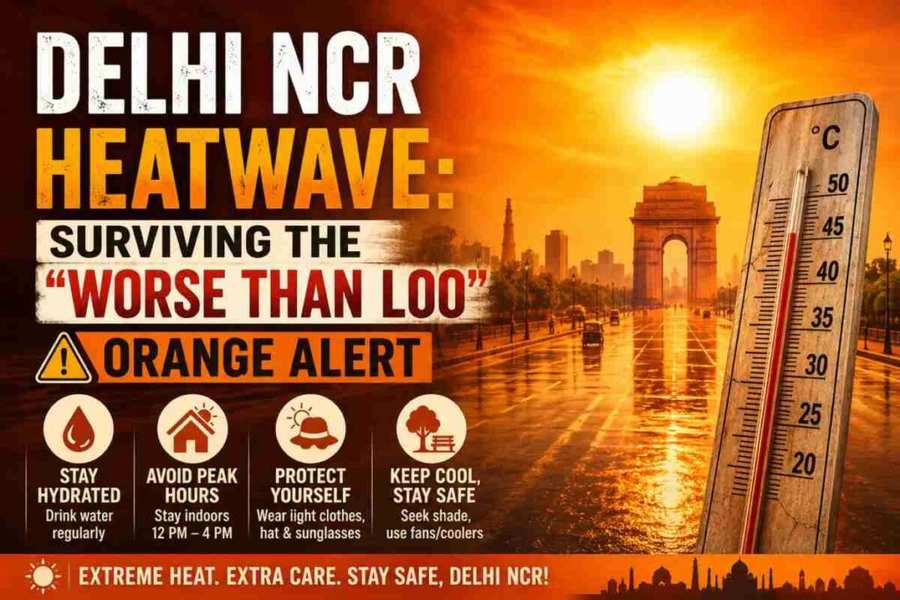
The India Meteorological Department (IMD) has issued a severe orange alert for the entire National Capital Region (NCR), warning that daytime temperatures are set to breach a staggering 46°C. But the real panic started when a chilling emergency text popped up on local mobile phones from the National Disaster Management Authority (NDMA). The warning? The region is facing a phenomenon described in Hindi as “loo se bhi bheeshan loo”—an atmospheric condition literally worse than the traditional, blistering summer winds we are accustomed to.
If you are living, working, or commuting through the concrete expanse of the capital region, this is no longer a conversation about standard summer discomfort. This is an official public health crisis. In this definitive guide, we will break down what this historic 2026 heatwave means for your daily routine, explore why the weather has turned so relentlessly hostile, and look closely at the practical steps you must take to shield your family, your health, and your home over the next harrowing week.
What is the Delhi NCR Heatwave?
Simple Explanation
A heatwave is technically declared in the plains when the maximum temperature of a weather station reaches at least 40°C and deviates from the normal temperature by 4.5°C or more. When that departure crosses 6.5°C, it scales up to a “severe heatwave.”
The current Delhi NCR heatwave is a massive system of high-pressure atmospheric air trapped over northwestern India. It acts like a giant dome, compressing the air beneath it and heating it up exponentially. Because there are no pre-monsoon showers or clouds to disrupt this system, the ground keeps absorbing thermal energy day after day without any opportunity to cool down.
Why It Matters in 2026+
What makes the late May 2026 crisis unique and dangerous is the combination of missing pre-monsoon activity and a phenomenon called “warm night” conditions. On May 21, 2026, Delhi recorded a minimum nighttime temperature of 31.9°C at the Safdarjung base station. This marks the warmest May night the capital has witnessed in nearly 14 years.
When nights remain above 30°C, the human body cannot shed built-up daytime heat. This places an immense, continuous strain on the cardiovascular system and prevents restorative sleep, multiplying cases of heat exhaustion before the sun even rises.
Key Features / Highlights
The “Worse Than Loo” Mobile Alerts
The NDMA sent out mass cell-broadcast alerts to residents in Gautam Buddh Nagar (Noida), Ghaziabad, and surrounding districts like Aligarh and Mathura. The warning specified a threat worse than the classic loo—the dry, blindingly hot afternoon wind that sweeps across the Indo-Gangetic plains. This upgraded warning implies winds that are not only exceptionally hot (exceeding 45°C) but also completely devoid of moisture, vastly accelerating the rate of human dehydration and heatstroke.
Unprecedented Temperature Spikes
While official central base stations like Safdarjung hovered around 44.5°C to 45.1°C, localized urban pockets have seen far worse. The Ridge station and localized automated weather stations in areas like Narela, Mungeshpur, and parts of industrial Noida have recorded temperatures pushing toward 46.5°C.
Simultaneous Power Grid Failures
The historic heat has triggered an unprecedented surge in power demand as millions of air conditioners run continuously. This has resulted in widespread, unscheduled power outages and transformer overloads across Noida, Greater Noida, and parts of Ghaziabad, leaving residents without cooling systems during the crucial, sweltering midnight hours.
Benefits of Monitoring the Weather (Why Awareness Matters)
Financial Benefits
Staying ahead of the Delhi NCR heatwave forecast helps you manage soaring power bills and prevent appliance damage. Knowing when the peak thermal windows occur allows households to optimize AC usage, pre-cool rooms during non-peak grid hours, and protect costly inverter systems from tripping or exploding due to continuous over-loading.
Lifestyle / Business Benefits
For logistics managers, corporate office administrators, and retail owners, tracking the orange alert allows for shifting operational hours. Moving delivery windows to early mornings or late evenings protects gig workers, maintains supply chain efficiency, and stops inventory spoilage without losing revenue.
Long-Term Value
Understanding these evolving climate baselines allows property buyers and business owners to invest in smart, climate-resilient architecture. This includes shifting toward green roofing, UV-reflective glass coatings, and robust backup power setups that will protect asset values as Indian summers grow increasingly intense over the decade.
Location / Market Analysis: NCR Infrastructure Under Strain
Connectivity and Commuting Hazards
The heatwave has turned daily travel into a dangerous task. Surface asphalt temperatures on major thoroughfares like the DND Flyway, Noida-Greater Noida Expressway, and the Delhi-Gurugram Expressway can easily exceed 55°C during peak afternoon hours. This extreme surface heat leads to regular tire bursts, engine overheating, and severe physical exhaustion for two-wheeler commuters who are directly exposed to the furnace-like winds.
Infrastructure Growth vs. Power Demand
The rapid vertical growth of high-rise societies in Noida (Sectors 74–78, 137, and Noida Extension) has outpaced local electrical sub-station upgrades. Paschimanchal Vidyut Vitran Nigam Limited (PVVNL) has had to resort to emergency infrastructure overhauls, installing extra breakers and control panels under the Revamped Distribution Sector Scheme (RDSS) right in the middle of the heatwave, resulting in unavoidable, scheduled power cuts.
Future Urban Heat Island Potential
The dense clustering of concrete structures, glass facades, and endless rows of external AC units has created massive Urban Heat Islands across Gurugram and Noida. Because concrete absorbs heat all day and releases it slowly at night, these urban zones are recording ambient nighttime temperatures up to 4°C higher than nearby open, rural areas.
Public Health Impact / Risk Assessment
Medical Vulnerabilities
The continuous exposure to extreme heat causes severe medical conditions very quickly if left unchecked.
| Condition | Primary Symptoms | Immediate Action Required |
| Heat Exhaustion | Heavy sweating, pale skin, muscle cramps, dizziness, nausea, headache. | Move to a cool room, loosen clothing, sip water or ORS slowly. |
| Heatstroke (Emergency) | Body temperature above 103°F (39.4°C), red and dry skin, rapid pulse, confusion, fainting. | Call emergency medical services immediately; cool the body with wet cloths or ice baths. |
| Dehydration / Electrolyte Loss | Dark urine, extreme thirst, dry mouth, extreme lethargy. | Consume fluids enriched with salts (Coconut water, buttermilk, Nimbu Paani). |
Risk Factors (The Honest Reality)
The local health administration has warned that certain demographics face extreme risk during this orange alert:
- Outdoor Laborers: Construction workers, security guards, and delivery partners face direct, life-threatening exposure.
- The Elderly and Toddlers: Their bodies cannot regulate core temperatures efficiently under sustained thermal load.
- Comorbid Individuals: Those with existing heart conditions, kidney issues, or high blood pressure face increased cardiovascular stress during “warm night” cycles.
Who Needs to Take Extreme Care
If your daily routine involves field sales, open-air commuting, or working in non-air-conditioned environments across Ghaziabad or Noida, you must treat this weather alert with the same urgency as a severe flood or storm warning.
Comparing This Summer to Previous Trends
2026 vs. Historical Met Data
To put this current Delhi NCR heatwave into context, we have to look back at how May temperatures have behaved over the last few years.
| Year | Peak May Max Temperature | Number of Consecutive Heatwave Days | Notable Weather Characteristic |
| 2023 | 43.7°C | 0 | Frequent western disturbances brought soothing rain |
| 2024 | 46.8°C (Narela hit 49°C) | 6 | Prolonged dry spell across northwest India |
| 2025 | 42.3°C | 0 | Relatively mild May with consistent cloud cover |
| 2026 (Current) | 46.5°C+ (Projected) | 7+ (Sustained) | Warmest May nights in 14 years (31.9°C minimum) |
Why This Year Stands Out
While May 2024 saw brief, terrifying peaks near 48°C, the 2026 heatwave is exceptionally dangerous because of its consistency and the total absence of nighttime cooling. The weather charts indicate that hot, dry winds blowing directly from the Thar Desert and Pakistan are moving into the NCR completely unimpeded, locking the region into a multi-day thermal prison.
Step-by-Step Guide to Heatwave Proofing Your Home
If your apartment or house is turning into an unlivable hot zone during the current orange alert, follow this logical process to lower interior temperatures safely.
1.Seal and Shade the Windows:Perform by 8:00 AM.
Before the sun begins to cook the concrete exterior, roll down heavy curtains, blinds, or thermal drapes. If you have west-facing windows, tape up inexpensive reflective sheets or bubble wrap to bounce away incoming solar radiation.
2.Create Strategic Cross-Ventilation:Perform between 5:00 AM and 7:00 AM Only.
Open windows only during the brief early morning window when the outdoor air is at its absolute coolest. Once the clock hits 8 AM and the desert winds pick up, seal all doors and windows completely to trap the cooler air inside.
3.Manage Moisture and Evaporative Cooling:Throughout the Day.
If you use an air cooler, ensure it has access to a small ventilation gap so it doesn’t turn your room into a humid sauna. For air-conditioned rooms, placing a small bowl of freshwater in the corner prevents the air from drying out completely, saving you from waking up with a sore throat.
4.Prep for Midnight Power Outages:Before Nightfall.
Charge all emergency portable fans, power banks, and inverter batteries. Freeze multiple blocks of ice in large containers; if the power grid trips at 2 AM, placing these ice blocks directly in front of a battery-operated fan can keep your immediate sleeping space tolerable for hours.
Expert Tips for Surviving the Heatwave (Insider Advice)
- Ditch Pure Water for Electrolytes: Drinking gallons of plain water can dilute your body’s essential salt levels, leaving you feeling weak and dizzy. Always mix in an Oral Rehydration Solution (ORS), or drink traditional options like Sattu Sharbat, unsalted buttermilk (Chaas), or wood apple juice (Bel ka Sharbat).
- The Cotton Sheet Trick: If your bedroom feels too hot to sleep in during a power outage, mist your top cotton sheet lightly with a spray bottle of cold water. It sounds unusual, but the evaporation process will instantly cool your body down enough to help you fall asleep.
- Protect Your Pets: Animals suffer immensely during these dry loo winds. Keep your pets indoors on cool tile floors, change their water bowls every three hours, and never, under any circumstances, leave them inside a parked car—even for two minutes.
- Isolate High-Heat Appliances: Avoid running washing machines, dishwashers, or heavy cooking ovens during the afternoon. These appliances generate substantial internal heat that gets trapped inside your home, forcing your AC to work twice as hard.
- The Pulse-Point Cooling Method: If you feel yourself overheating quickly, run cold tap water or apply ice packs directly to your pulse points: your wrists, the sides of your neck, and the insides of your elbows. This cools down the blood circulating through your body very rapidly.
Common Mistakes to Avoid Amid Extreme Temperatures
- Chugging Ice-Cold Water After Being Outdoors: Stepping out of a 45°C street and instantly drinking freezing water shocks your thermal regulation system. It can trigger severe throat spasms, stomach cramps, and sudden dizziness. Let your body cool down to room temperature for ten minutes first.
- Leaving Inverters and Stabilizers Without Ventilation: Most people tuck their home inverters away into tight closets or under staircases. At a time when ambient temperatures are near 45°C, these units generate immense heat while working overtime and can easily experience internal component failure or catch fire if they lack open ventilation.
- Assuming Dark Clothes Keep the Sun Off: While dark clothing might look stylish, black and dark fabrics absorb solar heat radiation rapidly and trap it against your skin. Stick exclusively to loose-fitting, light-colored cotton or linen garments that allow your skin to breathe.
- Neglecting Car Windshield Safety: Parking your car under direct sunlight with all the windows completely rolled up turns the cabin into a greenhouse, with temperatures easily crossing 65°C. This can crack your dashboard, destroy dash-cams, or cause cheap plastic water bottles left inside to leach toxic chemicals. Always leave your windows cracked open by half an inch to let pressure escape.
Future Trends (2026–2030)
- Rising Average Minimum Nighttime Temperatures: Climate modeling suggests that over the next four years, the Indo-Gangetic plains will see a sharp rise in “warm night” anomalies. The gap between day and night temperatures will shrink, making effective thermal insulation a core requirement for all future real estate builds.
- Mandatory Structural Retrofitting: By 2030, high-rise residential societies across Noida and Gurugram will likely be forced to adopt mandatory cool-roof coatings, urban micro-forest barriers, and solar-assisted localized grids to cope with the explosive power demands of prolonged summers.
- The Shift in Commercial Timings: We are likely to witness a systemic structural shift in how businesses operate during peak summer months, with outdoor labor, weekly markets, and delivery services moving to a split-shift model—operating strictly from 6:00 AM to 11:00 AM and restarting after 6:00 PM.
Conclusion
The historic May 2026 Delhi NCR heatwave and the accompanying “worse than loo” warning from the NDMA are clear indicators that our local summers have fundamentally transformed. With temperatures touching 46.5°C and nights refusing to cool down, staying safe requires shifting from passive awareness to active, daily preparation. Treat this orange alert with the respect it demands. Keep your body hydrated with electrolyte-rich fluids, protect your home from direct solar radiation, check on your vulnerable neighbors, and limit all non-essential outdoor travel during the peak afternoon windows. Stay indoors, stay cool, and prioritize your health above all else until this atmospheric pressure dome finally breaks. For residents and businesses across Gurugram, Noida, and Delhi, the message is clear: the days of being hopelessly stuck in traffic are winding down. for Cutting out traffic Govt has launched Delhi katra Expressway It is time to look forward, adapt to these emerging corridors, and position your investments to ride the wave of this historic infrastructure transformation. You will see a city built for the next generation. Knowledge Park 5 is not just about real estate. It is about the quality of life you deserve. It represents a smart choice for your family and your finances. Take a drive through the sector and see the progress yourself. You will see a city built for the next generation. Sector 4 Greater Noida, is more than just a destination on a map; it represents the modern Indian dream of affordable luxury and planned growth. Knowing the Sector 4 Greater Noida pin code is just the beginning of your journey. Whether you are moving here for work, family, or investment, the area offers a robust foundation for a high-quality life. With its strategic location, improving infrastructure, and vibrant community, Sector 4 is undoubtedly one of the best places to plant your roots in the NCR. for more doubts get a On call free session by Real Estate Advisory or Visit byviveksingh.in to book a direct strategy consultation. Are you a Business Owner ? than For business owners, the primary benefit is the guaranteed footfall. Book your Commercial Shop in Mahagun Metro Mall Today as Being located right near the Vaishali Metro Station means a constant stream of commuters is funnelled toward the mall. High visibility leads to lower customer acquisition costs for retail tenants.
Frequently Asked Questions
Why did the NDMA issue a “worse than loo” warning for Noida and Ghaziabad?
The NDMA issued this emergency alert because the incoming winds are unusually severe, hitting temperatures above 45°C with almost zero relative humidity. These extreme desert winds can cause rapid dehydration, heat exhaustion, and heatstroke much faster than a standard seasonal loo.
How long will the current Delhi NCR heatwave and orange alert last?
According to the latest IMD forecasts, the current orange alert and severe heatwave conditions across Delhi, Noida, and Ghaziabad are expected to persist with no immediate relief until at least May 26 or 27, due to a total lack of pre-monsoon rain.
Why are power cuts happening across Noida and Greater Noida during this heatwave?
The extreme daytime and nighttime temperatures have driven residential power consumption to historic highs as air conditioners run continuously. This massive load has caused local distribution transformers to overheat and trip, forcing utilities like PVVNL to perform urgent, emergency repairs on the grid.
What exactly constitutes a “warm night” condition during a heatwave?
A “warm night” is officially declared by the IMD when the daytime maximum temperature crosses 40°C and the nighttime minimum temperature stays significantly above normal parameters—settling around 31.9°C as seen currently in Delhi. This prevents the human body from recovering from daytime heat stress.
What is the safest fluid to drink to counter heatstroke during an orange alert?
While plain water is necessary, the safest fluids to consume during severe heat waves are those enriched with natural minerals and electrolytes. Focus on drinking fresh coconut water, home-made Oral Rehydration Solutions (ORS), fresh lemonade with salt (Nimbu Paani), and traditional unsalted buttermilk.