

There is an old saying that in every Indian household, gold isn’t just an ornament; it’s a family member. We’ve seen it at weddings, festivals, and tucked away in lockers for “a rainy day.” However, recent shifts in the economic landscape have brought a surprising narrative to the forefront. PM Modi urges stop buying gold as the primary vehicle for savings, sparking a massive conversation across dinner tables and boardroom meetings alike.
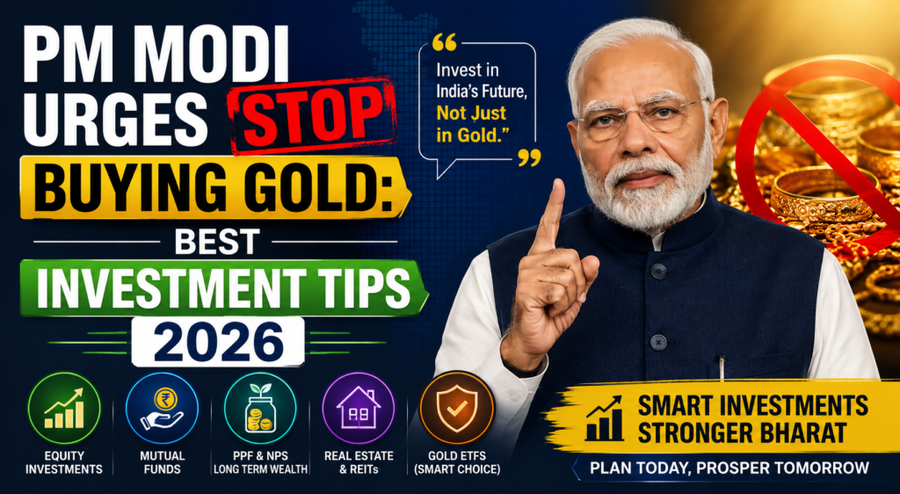
The message isn’t about abandoning tradition, but about modernizing our national economy. For decades, billions of dollars have been “locked away” in physical gold—unproductive assets that sit in vaults rather than circulating in the market to build infrastructure, fund startups, or create jobs. If you’ve been wondering whether it’s time to pivot your investment strategy, you’re in the right place. In this deep dive, we’re going to explore why this shift is happening, the alternatives available to you, and how you can protect your wealth without relying solely on the yellow metal.
What is the “Stop Buying Gold” Initiative?
Simple Explanation
At its core, the government’s stance is a nudge toward financialization. Instead of buying physical gold biscuits or jewelry, the goal is to encourage citizens to move their capital into productive financial instruments like Sovereign Gold Bonds (SGBs), mutual funds, or the stock market. When PM Modi urges a reduction in physical gold imports, the aim is to reduce the country’s Current Account Deficit (CAD) and strengthen the Rupee.
Why It Matters in 2026+
As we navigate 2026, India is positioning itself as a global manufacturing and tech hub. For this growth to be sustainable, internal capital must be utilized. Every gram of gold imported is paid for in foreign currency. By shifting focus away from physical gold, the government aims to keep that wealth within the Indian ecosystem, fueling the next decade of “Viksit Bharat.”
Key Features / Highlights of the Economic Shift
Feature 1: Digital Gold and SGBs
The primary alternative being pushed is the Sovereign Gold Bond. It gives you the price benefit of gold plus a fixed interest rate, all without the storage risks or “making charges” associated with physical jewelry.
Feature 2: Diversification into Equity
The government is highlighting the long-term ROI of the Indian equity market. Over the last five years, diversified portfolios have often outperformed gold, especially when considering the compounding effect of dividends and corporate growth.
Feature 3: Infrastructure Bonds
With massive projects underway—from high-speed rail to green energy grids—retail investors are being encouraged to put their money into bonds that literally build the nation’s future.
Benefits of Moving Beyond Physical Gold
Financial Benefits
When you buy jewelry, you lose 10–20% immediately in making charges and purity spreads. By following the advice to stop buying physical gold and moving to digital or paper gold, you eliminate these “leaks.” Furthermore, financial assets are more liquid; you can sell a mutual fund unit or a bond with a click, whereas selling physical gold often involves a trip to the jeweler and a haircut on the price.
Lifestyle / Business Benefits
Holding large amounts of physical gold creates a security risk. In 2026, the modern investor values peace of mind. By digitizing wealth, you remove the need for bank lockers and insurance for physical assets. For business owners, this liquidity means they can pivot faster when market opportunities arise.
Long-Term Value
Gold is a hedge against inflation, but it doesn’t “grow” in the traditional sense. It doesn’t produce a product or a service. By investing in the Indian economy (via stocks or bonds), you are participating in the value creation of the country’s top companies, which offers a higher ceiling for wealth generation over 20 years.
Market Analysis: The 2026 Perspective
Connectivity
The rise of fintech apps has made it possible for a farmer in a remote village to buy a fraction of an index fund as easily as someone in Mumbai. This “digital connectivity” is the backbone of the movement away from physical gold.
Infrastructure Growth
As the government diverts funds from gold imports toward infrastructure, the value of land and industrial stocks is rising. We are seeing a direct correlation: less money in gold lockers equals more money in the cement, steel, and energy sectors.
Future Potential
By 2030, the goal is to have a “Gold-Light” economy where gold is for celebration, not for core wealth. This transition could potentially stabilize the Rupee against the Dollar, making foreign travel and education cheaper for all Indians.
Investment Potential / Use Case
ROI Opportunities
Historically, gold has given a CAGR of around 8–10% over long periods. However, the Nifty 50 and mid-cap indices have frequently touched 12–15%. For a young investor, that 5% difference is the difference between a comfortable retirement and a wealthy one.
Risk Factors (Be Honest)
Equity is volatile. Unlike gold, which rarely goes to zero, individual stocks can crash. If you move away from gold, you must be prepared for market cycles. Furthermore, the psychological comfort of “holding” your wealth is lost in a digital format.
Who Should Invest?
- Young Professionals: Who have time to weather market volatility.
- Retirees: Who need regular income (dividends) rather than a stagnant gold bar.
- Aggressive Savers: Who want to beat inflation by a wide margin.
Comparison: Physical Gold vs. Digital Alternatives
| Feature | Physical Gold | Sovereign Gold Bonds (SGB) | Index Funds |
| Annual Return | Price Apprec. | Price Apprec. + 2.5% Int. | 12-15% (Hist.) |
| Storage Cost | High (Locker) | Zero | Zero |
| Liquidity | Moderate | High (Secondary Market) | Very High |
| Taxation | Capital Gains | Tax-free at Maturity | Capital Gains |
Step-by-Step Guide to Rebalancing Your Portfolio
Step 1: Audit Your Current Holdings
Take stock of how much of your net worth is in gold. If it’s more than 15–20%, you are “over-exposed.”
Step 2: Stop the “Impulse Buy”
The next time there is a festival, consider buying a “Gold ETF” or an SGB instead of a coin. You still honor the tradition, but your money works harder.
Step 3: Gradually Diversify
Don’t sell all your gold at once. Use the proceeds from old, unused jewelry to start a Systematic Investment Plan (SIP) in a diversified equity fund.
Expert Tips (The Human Touch)
- The “Locker” Rule: If you haven’t worn a piece of jewelry in three years, it’s not an ornament; it’s a poorly performing investment. Convert it.
- Emotional vs. Logical: Keep the wedding jewelry for sentiment, but treat the coins and bars as cold, hard cash that needs to be moved to a better “job.”
- Watch the CAD: Keep an eye on India’s Current Account Deficit news. When it’s high, the government will likely increase gold import duties, making physical gold even more expensive to buy.
- Use SGBs for Goals: If you’re saving for a child’s wedding 10 years away, SGBs are perfect. You get the gold weight at the end plus interest along the way.
- Don’t Fear the Dip: When the stock market dips, many run back to gold. Stay the course; the long-term trend of the Indian economy is upward.
Common Mistakes to Avoid
- Buying “Digital Gold” on Apps without checking spreads: Some apps charge 3% to buy and 3% to sell. That’s a 6% loss immediately!
- Forgetting Making Charges: Never buy jewelry as a pure investment. You are paying for the labor, not just the metal.
- Panic Selling: Don’t dump your gold because of a headline. Rebalance slowly and logically.
Future Trends (2026–2030)
Expect to see more “Gold Monetization Schemes” where you can deposit your gold with the bank and earn interest. We also anticipate the rise of “Asset-Backed Tokens” on the blockchain, allowing for even more transparency. The trend is clear: Wealth is becoming invisible.
Conclusion
When PM Modi urges us to stop buying gold in the traditional sense, it isn’t an attack on culture—it’s a call to economic arms. By shifting our mindset from “hoarding” to “investing,” we provide the capital necessary for India to reach its $5 trillion and $10 trillion goals.
The transition might feel uneasy at first. We are a nation built on the shimmer of gold. But the real shimmer of the future lies in our digital economy, our rising startups, and our robust infrastructure. Start small, diversify your holdings, and let your wealth contribute to the nation’s growth while it secures your own.
Frequently Asked Questions
Why is the PM asking people to stop buying physical gold?
The primary reason is to reduce India’s import bill and Current Account Deficit. Since India imports most of its gold, massive amounts of foreign exchange leave the country. By reducing physical gold purchases, that capital stays within India to fund development and strengthen the Rupee.
Is it illegal to buy gold now?
No, it is not illegal. The government is using “moral suasion” and policy nudges—like Sovereign Gold Bonds and increased import duties—to discourage gold as a primary investment. It is about shifting consumer behavior toward more productive financial assets rather than imposing a ban.
What are the best alternatives to physical gold in 2026?
The best alternatives include Sovereign Gold Bonds (SGBs), Gold ETFs, and Digital Gold. For those looking for higher growth, the government suggests diversifying into the Indian stock market through Mutual Funds or Index Funds, which historically offer better long-term returns.
Will the price of gold fall if everyone stops buying?
While Indian demand significantly impacts global prices, gold is a global commodity. However, a domestic slowdown in buying could lead to lower “premiums” in the local market. The goal isn’t to crash the price, but to ensure citizens don’t lose money on making charges and storage.
How do I convert my physical gold into a better investment?
Far far away, behind the word mountains, far from the countries Vokalia and Consonantia, there live the blind texts. Separated they live in Bookmarksgrove right at the coast of the Semantics, a large language ocean.