
Imagine cruising down the Delhi-Mumbai Expressway, the music hums softly, and the horizon stretches out before you. You are maintaining a steady 100 km/h when suddenly, taillights flare ahead. A bottleneck. As you crawl closer, you see the culprit: a toll plaza. Even with FASTag, vehicles are stopping, scanners are misreading windshield stickers, and a VIP convoy is trying to navigate a dedicated lane while manual security checks cause a backup. It is a frustrating ripple effect that costs time, burns fuel, and tests everyone’s patience.
But change is coming to India’s highways, and it is powered by artificial intelligence.
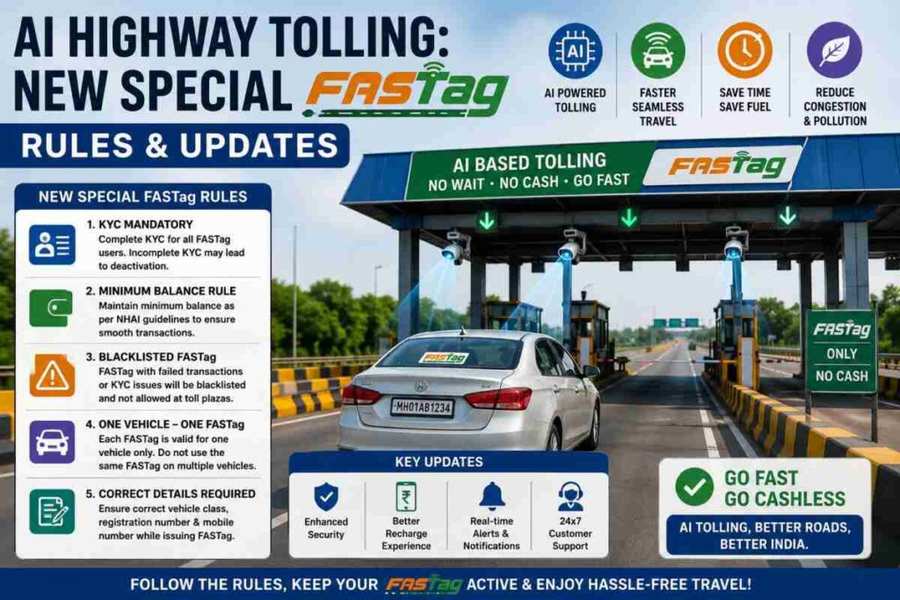
The Ministry of Road Transport and Highways (MoRTH) is rolling out a massive upgrade to how we pay for highway infrastructure. The future is barrier-free, high-speed, and automated. However, transitioning a nation of over 1.4 billion people to satellite and camera-based tolling isn’t as simple as switching off the old gates. To bridge the gap, the government is introducing an upgraded system featuring special FASTags designed specifically for exempted and VIP vehicles. This move aims to eliminate wrongful penalties, streamline traffic, and ensure that the transition to AI highway tolling centers is seamless for everyone on the road.
What is AI Highway Tolling?
Simple Explanation
At its core, AI highway tolling removes the physical barriers—the actual boom barriers that lift and lower—from toll plazas. Instead, the system relies on a network of high-speed overhead gantries equipped with Automatic Number Plate Recognition (ANPR) cameras, sensors, and Global Navigation Satellite System (GNSS) tracking.
As your vehicle passes under these gantries at highway speeds, the AI system instantly photographs your license plate, cross-references it with national vehicle databases, tracks the exact distance you traveled on that specific highway, and automatically deducts the correct toll amount from your linked wallet or bank account. No stopping, no slowing down, and no human intervention required.
Why It Matters in 2026+
As we move through 2026, India’s highway infrastructure is expanding at an unprecedented rate. Traditional toll plazas, even those optimized with standard FASTag lanes, have become structural bottlenecks that limit the efficiency of multi-lane expressways.
Furthermore, the integration of artificial intelligence is no longer a futuristic concept; it is a logistical necessity. AI systems can process millions of vehicle transits per second, identify dirty or partially obscured license plates using predictive imaging, and manage complex distance-based tolling metrics that traditional RFID readers simply cannot handle. This transition marks the evolution from passive electronic collection to dynamic, real-time traffic management.
Key Features of India’s AI Tolling System
1. GNSS & ANPR Integration
The backbone of the new system is a hybrid approach combining satellite tracking (GNSS) with high-definition ANPR cameras. The satellite tracks your vehicle’s coordinates along the highway to determine the exact entry and exit points. Simultaneously, the ANPR cameras at overhead gantries act as a verification layer, capturing physical proof of the vehicle’s journey to prevent location tracking errors or systemic glitches.
2. Special FASTags for Exempted Vehicles
One of the most significant recent developments is the creation of specialized FASTags by the AI highway tolling center. These tags are explicitly earmarked for toll-exempt vehicles, such as ambulances, fire trucks, defense forces, and designated VIP or government vehicles. By embedding specific cryptographic signatures within these tags, the AI system instantly recognizes their exempt status, preventing the automated system from wrongfully issuing penalties or mistakenly deducting funds from government accounts.
3. Dynamic Distance-Based Pricing
Unlike the legacy system where you pay a fixed flat rate at a toll booth regardless of whether you drove 5 kilometers or 50 kilometers, the AI-driven system calculates tolls proportionally. You pay strictly for the precise stretch of tarmac your tires touched. This makes short-distance highway travel significantly more affordable for regional commuters.
Benefits of AI Highway Tolling
Financial Benefits
The economic drain of idling engines at toll plazas is staggering. By eliminating the stop-and-go pattern at traditional barriers, logistics companies and private drivers save billions annually in wasted fuel.
| Benefit Factor | Legacy FASTag Plazas | AI Barrier-Free Tolling |
| Average Wait Time | 30 seconds to 5 minutes | 0 seconds (Free Flow) |
| Fuel Wastage | High (due to idling/acceleration) | Negligible |
| Toll Calculation | Fixed point-to-point rate | Exact distance-based pricing |
| Wrongful Deductions | Moderate (misreads/double scans) | Exceptionally low (dual verification) |
Additionally, for commercial fleet operators, reduced transit times translate directly to higher vehicle utilization rates and quicker delivery turnaround times.
Lifestyle and Business Benefits
For the everyday driver, the primary benefit is stress reduction. Highway journeys become fluid, continuous experiences. For businesses, supply chain predictability skyrockets. A freight truck traveling from Chennai to Delhi no longer faces unpredictable delays at state borders or major intersection toll points, allowing companies to optimize just-in-time inventory systems with pinpoint accuracy.
Long-Term Value
Over time, the reduction in carbon emissions from millions of vehicles no longer idling at toll barriers will contribute significantly to India’s environmental goals. Furthermore, the wear and tear on vehicle braking systems and transmissions is notably reduced, extending the lifespan of both commercial fleets and personal vehicles.
Market and Infrastructure Analysis
Connectivity
The initial phases of the AI highway tolling rollouts are strategically targeted at India’s high-density economic corridors. Expressways connecting major industrial hubs—such as the Delhi-Mumbai, Bengaluru-Mysuru, and Delhi-Meerut routes—are serving as the testing grounds for these advanced gantry setups. The long-term plan involves linking these national arteries seamlessly with state highways to create a unified, barrier-free national grid.
Infrastructure Growth
Implementing this system requires a robust digital and physical infrastructure overhaul. Thousands of kilometers of highways are being retrofitted with high-speed fiber-optic cables to connect overhead gantries directly to centralized cloud data centers running AI sorting algorithms. This massive infrastructure push is stimulating the domestic tech sector, creating high-demand roles for software engineers, data scientists, and network infrastructure specialists.
Future Potential
As the system matures, the data collected by highway AI sensors can be utilized for more than just toll collection. Real-time traffic density mapping, automated accident detection, immediate dispatch of emergency services, and dynamic speed limit adjustments based on weather conditions are all natural extensions of a fully digitized highway network.
Investment Potential and Use Cases
ROI Opportunities
For institutional investors and infrastructure funds, the transition to AI tolling represents a massive leap forward in operational efficiency. Physical toll plazas require extensive manual staffing, localized security, physical cash-handling infrastructure, and constant maintenance of mechanical barriers.
[Physical Toll Plaza: Staffing + Security + Mechanical Maintenance]
                             ⬇ (Replaced By)
[AI Overhead Gantry: Centralized Cloud System + Remote Diagnostics]
By transitioning to centralized cloud-based AI monitoring, the operational expenditure (OpEx) of highway concessionaires drops dramatically, directly boosting the long-term return on investment (ROI) for highway development projects.
Risk Factors to Monitor
While the technology is highly promising, implementation risks do exist:
- Systemic Glitches: During the early rollout phases, cross-referencing errors between satellite data and ANPR cameras can lead to incorrect billing disputes.
- Data Privacy Concerns: Continuously tracking vehicle movements via GNSS raises valid privacy questions that require strict data encryption and transparent governance policies.
- Enforcement of Unpaid Tolls: Without physical barriers to stop a vehicle, creating a foolproof legal and digital mechanism to recover dues from non-compliant drivers remains an ongoing logistical challenge for authorities.
Who Benefits Most?
The primary beneficiaries of this technological leap include logistics and supply chain enterprises, inter-state bus operators, e-commerce giants relying on rapid surface transport, and infrastructure development firms looking to optimize asset management.
Comparison: Traditional Tolls vs. AI Tolling
Why the New System Stands Out
Traditional toll collection required drivers to stop completely and hand over cash. The introduction of FASTag was a major step forward, transitioning the country to Radio Frequency Identification (RFID) technology that allowed scanning while moving at very slow speeds through a dedicated lane.
However, standard FASTag setups still rely heavily on physical infrastructure—the gate must stay down until the light turns green. If a tag lacks sufficient balance, or if a scanner misreads a windshield sticker, the entire lane grinds to a halt.
AI highway tolling eliminates the physical gate entirely. By utilizing a multi-layered verification system (Satellite tracking + AI camera validation), it decouples the payment process from the physical movement of the vehicle, allowing traffic to flow at maximum legal speeds.
Step-by-Step Guide: Navigating the Transition
Step 1: Ensure Your Vehicle Data is Updated
To avoid any friction with upcoming ANPR systems, check that your vehicle’s registration details on the VAHAN database match your active FASTag account and bank details. Correct any discrepancies in license plate fonts or registration formatting.
Step 2: Understand the Special FASTag Protocols
If you operate an exempted category vehicle (such as medical, emergency, or designated official transport), apply for the new special FASTags through the authorized government portals. These tags ensure that the AI highway tolling center recognizes your vehicle’s status instantly, keeping you exempt from automated billing loops.
Step 3: Transition to Prepaid/Linked Accounts
Ensure your toll wallets are linked directly to accounts with auto-top-up functionalities. Because tolling will happen seamlessly as you drive under gantries, maintaining a healthy account balance prevents accidental blacklisting or automated penalty flags on your license plate.
Expert Tips for a Smooth Highway Experience
- Keep Your License Plates Clean: ANPR cameras rely on visual clarity. Ensure your front and rear high-quality registration plates (HSRP) are clean, undamaged, and free of obstructions like aftermarket bumpers or mud.
- Monitor Your Digital Statements: Form the habit of periodically checking your linked toll wallet statements via official mobile applications to ensure that distance-based deductions match your actual traveled routes.
- Do Not Stack Multiple Tags: If you are upgrading to a new special FASTag or shifting providers, completely remove your old RFID tag from the windshield. Multiple tags can create signal interference, causing confusing errors for overhead scanners.
- Report Anomalies Promptly: If you receive a notification for an incorrect deduction or a penalty notice due to an ANPR misread, log an immediate dispute through the centralized highway helpline system to clear your vehicle record quickly.
Common Mistakes to Avoid
- Using Non-Standard Font License Plates: Avoid decorative or regional script license plates. The AI systems are optimized specifically for standard High-Security Registration Plates (HSRP). Non-standard fonts can cause reading errors, leading to manual verification delays or automated fines.
- Ignoring Low Balance Alerts: Because there are no physical barriers to stop you from entering an expressway, driving on an AI-monitored highway with an empty toll account will automatically trigger a non-compliance violation flag against your registration number.
- Assuming Exemptions Apply Mechanically Without the Special Tag: Many drivers of VIP or government-leased vehicles assume that their official status or physical vehicle decals are enough to bypass the automated systems. Without the newly launched special FASTags, the AI system will simply read the number plate and process a standard toll deduction or penalty notice, irrespective of who is inside the vehicle.
Future Trends: What to Expect Between 2026 and 2030
Over the next few years, we will witness the gradual decommissioning of physical toll plazas near major cities, replaced entirely by slim, unobtrusive overhead gantries.
We can also expect to see deeper integration between highway toll systems and urban smart city networks. The same AI framework managing highway entry and exit points will eventually communicate with city parking zones, congestion charging zones in mega-cities, and automated emission monitoring systems.
This will create a unified ecosystem where a single digital vehicle identity handles highway tolls, public parking fees, and municipal transit access across the entire country.
Conclusion
The shift toward AI highway tolling centers and the introduction of specialized FASTags represent a critical milestone in India’s infrastructure journey. By replacing physical friction with smart, automated digital solutions, the country is paving the way for safer, faster, and more eco-friendly travel.
As these systems roll out nationwide, staying informed and updating your vehicle’s digital profiles ensures you can enjoy the open road without missing a beat. Make sure your vehicle configuration is up to date, check your account linkages, and step confidently into the future of barrier-free driving.
You will see a city built for the next generation. Knowledge Park 5 is not just about real estate. It is about the quality of life you deserve. It represents a smart choice for your family and your finances. Take a drive through the sector and see the progress yourself. You will see a city built for the next generation. Sector 4 Greater Noida, is more than just a destination on a map; it represents the modern Indian dream of affordable luxury and planned growth. Knowing the Sector 4 Greater Noida pin code is just the beginning of your journey. Whether you are moving here for work, family, or investment, the area offers a robust foundation for a high-quality life. With its strategic location, improving infrastructure, and vibrant community, Sector 4 is undoubtedly one of the best places to plant your roots in the NCR.
Frequently Asked Questions
What happens if the AI highway tolling center makes an error in calculating my toll?
If the system miscalculates your distance or charges you incorrectly, you can easily file a dispute through your linked toll wallet app or the centralized highway customer portal. The dual-layer system logs both satellite telemetry and ANPR camera images, allowing customer service teams to quickly review the visual data, verify your actual route, and reverse any erroneous charges.
How do the new special FASTags protect VIP and exempted vehicles from wrong penalties?
The special FASTags contain unique, digitally signed identifiers linked directly to verified government records of exempted categories. When an automated gantry detects an exempted vehicle, the system reads this specialized cryptographic tag, confirms its authenticity against the database, and suppresses any automated billing actions, preventing wrongful penalties.
Do I need to replace my existing standard FASTag immediately?
No, you do not need to replace your functional standard FASTag immediately. The rollout is phased, and existing tags remain valid across the network. However, if you qualify for a toll exemption or operate a vehicle within the designated VIP/emergency categories, you should transition to the new special FASTag to ensure smooth integration with the upcoming barrier-free gantries.
Can the ANPR cameras read my number plate accurately in heavy rain or dense fog?
Yes, the advanced ANPR cameras deployed by the AI tolling centers utilize high-intensity infrared illuminators and thermal-assisted imaging sensors. This technology allows the AI system to pierce through challenging weather conditions like dense fog, heavy monsoon rains, and nighttime darkness to read standard high-security plates accurately.
Will my location data be tracked continuously by the government under this new system?
The satellite-based GNSS elements are designed specifically to log coordinates when your vehicle enters and exits designated highway concession zones for toll calculation purposes. Data protection protocols are built into the architecture to ensure your travel history is securely encrypted and used strictly for transit billing and transport compliance management.