
Imagine escaping the legendary, bumper-to-bumper traffic gridlock of the National Capital Region and cruising seamlessly on a world-class highway. For millions of residents across Delhi, Noida, Greater Noida, Ghaziabad, and Faridabad, this dream is fast transitioning into concrete reality. The announcement of a massive new Delhi-NCR 10-lane expressway is rewriting the infrastructure playbook of Northern India. This isn’t just another minor highway widening project or a routine bypass roadmap; it represents an ambitious engineering marvel engineered explicitly to unlock ultra-fast, seamless connectivity to the upcoming Noida International Airport in Jewar.
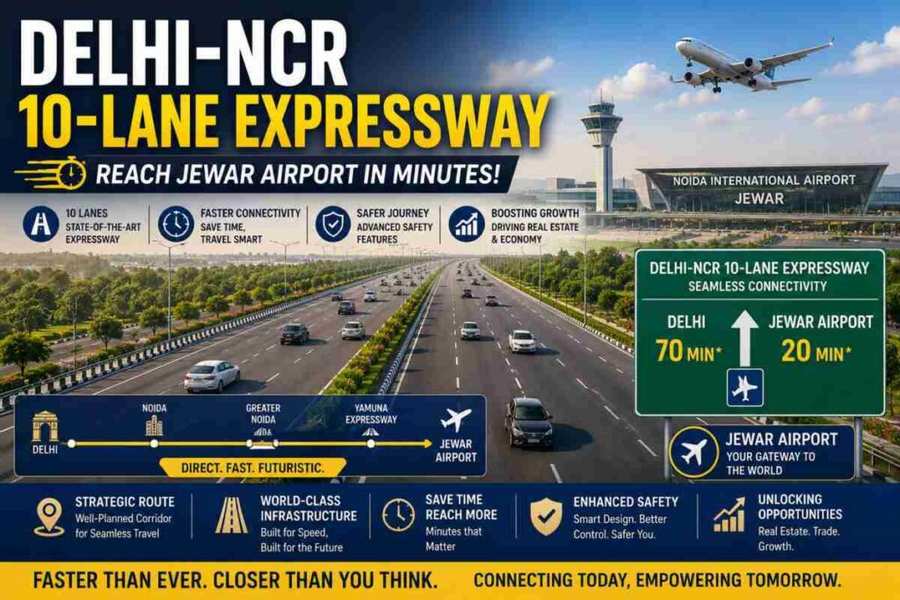
As urban centers expand at a breakneck pace, regional transportation systems must scale ahead of demand. The traditional 2-lane, 4-lane, or even standard 6-lane corridors are no longer sufficient to handle the tidal wave of commercial traffic, daily commuters, and logistics fleets traversing the region. By executing a hyper-scaled Delhi-NCR 10-lane expressway, authorities are effectively creating a high-velocity transit spine. This extensive deep dive examines the massive scope, the strategic market shifts, and the long-term investment implications of this infrastructure breakthrough, highlighting exactly how it will compress travel times to Jewar Airport into mere minutes.
 What is the Delhi-NCR 10-Lane Expressway?
Simple Explanation
At its core, the Delhi-NCR 10-lane expressway is a mega-highway infrastructure project designed to handle massive traffic volumes between the core hubs of the National Capital Region and the southern expanses of Gautam Buddha Nagar. Unlike conventional highways that mix local transport with high-speed interstate vehicles, this corridor features a strictly segregated layout. It combines high-speed express lanes in the center with dedicated local access corridors on the outer flanks. This ensure that long-distance travelers headed straight for the aviation hub do not get tangled up in localized commercial bottlenecks, allowing for continuous, unrestricted speeds.
The layout is strategically conceptualized to link existing major bypasses and arterial roads directly to the perimeter of the Jewar Airport site. By utilizing advanced engineering designs, grade-separated interchanges, automated tolling points, and intelligent traffic management systems, the expressway eliminates traditional signalized intersections. This creates a free- flowing conduit where vehicles can maintain steady transit velocities without experiencing intermittent stop-and-go bottlenecks.
Why It Matters in 2026+
As we navigate through 2026, the timeline for the operationalization of the Noida International Airport in Jewar has compressed dramatically. A world-class airport cannot function in isolation; its operational success depends entirely on the efficiency of its surface access networks. If international passengers and air cargo shipments spend hours stuck in localized bottlenecks just miles from the terminal, the economic utility of the airport diminishes. The Delhi-NCR 10-lane expressway is the multi-lane answer to this geographical puzzle, ensuring that access times remain fully predictable.
Furthermore, the year 2026 marks a crucial inflection point where regional supply chains are decentralizing. E-commerce fulfillment giants, heavy manufacturing units, and multi-national electronics firms are setting up massive operations all along the Yamuna Expressway corridor. This industrial expansion creates an urgent requirement for high-throughput road logistics. The 10-lane layout offers the required capacity to prevent early structural saturation, ensuring the corridor remains hyper-efficient for decades to come.
 Key Features and Engineering Highlights
Feature 1: Advanced Lane Segregation and Access Control
The primary structural highlight of this mega-highway is its sophisticated lane management configuration. The 10 lanes are not merely laid out side-by-side without a plan; instead, they are divided into dedicated express tracks and service access lanes. The central lanes are fully access-
controlled, reserved exclusively for high-speed, long-distance traffic moving towards Jewar Airport. Flanking these central lanes are dedicated multi-lane service roads that cater to local commuter entry, commercial logistics parks, and surrounding residential sectors. This structural separation effectively prevents slow-moving local vehicles from interrupting the high-velocity flow of the central corridor.
Feature 2: Integration with Intelligent Transportation Systems (ITS)
This expressway is being constructed as a smart highway network, heavily incorporating digital management systems. Automated number plate recognition (ANPR) systems and next-generation FASTag gantries enable free-flow tolling without requiring vehicles to come to a complete halt. Real-time dynamic variable message signs (VMS) are placed at regular intervals to alert drivers regarding weather alterations, traffic volumes, or lane incidents ahead. Additionally, drone surveillance networks and embedded pavement sensors monitor structural health and traffic anomalies instantly, minimizing clearance times for accidental road obstructions.
Feature 3: Eco-Friendly Corridors and Sustainable Engineering
In line with modern sustainable infrastructure mandates, the Delhi-NCR 10-lane expressway integrates green engineering protocols. The median and external boundaries are designed to house dense, multi-layered plantation belts that absorb vehicular emissions and dampen sound pollution for nearby communities. Rainwater harvesting networks run parallel along the entire length of the highway embankment to replenish local water tables. Additionally, all major interchange lighting systems and monitoring gantries rely directly on integrated solar power arrays, lowering the overall operational carbon footprint.
| Expressway Attribute | Technical Specification / Operational Detail |
| Total Lane Configuration | 10 Lanes (Segregated Express & Local Access Corridors) |
| Primary Connectivity Goal | Direct, high-speed link to Noida International Airport (Jewar) |
| Technology Stack | ANPR Cameras, Smart Toll Gantries, Dynamic VMS, Drone Monitoring |
| Sustainability Focus | Solar-powered lighting, Rainwater harvesting, Green carbon-sink medians |
| Primary Impacted Hubs | Delhi, Noida, Greater Noida, Ghaziabad, Yamuna Expressway Zone |
 Benefits of the Delhi-NCR 10-Lane Expressway
Financial Benefits
The economic impact of compressing transit windows across a major industrial region is substantial. For logistics corporations, freight operators, and supply chain firms, time is directly linked to profitability. By eliminating stop-and-go delays, fleet operators can achieve faster vehicle turnaround times, reduce idle fuel consumption, and lower mechanical wear and tear on heavy transport vehicles. This reduction in operational overhead translates into massive financial savings across regional supply networks, lowering overall costs for businesses choosing to locate their central warehouses along this newly created corridor.
Lifestyle and Business Benefits
For the average daily commuter and corporate professional, the benefits of this infrastructure leap are directly felt in daily life. Long hours spent navigating stressful traffic jams are replaced by smooth, predictable commutes. This improves work-life balance and reduces burnout for thousands of professionals living in Delhi or Ghaziabad who commute down to the office hubs of Noida and Greater Noida. From a business standpoint, it drastically expands the accessible talent pool; corporations established in the peripheral zones can seamlessly recruit specialized personnel from across the wider NCR without worrying about geographic distance barriers.
Long-Term Value Appreciations
Large infrastructure projects have historically served as reliable catalysts for real estate capital appreciation. The establishment of a Delhi-NCR 10-lane expressway creates permanent structural value for any real estate development situated within its immediate catchment zone. Land parcels that once felt remote or inaccessible are instantly transformed into premium, highly connected plots. This long-term value appreciation benefits early land buyers, institutional investors, and sovereign wealth funds who recognize that physical connectivity is the ultimate driver of urban land value.
 Location and Regional Market Analysis
Connectivity Matrix
The structural layout of this 10-lane highway serves as a connective tissue linking multiple disjointed expressways and national highways across the region. It links up with the Eastern Peripheral Expressway (EPE), the Delhi-Meerut Expressway, and the main Yamuna Expressway axis. This ensures that a traveler starting their journey from Western Uttar Pradesh or Haryana can bypass dense urban city centers entirely. They can transition from one high-speed highway to another, reaching the airport terminal gates without confronting local city bottlenecks.
Infrastructure Growth Corridors
The geographical belt running along the planned alignment of the Delhi-NCR 10-lane expressway is witnessing rapid structural development. Large patches of land are undergoing systematic zoning changes, transforming from agricultural uses to high-density commercial, institutional, and industrial zones. Academic hubs, multi-specialty healthcare cities, and integrated tech parks are anchoring themselves along the major exit ramps. This planned growth ensures that the expressway does not merely pass through empty countryside, but instead serves as the primary economic spine for a series of fully master-planned mini-cities.
Future Development Potential
Looking further out, the development potential of this corridor is reinforced by its alignment with major national industrial blueprints, such as the Delhi-Mumbai Industrial Corridor (DMIC). By connecting deep manufacturing pockets with a major new international aviation terminal via a 10-lane highway, authorities are creating an ideal ecosystem for export-oriented businesses. Air freight logistics, perishable goods processing centers, and high-value electronics manufacturing hubs are expected to fill the commercial zones bordering the highway, ensuring high economic output for the region.
 Investment Potential and Practical Use Cases
ROI Opportunities
For forward-thinking real estate and institutional investors, the deployment of the Delhi-NCR 10- lane expressway presents clear opportunities for capital growth. Historically, the early construction phase of a major transport corridor offers the most attractive entry pricing for real estate assets. As various sections of the highway are completed and opened to traffic, asset valuations typically experience upward adjustments. Investors targeting commercial spaces, corporate storage yards, or integrated residential communities along the project path stand to
gain significant rental yields and long-term capital gains as the entire ecosystem matures around the airport.
Risk Factors to Monitor Carefully
While the growth narrative is strong, prudent investing requires a clear-eyed evaluation of structural risk factors. Large-scale linear infrastructure developments can face occasional delays related to complex land acquisition processes, environmental clearances at river crossings, or funding re-allocations among contracting consortiums. Investors must evaluate the liquidity profiles and past execution records of developers before investing capital into peripheral projects. It is essential to ensure that individual projects possess independent viability and are not solely dependent on immediate expressway completion to function effectively.
Who Should Invest?
The investment profile of this corridor is well-suited for a variety of market participants. Long- term institutional funds seeking stable, inflation-hedged yields find infrastructure-backed commercial developments highly attractive. Similarly, manufacturing enterprises seeking to optimize their supply chain footprints should secure logistics plots adjacent to the major interchanges. Individual investors looking to build long-term family wealth can also find value by acquiring residential plots or apartments within master-planned sectors that feature direct access ramps to the expressway network.
 Comparison Section: Choosing the Strategic Alternative
Delhi-NCR 10-Lane Expressway vs. Existing Alternative Routes
To understand the impact of this new project, it helps to compare it against the current alternative routes serving the region. Travelers heading toward southern Noida and Jewar currently rely on older internal sector roads or the standard lanes of the main Yamuna Expressway. These existing routes are increasingly forced to handle a challenging mix of local auto-rickshaws, agricultural machinery, interstate buses, and heavy industrial trucks. This diverse traffic mix leads to frequent speed drops, high accident rates, and unpredictable delays during peak transit hours.
In contrast, the Delhi-NCR 10-lane expressway offers a highly controlled driving environment. Its strict access management excludes slow-moving regional traffic from the central express tracks, providing a reliable alternative. By bypassing localized urban clusters entirely, it offers highly predictable travel times that are impossible to achieve on unsegregated alternative routes.
Why It Stands Out Globally
When evaluated against international infrastructure benchmarks, this 10-lane project matches design standards seen in major global logistics corridors, such as those in Dubai, Shanghai, or Houston. It moves away from the traditional approach of simply building more asphalt, focusing instead on digital integration and smart lane management. The combination of dedicated freight lanes, intelligent tolling, and direct integration with an aviation hub positions this corridor as a modern, forward-looking asset that elevates the global competitiveness of the entire National Capital Region.
 Step-by-Step Guide for Navigating the Emerging Market
Step 1: Conduct Detailed Geographic and Zoning Analysis
The initial phase for any individual or business looking to engage with this corridor involves carrying out thorough geographic research. Do not buy real estate blindly based on vague marketing brochures. Utilize regional development maps to pinpoint the precise locations of planned highway interchanges, exit loops, and service road access points. Verify that the properties under consideration have secure, legal access to the highway network and are not slated for future infrastructure right-of-way acquisitions.
Step 2: Verify Legal Clearances and Land Titles Completely
Given the rapid pace of development along the Delhi-NCR 10-lane expressway corridor, checking regulatory compliance is an essential step. Ensure that any commercial project or residential community you evaluate is fully registered with the Real Estate Regulatory Authority (RERA). Thoroughly review land titles, cross-checking government records to confirm the absence of lingering legal disputes or ownership issues. This protects your capital from becoming tied up in unauthorized developments.
Step 3: Align Investment Timelines with Infrastructure Milestones
Successful investing along an emerging transport corridor requires careful timing. Align your capital investment schedules with public project milestones, such as the opening of specific highway phases or the initial commercial flight testing at Jewar Airport. Diversifying your investments across different asset classes—such as combining liquid commercial spaces with longer-term residential land—can optimize your portfolio’s cash flow while allowing you to capture maximum long-term capital growth.
 Expert Tips from Industry Insiders
- Focus on Interchange Proxemity: The most significant commercial value appreciation always occurs within a 3 to 5-kilometer radius of major highway interchanges, rather than along the edge of the fenced-off expressway itself.
- Prioritize Institutional Grade Developers: Stick with well-capitalized developers who have a proven track record of delivering large projects without relying on continuous pre-sales cash flow.
- Examine Industrial Sub-Zoning Carefully: If you are purchasing land for commercial storage or logistics, ensure the plots are specifically zoned for heavy logistics use to avoid future compliance issues.
- Look for Multi-Modal Integration Hubs: Give preference to investment sectors where the expressway runs parallel to planned metro extensions or rapid rail corridors, creating highly valuable multi-modal transport hubs.
- Plan for a Multi-Year Horizon: Realize maximum gains by maintaining an investment horizon of 5 to 7 years, allowing the complete surrounding economic ecosystem to fully mature.
 Common Real-World Mistakes to Avoid
- Buying Land in Locked-Out Sections: Avoid purchasing land blocks that run directly parallel to the expressway but lack access to service roads or interchange ramps, leaving them physically cut off from the highway.
- Overestimating Early Phase Completion Speed: Do not base your immediate business cash flows on optimistic project deadlines; build realistic financial cushions to handle potential delays safely.
- Ignoring Local Secondary Infrastructure Quality: Always check the condition of the local connection roads that lead from the main expressway to your specific property site.
- Neglecting Comprehensive Due Diligence: Never skip formal legal reviews or rely entirely on informal verbal promises made by local brokers regarding future zoning changes.
 Future Regional Trends (2026–2030)
Between 2026 and 2030, the corridor flanking the Delhi-NCR 10-lane expressway is projected to evolve into an active, highly integrated economic zone. We expect to see the widespread deployment of autonomous freight shipping corridors and dedicated lanes optimized for electric logistics fleets, supported by high-capacity charging stations at primary rest stops. The rapid
growth of air cargo operations at Jewar Airport will likely drive demand for smart, automated warehousing complexes and cold-chain storage facilities along the highway route, making it the primary logistics spine for Northern India.
 Conclusion
The construction of the Delhi-NCR 10-lane expressway marks a major step forward for regional transportation, successfully transforming the journey to the upcoming Noida International Airport into a fast, highly predictable drive. By blending advanced engineering, intelligent traffic systems, and thoughtful lane segregation, this mega-highway provides a long-term solution to the region’s historic congestion challenges. For property buyers, logistics companies, and forward- looking investors, this expanding economic corridor offers a valuable opportunity to participate in one of Northern India’s most significant infrastructure transformations. To maximize your returns, begin your market research early, focus on key interchange hubs, and align your investment strategy with the structural growth of the region.
You will see a city built for the next generation. Knowledge Park 5 is not just about real estate. It is about the quality of life you deserve. It represents a smart choice for your family and your finances. Take a drive through the sector and see the progress yourself. You will see a city built for the next generation. Sector 4 Greater Noida, is more than just a destination on a map; it represents the modern Indian dream of affordable luxury and planned growth. Knowing the Sector 4 Greater Noida pin code is just the beginning of your journey. Whether you are moving here for work, family, or investment, the area offers a robust foundation for a high-quality life. With its strategic location, improving infrastructure, and vibrant community, Sector 4 is undoubtedly one of the best places to plant your roots in the NCR.
Ready to build your legacy? Don’t just look at the price tag today; look at the potential of the neighborhood tomorrow. The best time to buy was twenty years ago; the second best time is today—but only if you know the numbers.
 Frequently Asked Questions
Q1: How will the Delhi-NCR 10-lane expressway cut travel times to Jewar Airport?
The new expressway features dedicated, access-controlled lanes that separate high-speed airport traffic from slow-moving local vehicles. By eliminating traditional intersections and traffic signals, the design ensures continuous speeds, allowing commuters from across the National Capital Region to reach the terminal safely and predictably in just a fraction of the current travel time.
Q2: Which major locations will gain the most from this 10-lane expressway?
The primary benefits will be felt across Greater Noida, Noida, Delhi, Ghaziabad, and the emerging industrial zones along the Yamuna Expressway. Properties located near the major interchanges are expected to see the highest growth, as these points provide seamless connectivity to the wider regional highway network.
Q3: Are there specific commercial real estate opportunities along this new corridor?
Yes, the corridor offers excellent opportunities for developing modern fulfillment centers, cold- storage units, corporate office parks, and retail hospitality hubs. Businesses can leverage the high-speed connectivity to optimize their regional logistics, lower transportation costs, and access a broader pool of professional talent from across the NCR.
Q4: How does this project compare to existing regional highways?
Unlike older routes that mix local and long-distance traffic, this project features a specialized 10- lane layout with strict access controls. It incorporates smart highway technology, such as automated tolling and real-time incident monitoring, which ensures a much safer and more reliable driving environment than traditional regional roads.
Q5: What future infrastructure trends should investors watch for along the route?
Investors should keep an eye on the integration of high-capacity electric vehicle charging stations, smart warehousing zones, and multi-modal transit links like metro line expansions. These advanced features will help ensure the corridor remains highly efficient and competitive for decades to come.