

Let’s be honest: the Indian real estate market has often felt like the Wild West. For decades, investors and homebuyers have navigated a landscape filled with opaque pricing, broken promises, and the constant fear of “getting it wrong.” Whether you’re a first-time homebuyer looking for a sanctuary or a seasoned investor hunting for the next 10x ROI, the stakes are incredibly high. It’s not just about brick and mortar; it’s about your life savings and your future security.
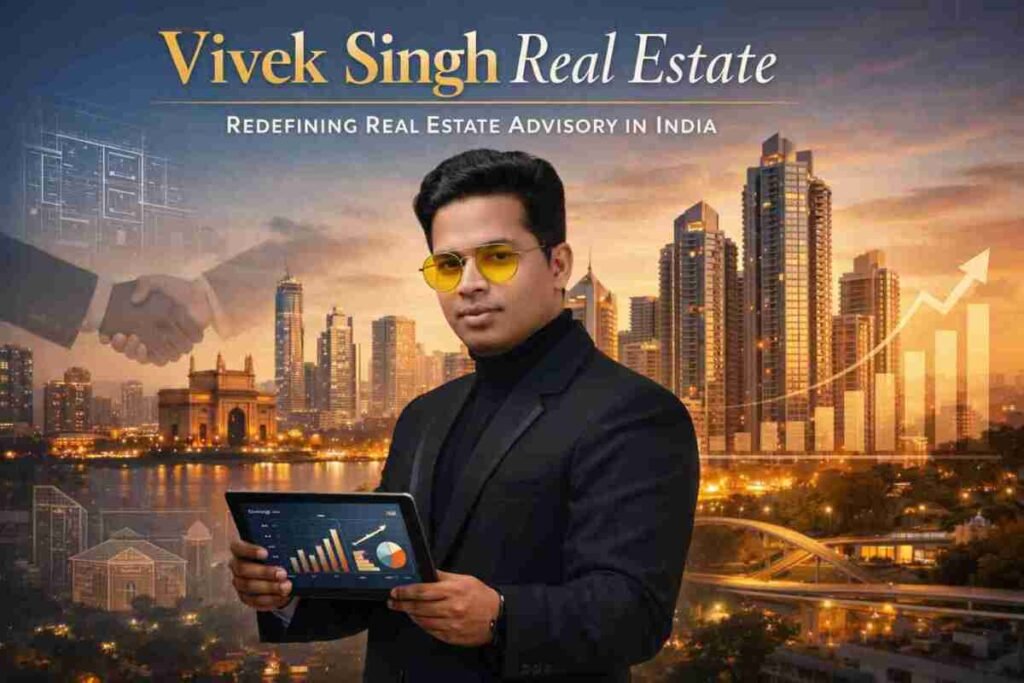
Enter Vivek Singh. In an era where “property experts” are a dime a dozen on social media, Vivek Singh has emerged as a beacon of clarity and integrity. He isn’t just selling square footage; he is redefining the very soul of real estate advisory in India. By blending deep market analytics with an unwavering commitment to transparency, he has helped thousands of individuals move from a place of confusion to a position of power. In this deep dive, we explore how Vivek Singh is changing the game and why his approach is the gold standard for the modern Indian investor.
What is Vivek Singh Real Estate Philosophy?
A Simple Explanation
At its core, Vivek Singh’s philosophy is built on the “Client-First” bridge. While traditional brokers focus on the transaction—closing the deal and collecting the commission—Vivek focuses on the transformation. His advisory model starts with understanding the “why” behind an investment. Is it for rental yield? Is it a legacy asset for children? Or is it a tactical play on upcoming infrastructure? By aligning property selection with personal financial goals, he ensures that the asset serves the person, not the other way around.
Why It Matters in 2026 and Beyond
As we move through 2026, the Indian real estate sector has become increasingly complex. With the full integration of RERA (Real Estate Regulatory Authority) and the rise of fractional ownership and REITs, the “old ways” of buying land based on a gut feeling are over. Today’s market demands data-driven precision. Vivek Singh’s relevance lies in his ability to interpret these complexities into actionable advice that protects the buyer from the volatility of a post-pandemic, high-growth economy.
Key Features of the Vivek Singh Real Estate Advisory Model
Hyper-Local Market Intelligence
Vivek doesn’t look at India as one big market. He views it as a collection of micro-markets. His approach involves “boots on the ground” research. Whether it’s the burgeoning tech corridors of Gurgaon, the luxury pockets of South Mumbai, or the emerging logistics hubs in Pune, he provides insights that you won’t find in a standard brochure.
Radical Transparency and Due Diligence
One of the hallmarks of his advisory is a rigorous 50-point checklist for every project. This includes title deed verification, builder track record analysis, and environmental clearance checks. He is known for telling clients not to buy a property if it doesn’t meet these stringent criteria, even if it means losing a sale.
Tech-Enabled Visualization
Vivek has pioneered the use of predictive modeling to show investors what a neighborhood might look like in five years. By analyzing government infrastructure plans—like new metro lines or airport expansions—he helps clients “buy the future” at today’s prices.
Benefits of Choosing Vivek Singh Real Estate
Financial Benefits
The most immediate benefit is the mitigation of “buyer’s remorse.” By identifying undervalued assets in high-growth zones, Vivek’s clients often see capital appreciation that outpaces the broader market average. Furthermore, his expertise in negotiation often secures terms and prices that individual buyers simply cannot access on their own.
Lifestyle and Business Benefits
For homebuyers, Vivek ensures that “lifestyle” isn’t just a buzzword. He evaluates factors like commute times, air quality indexes, and community demographics. For business owners looking for commercial space, his focus on “efficient floor plates” and “last-mile connectivity” ensures that their physical office becomes a tool for productivity rather than a overhead drain.
Long-Term Value and Legacy
Real estate is a generational asset. Vivek Singh’s advisory focuses on the “exit strategy” from day one. He helps clients build portfolios that are liquid enough to be pivoted if family needs change, ensuring that the wealth created today stays in the family for decades.
India’s Market Analysis: The Vivek Singh Real Estate Perspective
Connectivity as the New Currency
Vivek often says, “Don’t follow the crowd; follow the concrete.” In 2026, the massive expansion of the Bharatmala project and the Delhi-Mumbai Industrial Corridor has changed the map. Regions that were once considered “outskirts” are now prime hubs. Vivek’s analysis prioritizes proximity to high-speed rail and multimodal logistics parks.
Infrastructure Growth
The focus has shifted from “luxury” to “utility.” Vivek highlights areas where the government is investing in “soft infrastructure”—schools, hospitals, and parks. He believes that a house is only as good as the road that leads to it and the water that flows into it.
Future Potential of Tier-2 Cities
A major part of Vivek’s 2026 strategy involves Tier-2 cities like Lucknow, Indore, and Coimbatore. As remote work stabilizes and industries decentralize, these cities offer the highest growth potential for investors looking to enter at a lower price point.
Investment Potential and Use Cases
ROI Opportunities
Vivek Singh identifies two primary ROI engines:
- Gentrification Plays: Buying in older neighborhoods slated for redevelopment.
- Infrastructure Front-Running: Investing in the “path of progress” before the metro station is built.
Risk Factors (The Honest Truth)
Real estate is never risk-free. Vivek is vocal about the risks of over-leveraging (taking too much debt) and the “liquidity trap” where a property might take months to sell. He advises keeping at least 20% of a portfolio in liquid assets to balance the illiquid nature of property.
Who Should Invest?
His services are tailored for:
- The NRI (Non-Resident Indian): Who needs a trusted “eye on the ground” to manage Indian assets.
- The High-Net-Worth Individual: Looking to diversify out of volatile equity markets.
- The First-Time Buyer: Who needs a shield against aggressive developer sales tactics.
Comparison: Vivek Singh vs. Traditional Brokers
| Feature | Traditional Broker | Vivek Singh Advisory |
| Primary Goal | Closing the Sale | Long-term Asset Performance |
| Data Usage | Marketing Brochures | Predictive Analytics & Govt. Plans |
| Transparency | High-pressure tactics | Educational, “No-BS” approach |
| After-Sales | Often non-existent | Portfolio management & Resale support |
| Fee Structure | Commission-only | Value-based or Retainer |
Step-by-Step Guide to Investing with Vivek Singh
Step 1: The Clarity Session
This isn’t about looking at floor plans. It’s a deep dive into your finances, risk appetite, and 10-year goals. If your goals don’t align with real estate, Vivek will be the first to tell you to put your money elsewhere.
Step 2: The Shortlist and “Stress Test”
Once a budget is set, Vivek’s team presents 3-5 options. Each is put through a “stress test”—what happens to the value if interest rates rise? What if the nearby IT park sees a layoff? Only the survivors make the final cut.
Step 3: Seamless Execution
From legal vetting of documents to negotiating the final price and handling the registration, the process is designed to be “stress-free.” You aren’t just buying a house; you’re buying your time back.
Expert Tips (The Insider’s Edge)
- The 10-Minute Rule: If you can’t reach a grocery store, pharmacy, or park within 10 minutes of the property, the resale value will suffer in the long run.
- Check the “Night Life”: Visit a prospective property at 11 PM. Is it safe? Is it noisy? Is there a factory nearby that only operates at night?
- The Builder’s Debt: Always check the developer’s debt-to-equity ratio. A builder in deep debt is more likely to stall your project.
- Buy the View, Not the Paint: You can change the tiles and the paint, but you can’t change the view or the floor level. Prioritize the unchangeable aspects.
- Ignore the “Sample Flat”: It’s designed to look bigger using mirrors and small furniture. Bring a measuring tape and check the “carpet area” yourself.
Common Mistakes to Avoid
- Emotional Overspending: Falling in love with a clubhouse or a swimming pool you will never use.
- Ignoring Maintenance Costs: A “cheap” property with high monthly maintenance is a bad investment.
- The “Pre-Launch” Trap: Investing in projects that haven’t even broken ground yet just to save 5%. The risk of delay often outweighs the savings.
Future Trends (2026–2030)
We expect to see a massive shift toward Sustainable and Green Housing. Vivek Singh is already pivoting toward “Net-Zero” developments. In the next four years, properties with solar integration, rainwater harvesting, and EV charging stations will command a 15-20% premium over “standard” buildings. Additionally, the “Silver Economy” (senior living) will become a major asset class as India’s demographics shift.
Conclusion
Real estate in India is no longer just about owning a piece of the earth; it’s about navigating a complex financial ecosystem. Vivek Singh has proven that with the right mix of data, integrity, and a human touch, anyone can build a legacy through property. Whether you are looking for your “forever home” or a strategic investment, the path to success is paved with professional advice.
Ready to secure your future? Stop searching and start strategizing. Contact Vivek Singh’s advisory team today for a consultation that puts your interests first.
Frequently Asked Questions
1. Who is Vivek Singh Real Estate in the context of Indian Real Estate?
Vivek Singh is a leading real estate advisor known for his transparent, data-driven approach. Unlike traditional brokers, he focuses on long-term wealth creation and rigorous due diligence, helping investors identify high-growth opportunities in India’s complex property market through personalized strategy and market intelligence.
2. How does Vivek Singh’s approach differ from a standard broker?
A standard broker usually represents the builder and focuses on closing a transaction. Vivek Singh acts as a buyer’s advocate. His approach involves deep-dive analytics, legal vetting, and future-proofing investments by analyzing infrastructure trends, ensuring the client’s financial health is the top priority.
3. Is now a good time to invest in Indian real estate?
According to Vivek Singh, “now” is always a good time if you have a 5-10 year horizon. With the current infrastructure boom and regulatory stability provided by RERA, the market in 2026 offers excellent opportunities in emerging micro-markets and Tier-2 cities.
4. What are the best cities for investment according to Vivek Singh?
While metros like Gurgaon and Bangalore remain strong for rental yields, Vivek Singh currently highlights Tier-2 cities like Pune, Ahmedabad, and Lucknow. These cities offer a better entry price and higher potential for capital appreciation as industries decentralize.
5. What is the “Skyscraper Technique” in real estate?
In Vivek’s context, this refers to building upon existing market data to find “gaps” that others miss. It’s about taking a standard investment idea and elevating it with better research, better location timing, and more secure legal structures to achieve superior results.
6. Can Vivek Singh help with NRI property management?
Yes, Vivek Singh Real Estate provides specialized services for NRIs, including remote property monitoring, legal document handling, and rental management. This allows overseas investors to grow their Indian portfolio without the need for constant physical travel or local family intervention.
7. What are the typical risks in Indian real estate today?
The primary risks include project delays, hidden legal encumbrances, and liquidity issues. Vivek Singh mitigates these by strictly selecting RERA-compliant projects and builders with a proven “completion track record,” ensuring your capital is not tied up in stalled developments.
8. Does Vivek Singh charge a commission or a fee?
Vivek Singh typically operates on a value-based fee or retainer model, depending on the complexity of the portfolio. This ensures his advice remains unbiased and is not influenced solely by the size of the commission from a specific developer.
9. How does Vivek Singh use technology in his advisory?
He utilizes predictive AI models to forecast neighborhood growth and 3D geospatial mapping to analyze upcoming infrastructure projects. This allows clients to visualize the future potential of a location before the market prices in that growth.
10. How can I get started with a consultation?
Getting started is simple. You can reach out through the official Vivek Singh advisory platform to schedule a “Clarity Session.” This initial meeting focuses on your goals and determines if his advisory style is a good match for your investment needs.