
The name Dharmendra evokes images of cinematic dynamism, unparalleled charm, and a rugged, grounded persona that earned him the title of the ‘He-Man’ of Bollywood. Yet, beyond the silver screen and a career spanning over six decades, lies an equally impressive and meticulously built financial legacy. This fortune, estimated to be around ₹335 crore to ₹450 crore, was not solely dependent on box office success. Instead, it was strategically fortified by prudent and long-term investment decisions, with Dharmendra Real Estate holdings forming one of the most significant pillars.
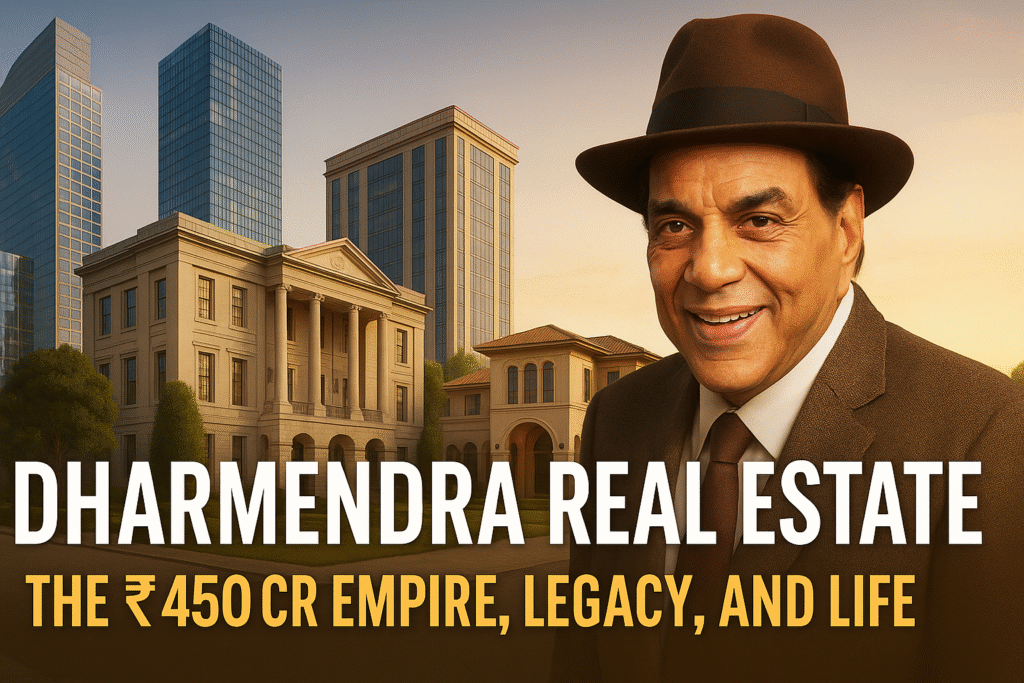
Dharmendra, who passed away recently at the age of 89, was not just an actor but an astute entrepreneur with a deep-rooted connection to the land—a characteristic that profoundly shaped his property investments. His legacy is one of successful diversification, seamlessly transitioning from a cinematic powerhouse to a real estate mogul and hospitality titan. This deep-dive article explores the complete financial landscape left behind by the veteran star. We will analyze how his core philosophy influenced the Dharmendra Real Estate portfolio, from the sprawling, rustic Lonavala farmhouse to his strategic urban holdings in Maharashtra, and examine how these assets contributed to his phenomenal net worth. The following sections will provide an unparalleled, authoritative look into the financial and physical foundations of one of Indian cinema’s most enduring icons.
Understanding Dharmendra Real Estate: More Than Just Property
The concept of Dharmendra Real Estate extends far beyond simple monetary valuation; it is a reflection of his personal journey from a village in Punjab to the glamour of Mumbai, always maintaining a connection to the earth. Unlike many of his contemporaries who favored high-rise penthouses, Dharmendra invested heavily in sprawling land and grounded structures. This strategic choice was key to long-term wealth preservation and appreciation, especially in a geographically constrained market like Maharashtra. His real estate portfolio served dual purposes: an investment engine and a spiritual retreat, deeply tied to his love for nature and farming. Analyzing Dharmendra Real Estate means understanding the man’s preference for legacy and utility over fleeting trends.
Why Dharmendra Real Estate Is Important in Today’s Market?
The structure of the Dharmendra Real Estate portfolio provides a valuable lesson for modern investors: diversification across utility. In an environment where liquid assets are volatile, the stability and intrinsic value of land—especially agricultural land and large farmhouses near major metropolitan hubs—offer a hedge against inflation. For an actor whose primary income source was performance fees, shifting significant capital into tangible, appreciating Dharmendra Real Estate was an act of financial foresight. His investments secured the family’s wealth for generations, transitioning earnings from the ephemeral nature of cinema into concrete, enduring assets. This model of wealth building is a classic blueprint for converting fame into lasting financial security.
Key Features and Advantages of Dharmendra Real Estate
The most notable feature of Dharmendra Real Estate is its sheer scale and location strategy. The portfolio boasts two distinct, high-value asset classes:
- The Lonavala Farmhouse: This 100-acre estate near Tiger Point is the crown jewel. Its size alone, a rarity in Maharashtra, makes it immensely valuable. The advantage here is the blend of agricultural utility (he personally cultivated organic vegetables and crops) and luxury retreat (featuring a heated outdoor pool for aqua therapy). This multi-functional land holds both sentimental and commercial value, offering the potential for future development into a resort or wellness center, a venture he had reportedly explored.
- Maharashtra Urban and Land Holdings: Beyond the Lonavala retreat, he held properties worth over ₹17 crore in Maharashtra, including his primary residence in the affluent Juhu, Mumbai neighborhood. Juhu is a strategic location, central to the film industry, ensuring his urban asset holds a high commercial rental yield and excellent capital appreciation potential. Furthermore, his land investments included agricultural plots (valued at ₹88 lakh) and non-agricultural land (₹52 lakh), demonstrating a sophisticated understanding of different property classes for tax and growth benefits. The core advantage of Dharmendra Real Estate is its ability to generate both experiential value (Lonavala) and financial return (Juhu & land holdings).
Location and Connectivity Advantages of Dharmendra Real Estate Assets
The strategic placement of Dharmendra Real Estate assets highlights a keen business acumen.
- Lonavala Farmhouse: Located conveniently off the Mumbai-Pune Expressway, Lonavala provides easy access to both Mumbai (the commercial and cinematic hub) and Pune (an emerging tech and education center). This connectivity ensures the property is a true ‘getaway’ that can be reached quickly, maximizing its utility for the family. The area, known for its tranquil environment and natural beauty, guarantees that the land value will continue to appreciate as urban sprawl increases the demand for nearby retreats.
- Juhu Residence: The Juhu property is situated in one of Mumbai’s most exclusive and celebrity-dense zones. This location is paramount for an industry professional, offering proximity to studios Apartment and business connections. Crucially, the Juhu home is a rare Classic Mumbai Bungalow, standing in stark contrast to the high-rise apartments that dominate the modern real estate landscape. Its sprawling nature and large compound walls signify luxury and privacy, making it an irreplaceable and highly appreciating part of Dharmendra Real Estate.
Pricing and Investment Insights into Dharmendra Real Estate
Dharmendra’s total estimated net worth ranged from ₹335 crore to ₹450 crore. A significant, yet difficult to isolate, portion of this wealth is locked within his Dharmendra Real Estate holdings. The conservative valuation of his other Maharashtra properties (₹17 crore) plus his agricultural lands (₹88 lakh) and non-agricultural lands (₹52 lakh) hints at a diversified physical portfolio of over ₹18 crore, excluding the Lonavala and Juhu primary residences. The Lonavala farmhouse, given its 100-acre size in a high-demand hill station, is likely valued considerably higher, possibly exceeding ₹100 crore in modern market estimation, demonstrating massive appreciation over the years. The key insight is the massive capital gains generated from holding large, strategically located land parcels over several decades. Dharmendra Real Estate wasn’t about quick flips but about inter-generational wealth creation through patient land banking.
Future Growth and Development Potential of Dharmendra Real Estate
The inherent potential for future growth in Dharmendra Real Estate is substantial. The actor’s reported interest in developing a 30-cottage resort near his Lonavala farmhouse suggests a clear understanding of capitalizing on the wellness and hospitality trend. The 100-acre site offers an ideal canvas for an eco-friendly resort or a luxury wellness center, leveraging the property’s existing natural tranquility and the actor’s ‘Garam Dharam’ brand recognition. This type of commercial repurposing would dramatically shift the asset from a high-value personal residence to a revenue-generating hospitality asset, ensuring a continued, substantial income stream for the Deol family legacy. Furthermore, the immense land holdings in Maharashtra offer flexibility for future, higher-density developments as the region urbanizes.
Need New Property or Want to Invest in Noida Knowledge park 5?
Buyer’s or Investor’s Perspective on Dharmendra Real Estate Strategy
From a shrewd investor’s viewpoint, the Dharmendra Real Estate strategy was impeccable: Invest in scarcity and heritage.
- Scarcity: Large, contiguous land parcels (100 acres) near Mumbai are almost impossible to acquire today. His early investment in the Lonavala farmhouse locked in an asset that is inherently scarce and will only appreciate as the city expands.
- Heritage: The Juhu bungalow is an investment in cultural and architectural heritage. The choice to maintain a spacious, traditional bungalow in a high-rise dominated area makes the property stand out, lending it a unique luxury value beyond its square footage.
The investor takes away this lesson: the best Dharmendra Real Estate investments were made not for immediate liquidity but for long-term legacy value, securing both family roots (Sahnewal, Punjab) and strategic wealth (Mumbai, Lonavala).
Comparison with Similar Projects or Trends in Real Estate
When comparing Dharmendra Real Estate to contemporary celebrity investments, a clear pattern emerges. While many younger celebrities favor high-end, designer apartments (e.g., sea-facing flats or sky villas) for lifestyle and immediate access, Dharmendra’s focus was on land-based wealth. This trend aligns more closely with India’s older, aristocratic families who prioritized ancestral homes, large estates, and agricultural holdings. The Dharmendra Real Estate model hedges against the cyclic nature of construction-based appreciation, relying instead on the steady, undeniable appreciation of prime, large-acreage land, a truly scarce resource. His investment is a testament to the wisdom of rural-to-urban diversification.
Expert Insights and Market Analysis on Dharmendra Real Estate
Market analysts view the Dharmendra Real Estate portfolio as a prime example of a celebrity leveraging their brand for business diversification.22 His successful restaurant chain, Garam Dharam Dhaba and He-Man, are themselves extensions of his ‘Garam Dharam’ film persona, generating significant income that can be channeled back into the stability of real estate. The appreciation of his land assets over a sixty-year career far outpaced many other forms of financial investment. The estimated combined wealth of the entire Deol family, exceeding ₹1,000 crore, shows that Dharmendra’s initial, astute real estate investments formed a solid foundation upon which his children could build their own financial success.24 This strategy secures the family’s wealth through generations.
Why Dharmendra Real Estate Represents a Blueprint for Legacy Building
The essence of the Dharmendra Real Estate investment is the creation of a tangible legacy. His properties are not merely entries in a ledger; they are physical manifestations of his life’s journey. The Lonavala farmhouse, a constant retreat and his organic farm, is a testament to his grounded nature and love for farming. It’s where he found peace away from the industry. The Juhu residence serves as the family’s urban command center. Choosing to retain land and traditional homes reflects a desire to pass on a stable, nature-connected heritage, rather than a transient, liquid fortune. The foresight behind Dharmendra Real Estate ensures that his influence and financial stability will continue to impact his family for decades to come.
The Age and Life of a Legend: Confirming Dharmendra’s Enduring Status
The fact that Dharmendra, born in December 1935, continued to work in films like Rocky Aur Rani Kii Prem Kahaani and Teri Baaton Mein Aisa Uljha Jiya well into his late 80s speaks volumes about his discipline and vitality. He passed away at the age of 89. His personal connection to his Dharmendra Real Estate, specifically his Lonavala farmhouse where he practiced aqua-therapy and farming, played a significant role in his disciplined, health-conscious lifestyle. By openly sharing his life on his farm, he debunked false rumors and demonstrated the healing power of connection to the land. His passing, confirmed recently at his Mumbai residence, marks the end of an era, but his real estate investments ensure his legacy lives on physically, cementing his status not just as a cinematic legend, but as an astute and enduring investor.
The Final Word on Dharmendra Real Estate
The saga of Dharmendra Real Estate is a powerful narrative of translating cinematic stardom into sustainable, generational wealth. With a net worth estimated in the range of ₹335 to ₹450 crore, Dharmendra’s financial empire was anchored by his sprawling, strategically acquired property portfolio. His choices—from the 100-acre Lonavala farmhouse, which served as his sanctuary and personal farm, to his premium urban holdings in Juhu and other valuable land parcels across Maharashtra—demonstrate a unique vision. This vision prioritized the long-term, tangible appreciation of real assets over short-term gains, blending utility, luxury, and a deep-seated connection to nature. The Dharmendra Real Estate legacy is not just about the numbers; it is a blueprint for building a financial fortress that will continue to support the Deol family and serve as an inspiration for investors seeking to combine professional success with stable, enduring wealth creation. His life was a blockbuster, and his investments are his timeless financial classic.

Looking For Retail Shop or Food Court Investment?
Financial Blueprint of Dharmendra Real Estate
In summarizing the financial blueprint of one of Indian cinema’s true legends, it is clear that the Dharmendra Real Estate portfolio was the backbone of his substantial ₹450 crore empire. His strategic vision involved securing large, appreciating land assets like the 100-acre Lonavala farmhouse—a perfect blend of agricultural retreat and high-value investment—alongside prime urban properties in Juhu. This two-pronged approach provided both financial stability and a connection to his grounded roots, a reflection of the man who remained ‘Garibon Ka Devta’ despite his immense success. The sheer value of his properties and diversified land holdings ensures that the financial legacy of Dharmendra Real Estate will continue to thrive, providing generational wealth. As the world mourns the passing of the iconic star, his meticulously built assets stand as a permanent testament to his business acumen and foresight. Explore the principles of Dharmendra Real Estate to secure your own enduring financial future.
Few Questions Asked about Dharmendra Real Estate
Q1. What was the net worth of Dharmendra and how much did Dharmendra Real Estate contribute?
A1. Dharmendra’s net worth was estimated to be between ₹335 crore and ₹450 crore. Dharmendra Real Estate was a major contributor, with his 100-acre Lonavala farmhouse alone estimated to be worth a substantial portion of the total, complemented by over ₹17 crore in other Maharashtra properties and land, making property a foundational asset in his financial standing.
Q2. Where is Dharmendra Real Estate primarily located, and what is the key property?
A2. The most famous piece of Dharmendra Real Estate is his massive 100-acre farmhouse located near Lonavala in Maharashtra. Beyond this, he held his main urban residence in the exclusive Juhu neighborhood of Mumbai and other agricultural and non-agricultural land parcels across Maharashtra.
Q3. How does Dharmendra Real Estate compare to properties owned by other Bollywood stars?
A3. The Dharmendra Real Estate portfolio is distinct because of its emphasis on large, contiguous land (100-acre farmhouse) rather than only luxury vertical apartment units. This focus on acreage and agricultural land aligns with long-term, patient wealth creation and generational legacy building, a less common, yet highly effective, approach compared to others.
Q4. Did Dharmendra have any real estate investments in his ancestral home state?
A4. Yes, while much of his commercial portfolio was in Maharashtra, Dharmendra maintained his emotional connection to his roots through his ancestral home, a Heritage Haveli in Sahnewal, Punjab. This specific piece of Dharmendra Real Estate holds immense sentimental, non-commercial value for the entire Deol family.
Q5. Was the Dharmendra Real Estate Lonavala property a business investment or a personal retreat?
A5. The Lonavala property was a blend of both. It served as a vital personal retreat for Dharmendra, where he enjoyed organic farming and aqua-therapy. However, as Dharmendra Real Estate, it also held commercial potential, with reports indicating he had explored plans to convert part of the large acreage into a revenue-generating luxury resort.
Q6. What was Dharmendra’s age at the time of his passing, and what was his last film?
A6. Dharmendra was 89 years old at the time of his passing. The legendary actor continued to work actively, and his last on-screen appearance was in the 2024 film Teri Baaton Mein Aisa Uljha Jiya, cementing his legacy as a star who worked until the very end.
Q7. How did Dharmendra’s investments outside of films, like his restaurants, affect his net worth?
A7. Dharmendra’s entrepreneurial ventures, such as his popular Garam Dharam Dhaba and He-Man restaurant chains, significantly diversified his income streams. These successful businesses generated substantial cash flow, which could then be strategically channeled into stable assets like Dharmendra Real Estate, thereby ensuring continuous growth and consolidation of his total net worth.
