
The anticipation surrounding Budget 2026 is reaching a fever pitch as India’s premier real estate body, CREDAI (Confederation of Real Estate Developers’ Associations of India), formally submits its list of recommendations to the Ministry of Finance. At the heart of these demands is a singular, urgent plea: to save the affordable housing segment from stagnation. For years, the real estate sector has been the backbone of the Indian economy, contributing significantly to the GDP and providing employment to millions. However, as we approach the announcement of Budget 2026, the industry faces a critical crossroads.
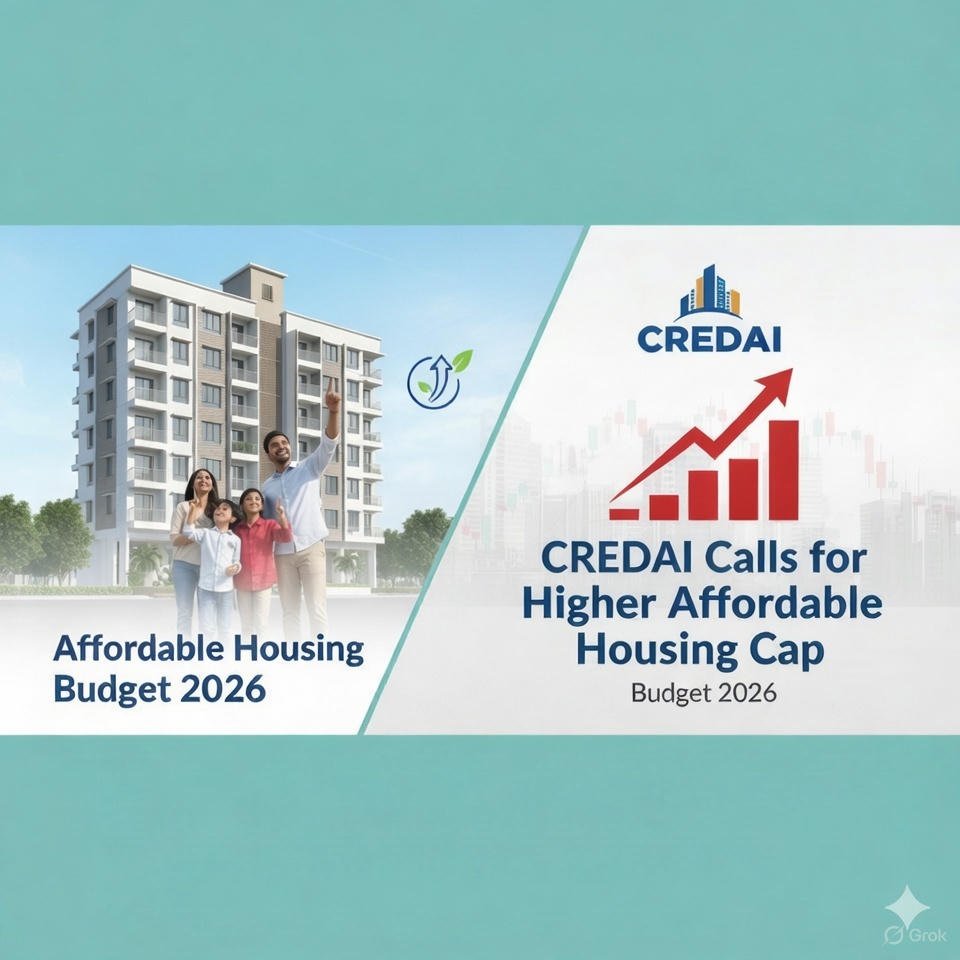
The relevance of Budget 2026 cannot be overstated. With rising input costs, inflationary pressures, and a shifting demographic that demands better urban living conditions, the existing policy frameworks are increasingly viewed as outdated. CREDAI’s call for a higher affordable housing cap and substantial tax relief for real estate developers isn’t just about corporate profit; it’s about the “Housing for All” mission’s survival.
This article explores the intricate details of the CREDAI proposal for Budget 2026, analyzing why a revision of the ₹45 lakh price ceiling is necessary and how tax incentives could stimulate a new wave of construction. We posit that the decisions made in Budget 2026 will dictate the trajectory of urban development in India for the next decade.
The Crucial Role of Budget 2026 in Real Estate
As the government prepares to table Budget 2026, the real estate industry is looking for a lifeline. The sector has shown remarkable resilience post-pandemic, yet the affordable segment—once the star performer—has lagged behind luxury and mid-income housing. Budget 2026 represents the government’s best opportunity to recalibrate the market.
CREDAI argues that without specific interventions in Budget 2026, the gap between demand and supply in the low-income category will widen. Developers are currently squeezed by high land costs and an 18% GST on work contracts. By focusing on Budget 2026, stakeholders hope to see a fiscal policy that acknowledges these ground realities.
Why CREDAI Demands a Higher Affordable Housing Cap in Budget 2026
The most vocal demand for Budget 2026 is the revision of the “affordable housing” definition. Currently, any house priced up to ₹45 lakh with a specific carpet area qualifies for the 1% GST benefit and other subsidies. However, in Tier-1 cities like Mumbai, Delhi-NCR, and Bengaluru, finding a home under ₹45 lakh is becoming a statistical impossibility.
CREDAI has proposed that Budget 2026 should increase this cap to at least ₹90 lakh. This shift would reflect the 30–40% rise in property prices seen over the last few years. If Budget 2026 adopts this change, it would immediately bring a vast inventory of mid-segment homes under the “affordable” umbrella, making them eligible for lower interest rates and tax sops.
Tax Relief for Real Estate Developers in Budget 2026
Supply-side incentives are just as important as demand-side subsidies. CREDAI has called for the reintroduction of Section 80-IB (10) in Budget 2026. This provision previously offered tax holidays for developers building affordable housing projects. Since its expiration, the incentive to build small-ticket homes has vanished, leading many developers to pivot toward luxury projects where margins are higher.
In Budget 2026, tax relief for real estate developers could take the form of:
- Income Tax Exemptions: Reintroducing 100% tax exemptions for profits derived from affordable housing.
- GST Rationalization: Reducing the GST on construction raw materials from 18% to 12%.
- Single-Window Clearance: While not a direct tax, the “time-is-money” principle means faster approvals in Budget 2026 would reduce interest burdens.
Understanding the Impact of GST on Budget 2026 Proposals
The Goods and Services Tax remains a significant hurdle for the sector. CREDAI’s memorandum for Budget 2026 highlights the “inverted duty structure” where developers pay 18% to 28% GST on inputs like cement and steel but cannot claim full input tax credits (ITC) in certain housing categories.
For Budget 2026, the industry is pushing for a flat 5% GST with ITC or a further reduction of the 1% GST cap for affordable housing to include projects with higher valuations. This change in Budget 2026 would directly lower the end-user price, stimulating sales and reducing the unsold inventory that currently plagues major metros.
Investment Insights: How Budget 2026 Affects Homebuyers
If you are a first-time homebuyer, Budget 2026 is likely the most important date on your calendar. The current tax deduction on home loan interest under Section 24(b) is capped at ₹2 lakh. CREDAI and other industry experts are advocating that Budget 2026 increase this limit to ₹5 lakh.
Comparison Table: Current vs. Proposed (CREDAI Recommendations)
| Feature | Current Policy | Proposed in Budget 2026 |
| Affordable Housing Cap | ₹45 Lakh | ₹90 Lakh |
| Home Loan Interest Deduction | ₹2 Lakh | ₹5 Lakh |
| GST on Affordable Units | 1% | 1% (with higher cap) |
| Developer Tax Holiday | Expired | Reintroduce Sec 80-IB |
Such moves in Budget 2026 would increase the disposable income of the middle class, encouraging them to move from rented apartments to owned homes.
Market Trends: The Decline of the ₹45 Lakh Segment
Recent data suggests that the supply of homes under ₹45 lakh has dropped by nearly 20% in the last two years. This is precisely why CREDAI is focusing on Budget 2026. When the cost of land and construction exceeds the selling price cap, developers simply stop building.
The trend is clear: the market is moving toward “premiumization.” To counter this, Budget 2026 must provide a reason for developers to return to the mass-market segment. Without a revised cap in Budget 2026, the dream of “Housing for All” risks becoming “Housing for the Elite.”
Comparing Global Affordable Housing Policies with India’s Budget 2026
Many developed nations use tax credits and land subsidies to keep housing affordable. In comparison, India’s current framework—which Budget 2026 aims to fix—relies heavily on the developer’s ability to absorb costs. By looking at international models, Budget 2026 could introduce “Social Housing Credits” that developers can trade, providing a new liquidity stream for the industry.
CREDAI’s push for Budget 2026 aligns with these global best practices, emphasizing that “affordable” is a relative term based on the local economy’s health and average income levels.
Growth and Future Potential Post-Budget 2026
The real estate sector is projected to reach a market size of $1 trillion by 2030. However, this growth is contingent on the policy support provided in Budget 2026. If the government accepts the higher affordable housing cap, we could see a 15–20% surge in new project launches in the second half of 2026.
Furthermore, Budget 2026 could act as a catalyst for Tier-2 and Tier-3 cities. As infrastructure improves, these cities become the new hubs for affordable housing. CREDAI’s recommendations for Budget 2026 specifically mention the need for regional incentives to prevent over-congestion in metros.
Expert Insights: Why the Timing of Budget 2026 is Vital
Economists suggest that the Indian economy needs a construction boom to maintain its 7%+ GDP growth rate. Real estate has a multiplier effect on over 250 allied industries, from steel to home decor. Therefore, the tax relief for real estate developers requested in Budget 2026 isn’t a “handout”—it’s an economic stimulus.
“The real estate sector cannot be treated as a luxury segment anymore,” says a leading analyst. “With Budget 2026, the government must recognize it as a core infrastructure component.”
Why You Should Care About the CREDAI Proposals in Budget 2026
Whether you are an investor, a developer, or a common citizen, the outcomes of Budget 2026 will impact your net worth.
- For Investors: A higher cap in Budget 2026 means more properties qualify for tax benefits, increasing rental yields and resale value.
- For Developers: Tax relief in Budget 2026 means better cash flow and the ability to finish stalled projects.
- For Homebuyers: Budget 2026 could be the difference between staying in a 1BHK or moving into a 2BHK.
Conclusion – Final Thoughts on Budget 2026
In summary, Budget 2026 stands as a landmark moment for the Indian real estate industry. The demands made by CREDAI—ranging from a higher affordable housing cap to significant tax relief for real estate developers—are rooted in the necessity of adapting to a more expensive, post-inflationary world. The ₹45 lakh limit has served its purpose, but as we move toward 2026, it is no longer a realistic benchmark for urban India.
As the Finance Minister prepares the final drafts for Budget 2026, the eyes of 1.4 billion people are on the policy changes that could make homeownership a reality again. If Budget 2026 delivers on even half of CREDAI’s requests, we could witness a golden era for Indian real estate, characterized by sustainable growth, inclusive housing, and a robust economic recovery.
Why You Should Choose Cyber Arch IT Park Studio Apartment Greater Noida Over Others
The decision to invest in a Cyber Arch IT Park Studio Apartment Greater Noida is a vote for stability and growth in a dynamic market. The unique combination of factors makes it a top-tier choice:
- Dual-Purpose Demand: Catering to both commercial (IT Park) and residential (Studio Apartment) demand simultaneously.
- Strategic Pinpoint Location: Its address in Knowledge Park 5, next to Delhi World Public School, is superior for both rental yield and accessibility.
- Low-Ticket Investment, High-Yield Potential: The studio apartment format offers an accessible entry point to the high-growth Greater Noida West market, maximizing the ROI potential from a single Cyber Arch IT Park Studio Apartment Greater Noida.
FAQs
Q1. What is the main demand of CREDAI for Budget 2026?
A1. The primary demand for Budget 2026 is to increase the price cap for affordable housing from ₹45 lakh to ₹90 lakh. CREDAI argues that the current limit is outdated due to rising land and construction costs. By revising this in Budget 2026, more homebuyers can access the 1% GST rate and other government subsidies meant for affordable housing.
Q2. How will tax relief for real estate developers in Budget 2026 help the economy?
A2. Providing tax relief for real estate developers in Budget 2026 stimulates the construction of new projects, which in turn creates millions of jobs. Real estate supports over 250 ancillary industries. When Budget 2026 offers tax breaks, it reduces the overall cost of projects, allowing developers to pass on those savings to the end consumer, thereby boosting overall economic consumption.
Q3. Will Budget 2026 change the home loan interest deduction limit?
A3. CREDAI has strongly recommended that Budget 2026 increase the home loan interest deduction limit under Section 24(b) from ₹2 lakh to ₹5 lakh. This change in Budget 2026 would provide significant relief to the middle class, making it easier for them to manage EMIs and encouraging more people to invest in residential property.
Q4. Why is the ₹45 lakh cap considered outdated for Budget 2026?
A4. The ₹45 lakh cap was set several years ago. Since then, inflation and high demand have pushed property prices up by 30% or more in major cities. For Budget 2026, industry experts point out that it is almost impossible to build quality housing at this price point in metros. Therefore, Budget 2026 needs to reflect current market prices to keep the “affordable” category relevant.
Q5. Can Budget 2026 help in reducing GST for homebuyers?
A5. While GST is governed by the GST Council, Budget 2026 sets the fiscal tone for such changes. CREDAI is pushing for a reduction in the GST on work contracts and raw materials. If Budget 2026 provides a roadmap for GST rationalization, the effective cost of a new home could drop by 5–7%, significantly benefiting the common man.
Q6. What happens if Budget 2026 ignores these real estate demands?
A6. If Budget 2026 fails to address the affordable housing cap and developer tax relief, we may see a further decline in the supply of low-cost homes. This could lead to a housing shortage in urban areas and force developers to focus only on luxury projects, making the goal of “Housing for All” much harder to achieve after Budget 2026.