
Buying a home is one of the most significant financial milestones in a person’s life, yet many buyers find themselves confused by the technical jargon used by developers. At the heart of this confusion is one critical question: what is carpet area? While the brochure might boast a massive square footage, the actual space you walk on can often be much smaller. Understanding what is carpet area is not just about floor space; it is about knowing exactly what you are paying for and ensuring you don’t get overcharged for “dead” spaces like thick walls or elevator shafts.
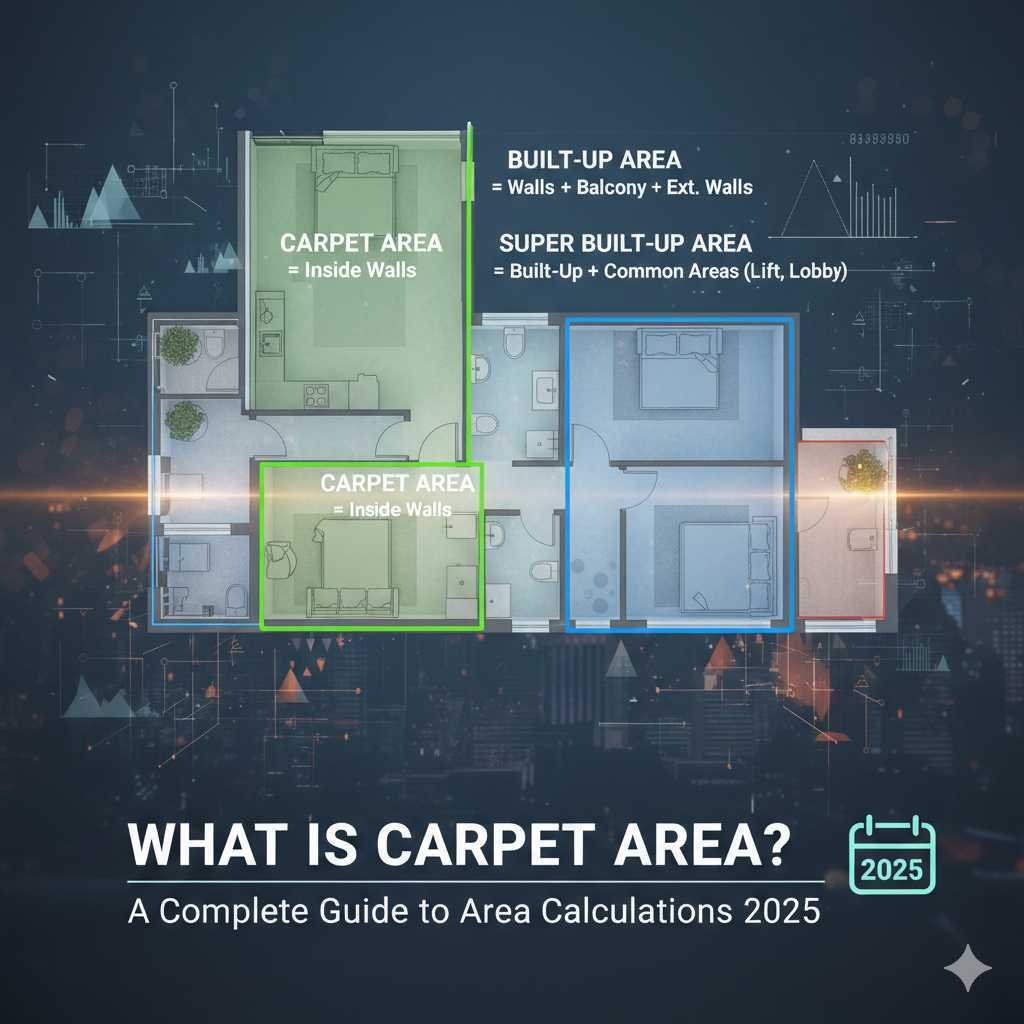
In the modern real estate market, transparency has become a priority. With the introduction of regulations like RERA, the definition of what is carpet area has been standardized to protect consumers. However, many still struggle to differentiate it from built-up or super built-up areas. This article serves as a definitive resource to explain what is carpet area, how it impacts your property value, and how you can calculate it accurately before signing any sale agreement. By the end of this guide, you will have a master-level understanding of what is carpet area and how to navigate property dimensions like a seasoned professional.
Defining What is Carpet Area in Simple Terms
To understand what is carpet area, think of it as the area where you can literally spread a carpet. It is the net usable floor area of an apartment, excluding the area covered by the external walls, areas under services shafts, exclusive balcony or verandah area, and exclusive open terrace area. Essentially, what is carpet area represents the actual living space available for your furniture, movement, and daily activities.
Historically, developers used various definitions to suit their marketing needs, but today, what is carpet area is strictly defined by law in many regions. It includes the thickness of internal partition walls but excludes the external structural walls. If you are looking at a floor plan, the what is carpet area measurement is the most honest representation of the home’s size.
Why Knowing What is Carpet Area is Essential for Homebuyers
Why does the question of what is carpet area matter so much? The primary reason is cost. Most real estate prices are quoted based on the “super built-up area,” which includes common spaces like lobbies and stairs. However, your daily life happens within the what is carpet area. If you don’t know the exact what is carpet area, you might end up paying a premium price for a house that feels cramped.
Furthermore, property taxes and utility calculations are often influenced by the size of the unit. Knowing what is carpet area ensures that you are not overpaying on your annual taxes. It also helps in planning your interiors. You cannot buy a king-sized bed or a modular kitchen without knowing the precise what is carpet area available in those specific rooms.
The Role of RERA in Defining What is Carpet Area
The Real Estate (Regulation and Development) Act, known as RERA, changed the landscape of property buying by providing a legal definition for what is carpet area. Under RERA, it is mandatory for developers to disclose the what is carpet area of every unit. This was done to prevent “loading,” where developers would sell a small flat by inflating the super built-up area.
According to RERA, what is carpet area is the net usable floor area of an apartment. It specifically includes internal partition walls. This standardization means that when you compare two different projects, you can use the what is carpet area as a true benchmark for comparison, ensuring a fair “apples-to-apples” evaluation of the price per square foot.
Understanding the Difference: Carpet Area vs. Built-up Area
To fully grasp what is carpet area, you must distinguish it from the built-up area. The built-up area is the sum of the what is carpet area plus the thickness of external walls, the area of the balcony, and any service shafts. Usually, the built-up area is about 10–15% larger than the what is carpet area.
While what is carpet area tells you where you can walk, the built-up area tells you the total footprint of the apartment. When a builder says a flat is 1,200 sq. ft. built-up, the actual what is carpet area might only be around 1,000 sq. ft. Always ask for the what is carpet area specifically to avoid surprises after possession.
Carpet Area vs. Super Built-up Area: The Loading Factor
The biggest gap in measurements occurs between what is carpet area and super built-up area. The super built-up area includes the built-up area plus a proportionate share of common amenities like the clubhouse, lift lobby, swimming pool, and security quarters. The difference between these two is often called the “loading factor.”
In many luxury projects, the loading can be as high as 30–40%. This means if you buy a 2,000 sq. ft. “super built-up” flat, your what is carpet area might be as low as 1,300 sq. ft. Understanding what is carpet area helps you calculate the efficiency of the building’s design. A lower loading factor means you get more what is carpet area for your money.
How to Calculate What is Carpet Area from a Floor Plan
Calculating what is carpet area manually is a great way to verify a developer’s claims. To find out what is carpet area, you should:
- Measure the length and breadth of each room (Living room, bedrooms, kitchen, bathrooms).
- Multiply them to get the area of each room.
- Add the areas of all rooms together.
- Include the thickness of internal walls.
- Subtract the thickness of external walls and balcony spaces.
The resulting figure is your what is carpet area. Many modern floor plans now come with these dimensions pre-printed. However, physically measuring the what is carpet area during a site visit with a laser tape is highly recommended for accuracy.
Is Balcony Included in What is Carpet Area?
A common point of contention is whether balconies are included in what is carpet area. Under the strict RERA definition, exclusive balconies, verandahs, or open terrace areas are not included in the what is carpet area. They are considered separate components of the “net usable area.”
However, in everyday conversation, some people refer to the “effective carpet area,” which might include the balcony. When reviewing a contract, check if the price is calculated solely on the what is carpet area or if the balcony area has been added separately. Knowing this distinction in what is carpet area can save you from legal loopholes during property registration.
The Impact of What is Carpet Area on Home Loans and Valuation
Banks and financial institutions take the what is carpet area very seriously when valuing a property for a home loan. A bank’s technical evaluator will measure the what is carpet area to determine if the property is worth the asking price. If there is a massive discrepancy between the what is carpet area and the price, the bank may lower the loan amount.
Furthermore, if you ever decide to sell your property, the resale value will largely depend on the what is carpet area. Modern buyers are savvy and will prioritize a flat with a higher what is carpet area over one with fancy common amenities but small rooms. Thus, what is carpet area is a key driver of long-term real estate ROI.
Common Misconceptions About What is Carpet Area
There are several myths regarding what is carpet area. Some believe it includes the space under the entrance door or the thickness of the main structural pillars. This is incorrect. What is carpet area is strictly the floor space. Another misconception is that “usable area” and what is carpet area are the same. While similar, usable area might include balconies, whereas the legal what is carpet area does not.
Education is the best tool against these misconceptions. By understanding the legal and technical boundaries of what is carpet area, you can hold developers accountable and ensure that the “Sale Deed” accurately reflects the physical reality of the apartment.
Future Trends: Will the Definition of What is Carpet Area Change?
As urban living evolves, the definition of what is carpet area might see further refinements. With the rise of “micro-apartments” and “smart homes,” every inch of what is carpet area is being optimized. We are seeing a trend where developers focus on “efficient carpet area”—minimizing hallways and maximize living spaces.
In the future, AI-driven architectural tools might provide even more precise what is carpet area data to buyers through virtual reality tours. However, the core principle of what is carpet area—the space that belongs exclusively to the resident—will remain the gold standard for real estate transactions globally.
Conclusion
Understanding what is carpet area is the single most important step in your home-buying journey. It is the bridge between the marketing promises of a brochure and the reality of your future living room. By focusing on what is carpet area, you ensure that your investment is sound, your taxes are fair, and your living space is adequate for your family’s needs.
Remember that while amenities and location are important, the what is carpet area is what you will interact with every single day. Always insist on the RERA-certified what is carpet area before making any financial commitment. Being informed about what is carpet area empowers you to negotiate better and choose a home that truly fits your lifestyle. Now that you know what is carpet area, you are ready to explore the market with confidence and clarity.
For investors seeking a balance of consistent rental income and strong future capital appreciation, the Cyber Arch IT Park Studio Apartment Greater Noida offers an undeniable opportunity. Its location is a magnet for the corporate and student population, locking in long-term demand. Now is the opportune moment to conduct final due diligence and secure your stake in the future of Greater Noida West. Invest in a Cyber Arch IT Park Studio Apartment Greater Noida today and position your portfolio for exponential growth.
FAQs
Q1. Why is what is carpet area different from the area mentioned in the brochure?
A1. Brochures often highlight the super built-up area to make the flat seem larger. However, what is carpet area is the actual usable space. The difference is due to “loading,” which includes common areas like lifts and lobbies. Understanding what is carpet area helps you see the actual space you are buying.
Q2. Does what is carpet area include the thickness of internal walls?
A2. Yes, under the RERA definition, what is carpet area includes the thickness of internal partition walls but excludes the external walls. This is a crucial part of knowing what is carpet area because it defines the boundary of your private living unit.
Q3. How can I verify what is carpet area during a site visit?
A3. You can verify what is carpet area by using a measuring tape to calculate the floor dimensions of each room. Add these up and include internal wall thickness. Comparing this to the developer’s what is carpet area statement ensures transparency and accuracy in your purchase.
Q4. Is the kitchen platform included in what is carpet area?
A4. Yes, the floor space covered by the kitchen platform is included in what is carpet area. Since the platform sits on the usable floor, it falls under the definition of what is carpet area, even though you cannot walk on that specific patch of floor.
Q5. Can a developer change the what is carpet area after the booking?
A5. Under RERA, a developer cannot significantly change the what is carpet area without the buyer’s consent. If the final what is carpet area is less than promised, the developer must refund the excess amount. This protection makes what is carpet area a legally binding metric.
Q6. Why should I care about what is carpet area when buying a plot?
A6. While what is carpet area is mostly used for apartments, it is relevant for built villas on plots. It helps you understand the ratio of open garden space versus actual indoor living space. Knowing the what is carpet area ensures the villa design meets your indoor space requirements.
Q7. What is the average ratio between what is carpet area and super built-up area?
A7. Generally, the what is carpet area is about 60% to 75% of the super built-up area. If the what is carpet area is lower than 60%, the “loading” is considered very high, meaning you are paying more for common areas than for your actual home.