
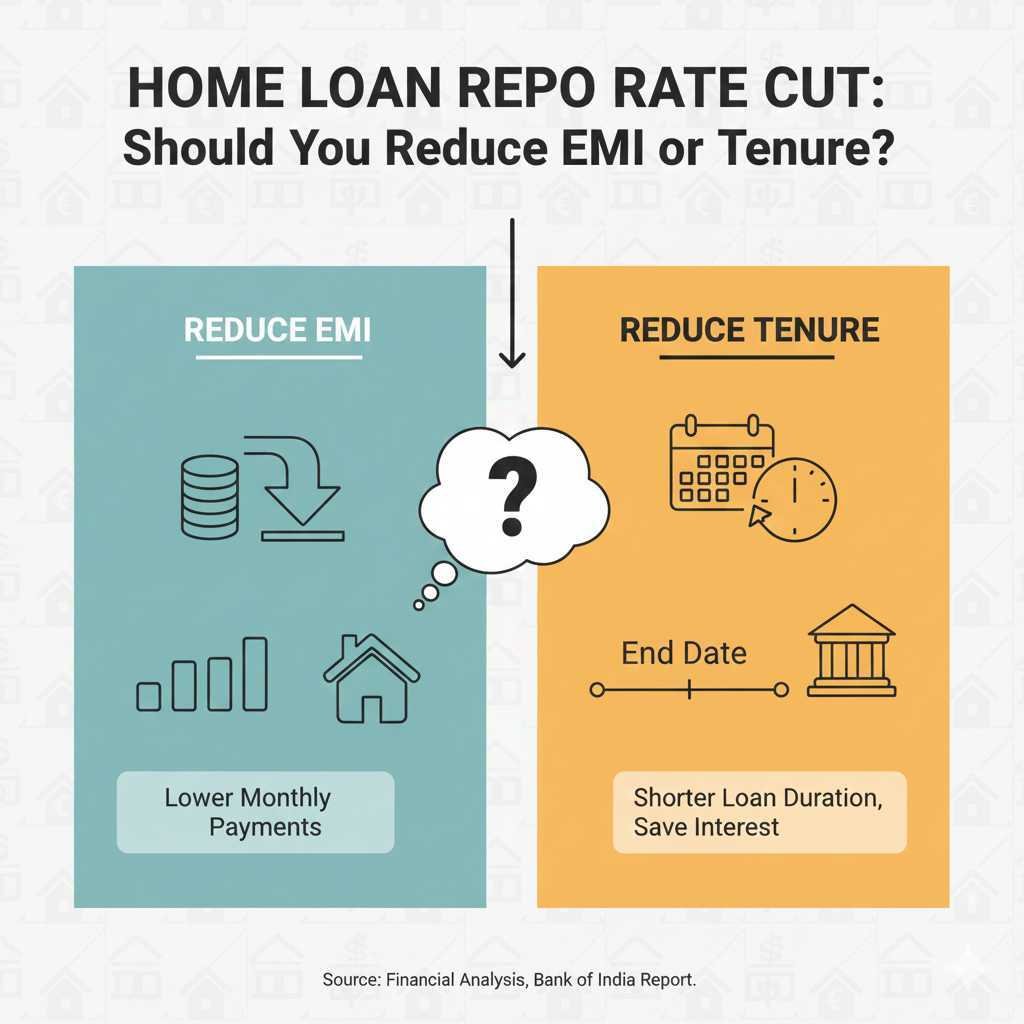
The financial landscape is buzzing with anticipation whenever the Reserve Bank of India (RBI) hints at a shift in monetary policy. For millions of homeowners, a Home Loan Repo Rate Cut is more than just a headline; it is a significant financial event that can alter the trajectory of their personal savings. When the central bank reduces the cost of borrowing for commercial banks, those savings are eventually passed down to the consumer, leading to a decrease in floating interest rates. This shift creates a pivotal crossroads for borrowers: should you lower your monthly outgoings through reduced EMIs, or should you keep payments the same to slash your loan tenure?
Understanding the nuances of a Home Loan Repo Rate Cut is essential for any savvy investor or homeowner. The decision you make today regarding your repayment strategy can result in savings worth lakhs of rupees over the lifetime of the loan. This article explores the mechanics of interest rate transmissions and why a Home Loan Repo Rate Cut represents a golden opportunity to restructure your debt.
Our thesis is clear: while a Home Loan Repo Rate Cut provides immediate liquidity through lower EMIs, the most profound wealth-building strategy almost always lies in tenure reduction. By analyzing market trends, interest math, and psychological factors, we will guide you through the best way to leverage a Home Loan Repo Rate Cut for your specific financial goals.
Understanding the Mechanics of a Home Loan Repo Rate Cut
A Home Loan Repo Rate Cut occurs when the RBI reduces the rate at which it lends to commercial banks. In a transparent lending environment, banks linked to the External Benchmark Lending Rate (EBLR) must pass these cuts to the borrower. This means that your interest component decreases. When a Home Loan Repo Rate Cut is implemented, the total interest burden on your principal reduces, allowing for a reorganization of your repayment schedule.
Why a Home Loan Repo Rate Cut Matters Today
In an era of fluctuating inflation, a Home Loan Repo Rate Cut serves as a vital tool for economic stimulus. For the individual, it provides breathing room in an otherwise tight monthly budget. As cost-of-living expenses rise, the relief provided by a Home Loan Repo Rate Cut can be redirected into high-yield investments or essential household spending. However, the timing of these cuts is cyclical, making it imperative to act quickly when a Home Loan Repo Rate Cut is officially announced by your lender.
Key Features and Advantages of a Home Loan Repo Rate Cut
The primary advantage of a Home Loan Repo Rate Cut is the reduction in the “Cost of Credit.” Borrowers benefit from:
- Lower Interest Outflow: A direct result of the Home Loan Repo Rate Cut is that a smaller portion of your payment goes toward interest.
- Increased Eligibility: For new borrowers, a Home Loan Repo Rate Cut means they can qualify for higher loan amounts.
- Financial Flexibility: You gain the choice to either increase your monthly cash flow or clear your debt faster.
Home Loan Repo Rate Cut: EMI vs. Tenure Reduction
This is the most critical debate following a Home Loan Repo Rate Cut. If you choose to reduce your EMI, you get immediate monthly relief. However, if you opt to keep your EMI constant despite the Home Loan Repo Rate Cut, the “excess” payment goes directly toward the principal. Over time, keeping the same EMI after a Home Loan Repo Rate Cut can shave years off your loan, saving you significantly more in total interest than the monthly EMI reduction ever could.
The Math Behind the Home Loan Repo Rate Cut
Let’s look at the numbers. Suppose you have a 20-year loan of ₹50 Lakhs. A 0.25% Home Loan Repo Rate Cut might seem small, but over 240 months, that minor percentage shift accounts for a massive difference in compounding interest. By choosing tenure reduction during a Home Loan Repo Rate Cut, you effectively pay off the principal faster, which reduces the base on which the next month’s interest is calculated.
Market Trends Around the Home Loan Repo Rate Cut
Historically, periods of low inflation lead the RBI to initiate a Home Loan Repo Rate Cut cycle. We are currently seeing a global shift where central banks are balancing growth with price stability. Keeping an eye on these macro-trends helps you predict the next Home Loan Repo Rate Cut, allowing you to plan prepayments or balance transfers to lenders who are faster at implementing the Home Loan Repo Rate Cut benefits.
Comparison: Fixed vs. Floating Rates During a Repo Rate Cut
If you are on a fixed-rate regime, a Home Loan Repo Rate Cut will not affect you immediately. This is one of the primary reasons why many experts suggest moving to a floating rate linked to the repo rate. Those on EBLR-linked loans see the impact of a Home Loan Repo Rate Cut within three months, whereas those on MCLR might have to wait for their reset date to feel the impact of the Home Loan Repo Rate Cut.
Growth and Future Potential of the Home Loan Repo Rate Cut Cycle
As the economy matures, the frequency of a Home Loan Repo Rate Cut may stabilize. Digital banking has also made it easier for consumers to track these changes. Future AI-driven banking apps will likely automatically suggest the best course of action—EMI reduction or tenure cut—the moment a Home Loan Repo Rate Cut is announced, ensuring consumers never miss out on potential savings.
Expert Insights on Navigating a Home Loan Repo Rate Cut
Financial planners suggest that a Home Loan Repo Rate Cut should be treated as a “found money” opportunity. Instead of increasing your lifestyle spending with the extra cash from a Home Loan Repo Rate Cut, reinvesting it into the loan principal is the most mathematically sound advice. Experts emphasize that the psychological peace of being debt-free sooner is often more valuable than the marginal monthly liquidity a Home Loan Repo Rate Cut provides.
Why You Should Choose the Tenure Option After a Home Loan Repo Rate Cut
If your current income allows, choosing the tenure reduction option after a Home Loan Repo Rate Cut is the superior choice. It accelerates your path to asset ownership. A Home Loan Repo Rate Cut is essentially the bank giving you back a portion of your interest; giving it right back to the principal is the fastest way to build equity in your home.
Conclusion
A Home Loan Repo Rate Cut is a significant milestone in any borrower’s journey. It represents a shift in the economic tide that favors the debtor over the lender. Whether you choose to lower your monthly EMI to ease your current financial burden or decide to reduce your loan tenure to save on long-term interest, the key is to be proactive. A Home Loan Repo Rate Cut doesn’t just happen; its benefits must be captured through careful planning and communication with your bank.
In summary, while the immediate gratification of a lower EMI is tempting, the long-term wealth generated by maintaining your EMI and shortening your tenure is unparalleled. As the market continues to evolve, staying informed about the next Home Loan Repo Rate Cut will ensure that you remain in control of your financial destiny. Leverage every Home Loan Repo Rate Cut to its fullest potential and turn your home into a debt-free sanctuary sooner than you ever imagined.
Why You Should Choose Cyber Arch IT Park Studio Apartment Greater Noida Over Others
The decision to invest in a Cyber Arch IT Park Studio Apartment Greater Noida is a vote for stability and growth in a dynamic market. The unique combination of factors makes it a top-tier choice:
- Dual-Purpose Demand: Catering to both commercial (IT Park) and residential (Studio Apartment) demand simultaneously.
- Strategic Pinpoint Location: Its address in Knowledge Park 5, next to Delhi World Public School, is superior for both rental yield and accessibility.
- Low-Ticket Investment, High-Yield Potential: The studio apartment format offers an accessible entry point to the high-growth Greater Noida West market, maximizing the ROI potential from a single Cyber Arch IT Park Studio Apartment Greater Noida.
FAQs
Q1. How soon after an RBI announcement does a Home Loan Repo Rate Cut take effect?
A1. For loans linked to the External Benchmark (EBLR), the Home Loan Repo Rate Cut usually reflects in your account within three months or at the next reset date. Banks are mandated to pass on the Home Loan Repo Rate Cut quickly to ensure transparency.
Q2. Does a Home Loan Repo Rate Cut apply to fixed-rate loans?
A2. No, a Home Loan Repo Rate Cut typically only benefits borrowers with floating-rate loans. If you have a fixed-rate loan, you would need to convert it to a floating rate to take advantage of a Home Loan Repo Rate Cut.
Q3. Is it better to reduce EMI or tenure after a Home Loan Repo Rate Cut?
A3. Reducing the tenure is generally better. When you keep your EMI the same after a Home Loan Repo Rate Cut, you pay off the principal faster, which significantly reduces the total interest paid over the life of the loan.
Q4. Can I request my bank for a Home Loan Repo Rate Cut benefit manually?
A4. Yes, if your bank is slow to pass on the Home Loan Repo Rate Cut, you can approach them to reset your interest rate. Some banks may charge a small processing fee to transition you to the latest Home Loan Repo Rate Cut benefits.
Q5. Will a Home Loan Repo Rate Cut affect my credit score?
A5. A Home Loan Repo Rate Cut does not directly affect your credit score. However, by making your loan more affordable, a Home Loan Repo Rate Cut makes it easier to maintain a perfect payment record, which helps your score in the long run.
Q6. How much can I save with a 0.25% Home Loan Repo Rate Cut?
A6. On a ₹50 Lakh loan for 20 years, a 0.25% Home Loan Repo Rate Cut can save you approximately ₹1.5 to ₹2 Lakhs in total interest if you choose to reduce your tenure instead of your EMI.